
10 Key Factors to Consider When Selecting PVDF Filter Cartridges
INTRODUCTION
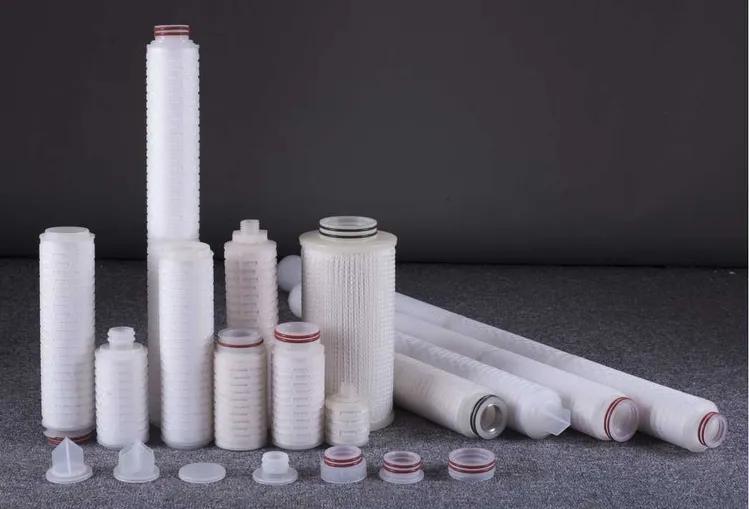
Selecting the right PVDF (Polyvinylidene Fluoride) filter cartridge is a crucial decision for industries that require high-purity, chemically resistant, and thermally stable filtration performance. From pharmaceuticals to electronics to water treatment, the quality of your filter cartridge directly impacts filtration efficiency, product safety, operational cost, and system stability. Yet, many engineers and procurement teams still struggle to identify which PVDF filter cartridge truly meets their process requirements.
This comprehensive guide explores the 10 key factors you should evaluate when selecting PVDF filter cartridges. Understanding these factors will help you improve filtration performance, extend service life, reduce maintenance downtime, and achieve better cost efficiency. Whether you are upgrading an existing system or designing a new one, this article will equip you with the knowledge needed to make an informed, confident purchasing decision.
1. Filtration Precision and Micron Rating
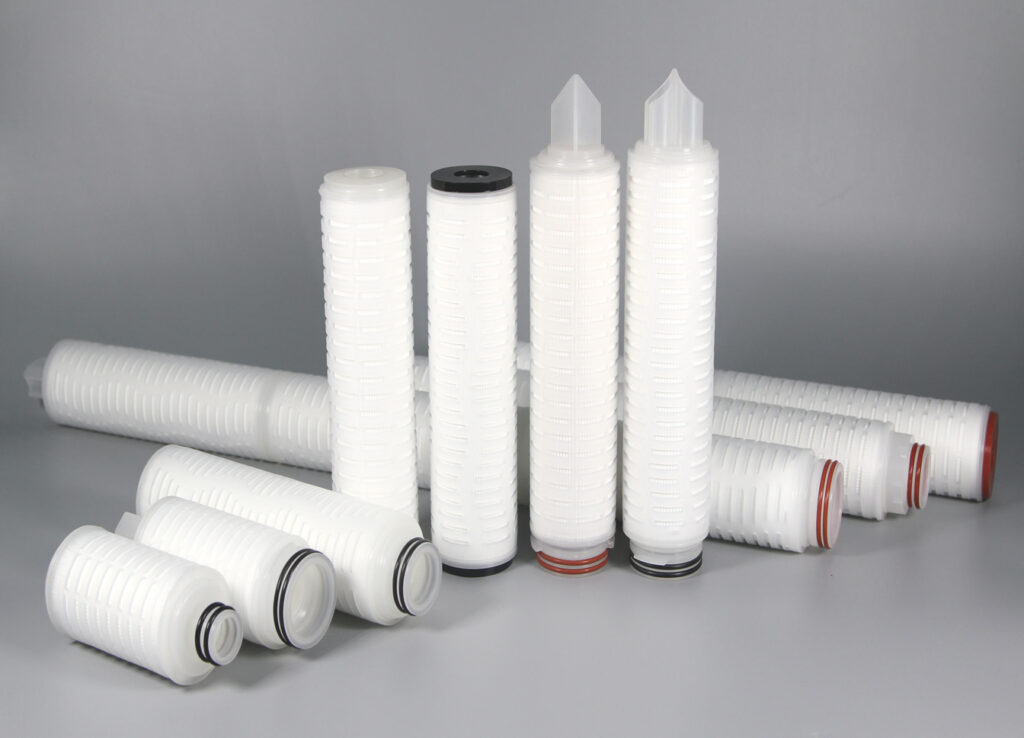
The first factor that plays a decisive role in PVDF filter cartridge selection is the micron rating. PVDF pleated filter cartridges generally range from 0.1 µm to 10 µm, giving users broad flexibility depending on their application.
Why Micron Rating Matters
A filter cartridge’s micron rating determines the particle sizes it can reliably remove.
0.1–0.45 µm is ideal for sterilizing filtration, pharmaceutical ingredients, and sensitive laboratory applications.
1–5 µm typically fits water treatment, chemical processing, and food/beverage pre-filtration.
5–10 µm works well as pre-filter stages for high-solids or high-contaminant processes.
Nominal vs. Absolute Micron Rating
Understanding the difference is essential:
Nominal micron rating suggests approximate efficiency (e.g., 60–90%).
Absolute micron rating ensures ≥99.9% particle retention of the stated size.
If you require high consistency and reproducibility, always choose absolute-rated PVDF filter cartridges. This ensures quality stability in pharmaceuticals, electronics manufacturing, and other critical systems.
2. Chemical Compatibility
One of the biggest advantages of PVDF is its excellent chemical resistance, especially compared to PP or nylon filter cartridges. However, not all PVDF cartridges perform equally, and their internal support materials can vary.
Chemicals PVDF Performs Well With
Strong acids (HCl, H₂SO₄, HNO₃)
Oxidizing chemicals
Organic solvents
Alcohols
Bases
Chlorinated compounds
This makes PVDF suitable for applications like ultra-pure water, semiconductor etching, and pharmaceutical solvents.
What to Check Before Purchase
Ensure the entire cartridge—not just the membrane—is chemically resistant.
Confirm compatibility with the full chemical spectrum in your system.
Verify that adhesives, support layers, and end caps withstand the same chemicals.
A high-quality PVDF membrane with a low-grade polypropylene support core can still fail under harsh conditions. Always check the full-material breakdown.
3. Temperature Resistance and Thermal Stability
PVDF filter cartridges are widely favored in processes involving higher temperatures because of their excellent thermal resistance. Most PVDF membranes can operate up to 80–95°C, and some high-grade cartridges can withstand sterilization cycles above 120°C.
Thermal Factors to Evaluate
Maximum operating temperature
Temperature cycling tolerance
Steam sterilization compatibility
Hot water sanitation endurance
Autoclave stability
For industries such as pharmaceuticals or biotechnology—where sterilization is routine—select a PVDF filter cartridge that supports multiple steam-in-place (SIP) or autoclave cycles without performance degradation.

4. Flow Rate and Pressure Drop
Flow rate directly affects productivity and operational cost, while pressure drop influences pump load and energy consumption.
Why Flow Rate Matters
A filter with poor flow performance can:
Slow down production
Increase energy usage
Cause system bottlenecks
Reduce filtration efficiency
Lead to premature filter replacement
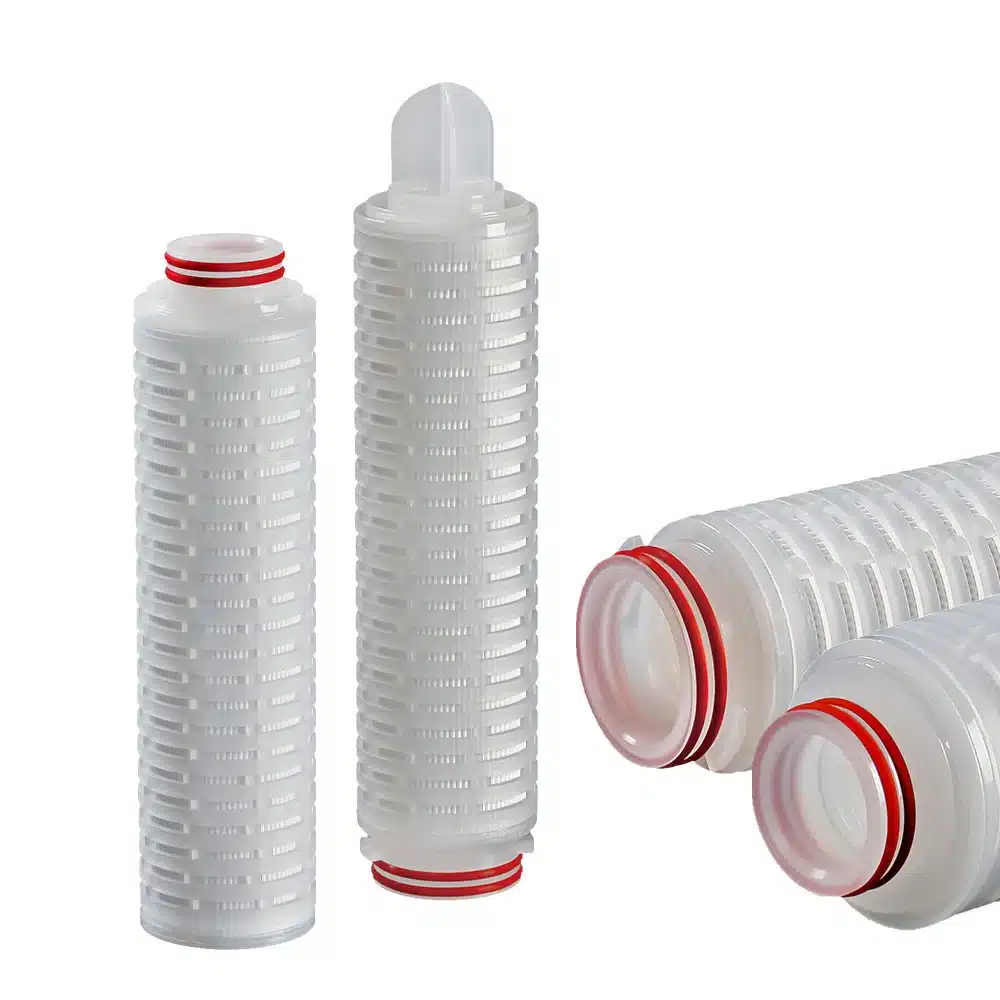
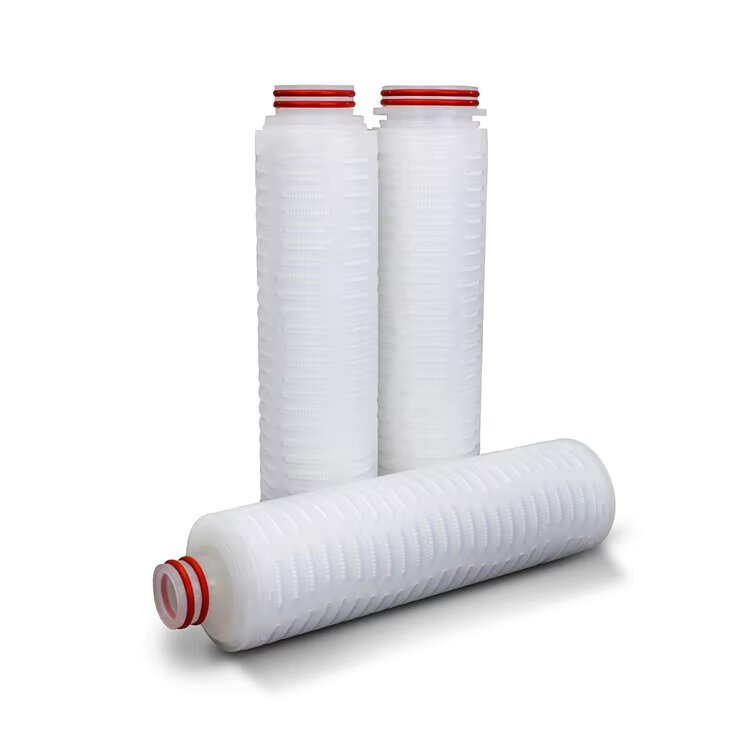
Good-quality PVDF cartridges feature a pleated structure that maximizes filtration surface area, improving flow while maintaining high particle retention.
What to Consider
Initial pressure drop at the rated flow
Maximum operating pressure
Pleat density and depth capacity
Compatibility with existing pumps and piping
If a cartridge’s pressure drop is too high, it may cause system alarms or unstable operation. Always request pressure drop vs. flow rate curves from your supplier.
5. End Cap Type and System Compatibility
PVDF filter cartridges come in different end cap configurations, such as:
DOE (Double Open End)
222/226 with fin or flat caps
Single open end (SOE)
Threaded end caps
Why End Cap Type Matters
Selecting the wrong end cap can cause:
Leakage
Improper sealing
System contamination
Safety hazards
In high-purity systems (like semiconductor and pharma), SOE or 222/226 end caps are typically preferred because they provide a secure O-ring seal.
O-Ring Material Is Equally Important
Common O-ring materials include:
Silicone
Viton
EPDM
Nitrile
FFKM (for extreme chemicals)
Ensure the O-ring is compatible with your chemicals and operating temperatures; otherwise, it may swell, crack, or leak.
6. Filtration Surface Area and Pleat Design
The pleat structure directly affects the cartridge’s performance, flow capacity, and lifespan.
Why Surface Area Matters
A larger filtration surface area leads to:
Higher dirt-holding capacity
Lower pressure drop
Longer service life
Reduced replacement frequency
Greater cost savings
For example, a cartridge with 20% more pleat area could last 30–50% longer in many applications.
Pleat Design Features to Evaluate
Pleat spacing
Membrane uniformity
Support structure strength
Ability to maintain shape under pressure
Number of pleat layers
High-quality PVDF filter cartridges use optimized pleating to maintain uniform flow distribution and maximize membrane performance.
7. Compliance and Certifications
If your application involves drinking water, bioprocessing, pharmaceutical products, or electronics, certifications are essential for safety and regulatory compliance.
Important Certifications to Look For
FDA CFR 21 compliant materials
ISO 9001/14001 manufacturing standards
NSF/ANSI drinking water certification
EU Food Grade Certification (EC 1935/2004)
USP Class VI biocompatibility testing
TOC and Extractables testing results
Certifications ensure the filter cartridge is safe, consistent, and suitable for sensitive applications.
8. Extractables, TOC Levels, and Purity
PVDF is naturally low in extractables, but performance varies dramatically between manufacturers. If you operate in pharmaceuticals, semiconductor fabrication, or biotech, this factor is critical.
What to Request from Suppliers
Extractables test reports
TOC (Total Organic Carbon) test results
Bacterial endotoxin levels
Integrity testing data
Low extractables ensure that the filter does not release contaminants into the product stream. This is essential for industries that require ultrapure liquids.
9. Service Life and Replacement Frequency
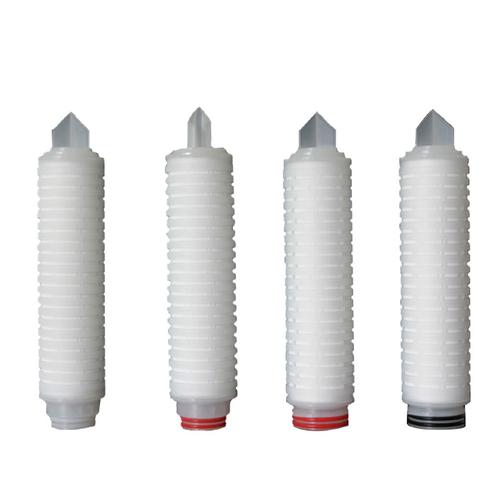
The service life of a PVDF filter cartridge determines the overall operating cost and system stability. A long-lasting filter not only saves money but also minimizes downtime, reduces maintenance interruptions, and keeps your process running efficiently. However, service life is influenced by several factors beyond just the cartridge material.
What Affects Service Life?
Feed water quality or contaminant load
High turbidity, suspended solids, or chemical impurities may cause faster clogging.Operating pressure and flow rate
Running a filter above its recommended flow rate can significantly shorten its lifespan.Temperature and chemical exposure
Long-term exposure to aggressive acids or high temperatures can gradually affect structural materials.Pleat integrity and support structure
Well-designed pleated PVDF filters maintain shape and performance longer, even under high pressure.Backwash or cleaning process
Some systems allow periodic flushing; others rely on replacement only. Cartridge design should match your operating method.
How to Maximize Service Life
Select a filter with strong pleat support and uniform structure.
Size your filtration system correctly to avoid overloading a single cartridge.
Choose PVDF cartridges with high dirt-holding capacity.
Confirm chemical and thermal compatibility of all materials in the cartridge.
A high-quality PVDF filter cartridge may last 30–70% longer than a low-grade one, especially in harsh industrial environments. Investing in reliable filters upfront often saves far more money in the long term.
10. Cost Efficiency and Total Cost of Ownership (TCO)
When selecting PVDF filter cartridges, many buyers focus solely on unit price. However, the actual value of a filter lies in the total cost of ownership, not the initial purchase cost. A cheaper filter may fail more often, produce inconsistent filtration results, or cause contamination issues—leading to much higher operational costs.
What Influences Total Cost of Ownership?
Filter lifespan – Longer lifespan reduces replacement frequency.
Filtration performance – Fewer defects, improved product quality, and lower rework rates.
Dirt-holding capacity – More capacity means fewer filter changeouts.
Pressure drop – Lower pressure drop reduces energy consumption.
System compatibility – Incorrect end caps or materials may require costly modifications.
Maintenance and downtime costs – Every replacement cycle disrupts production.
Why PVDF Filters Offer Cost Advantages
PVDF filter cartridges provide:
Excellent chemical resistance (reduces damage)
High thermal stability (supports repeated cleaning/sterilization)
Low extractables (improves product purity)
Stable flow rate (reduces pump load)
Longer service intervals
These benefits make PVDF one of the most cost-effective materials for long-term use, especially in pharmaceuticals, semiconductors, and industrial water treatment systems.
How to Evaluate Supplier Pricing
When comparing suppliers, request:
Full technical datasheets
Pressure drop curves
Test reports (TOC, extractables, integrity tests)
Warranty or performance guarantees
Sample testing before bulk orders
Never choose a PVDF filter based on price alone. Instead, evaluate how well the filter performs in your specific application environment.
Conclusion: Choosing the Right PVDF Filter Cartridge Matters
Selecting the correct PVDF filter cartridge can significantly improve the reliability, efficiency, and cost-effectiveness of your filtration system. From micron rating and chemical resistance to service life and certification, each factor plays a vital role in determining how well the filter performs in real industrial conditions.
A carefully chosen PVDF filter cartridge will help you achieve:
Higher filtration precision
Lower pressure drop
Longer operational lifespan
Greater chemical and thermal resistance
Consistent purity levels
Reduced downtime and maintenance costs
Whether you operate a pharmaceutical plant, semiconductor facility, chemical processing line, or water treatment system, understanding these ten factors enables you to make a confident and informed purchasing decision.
Recommended Filter Cartridges

 English
 Spanish