
What Is Filter Cartridge Nominal Micron Rating?
Nominal Micron Rating Introduction
Filter cartridge nominal micron rating is a fundamental concept in industrial and liquid filtration, yet it is also one of the most frequently misunderstood specifications by buyers, engineers, and system designers. Many filtration problems—such as insufficient contaminant removal, premature filter clogging, or unexpected pressure drop—can often be traced back to an incorrect understanding of nominal micron ratings.
This article provides a clear, authoritative explanation of what a nominal micron rating is, how it is defined, how it differs from absolute micron rating, and when nominal-rated filter cartridges are the right choice for your filtration system.
Why Nominal Micron Rating Matters in Filtration
Micron rating is used to describe the particle retention capability of a filter cartridge. In practical terms, it indicates how effectively a filter removes solid contaminants from a fluid stream.
However, not all micron ratings are defined in the same way. In cartridge filtration, two terms are commonly used:
Nominal micron rating
Absolute micron rating
Among these, nominal micron rating is the most widely used—especially for depth filter cartridges, such as melt blown, string wound, and some pleated depth filters. Because nominal ratings are not based on a single universal standard, misunderstanding their meaning can lead to incorrect filter selection and performance issues.
Understanding nominal micron rating helps users:
Choose the right filter for pre-filtration and coarse filtration
Balance filtration efficiency with flow rate
Control operating costs without sacrificing system protection
Avoid over-specifying high-precision filters where they are not required
Definition of Nominal Micron Rating
What Does “Nominal Micron Rating” Mean?
A nominal micron rating refers to the approximate particle size at which a filter cartridge can remove a percentage of particles, rather than all particles of that size.
In most cases, nominal micron rating means:
The filter removes 85% to 95% of particles at the stated micron size
Some particles larger than the nominal rating may still pass through
The rating represents average performance, not a strict cutoff
For example:
A 5 micron nominal filter cartridge may remove about 90% of particles that are 5 microns in size
The remaining 10% of 5-micron particles, along with some larger particles, may pass through
This is fundamentally different from absolute micron rating, which is designed to retain nearly all particles at the rated size.
Nominal Micron Rating vs Pore Size
One common misconception is that nominal micron rating directly represents the pore size of a filter. In reality:
Nominal micron rating does not mean all pores are the same size
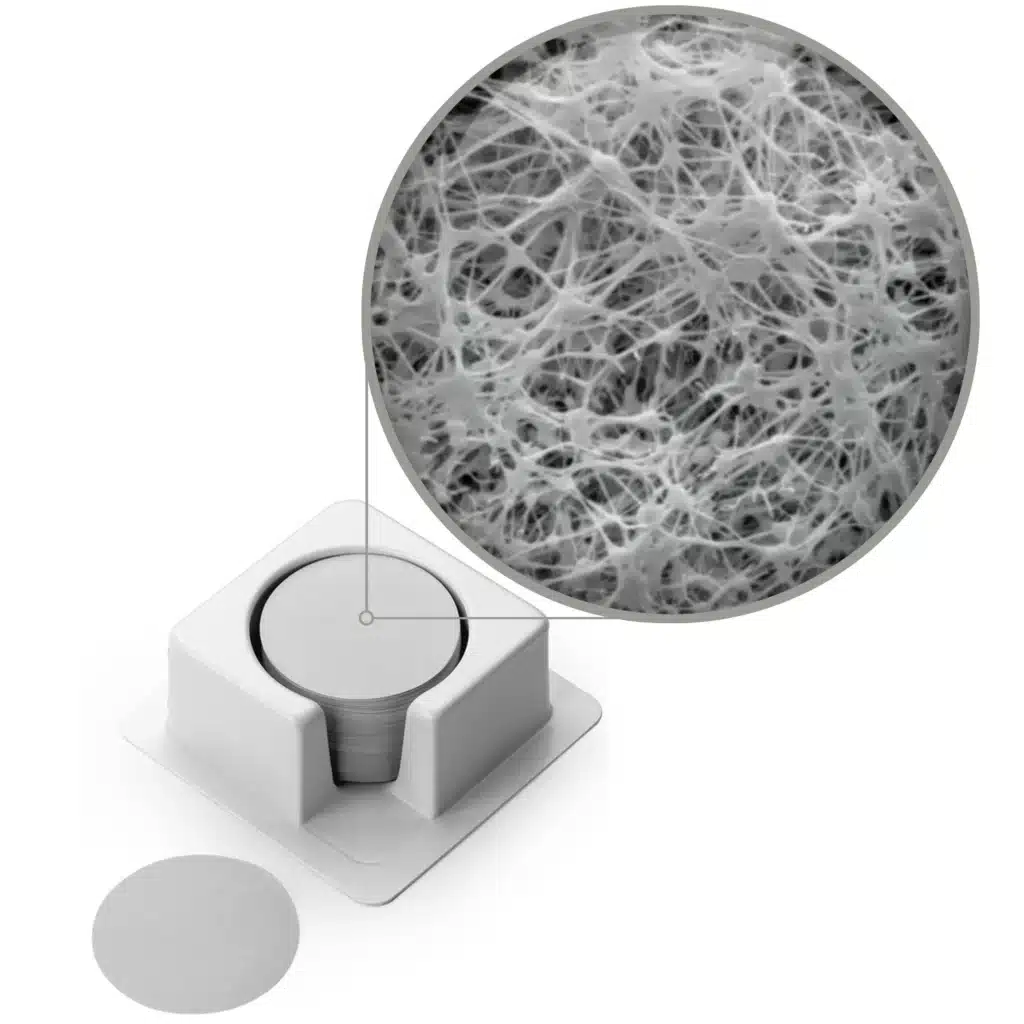
Depth filters have a random fiber structure
Particle capture occurs throughout the filter matrix, not at a single surface
As a result, nominal micron rating reflects filtration behavior, not a fixed physical dimension.
How Nominal Micron Ratings Are Determined
Particle Retention Testing
Nominal micron ratings are typically determined through particle challenge testing, where a fluid containing particles of known size distribution is passed through the filter cartridge.
During the test:
The number of particles upstream and downstream is measured
Filtration efficiency is calculated at specific particle sizes
The micron size at which a certain efficiency is achieved becomes the nominal rating
Common efficiency benchmarks include:
85% retention
90% retention
95% retention
However, the exact efficiency level associated with a nominal rating can vary by manufacturer.
Lack of a Universal Standard
Unlike absolute micron ratings—which are often validated using standardized integrity tests—nominal micron ratings are not governed by a single global standard.
This means:
A 5 micron nominal filter from Manufacturer A may perform differently from a 5 micron nominal filter from Manufacturer B
Testing methods, particle types, and flow conditions may differ
Published nominal ratings should be treated as guidelines, not guarantees
For this reason, reputable filter cartridge manufacturers often provide additional performance data, such as:
Beta ratios
Typical retention efficiency curves
Recommended applications
Why Nominal Ratings Are Still Widely Used
Despite their variability, nominal micron ratings remain popular because they offer:
Cost-effective filtration
High dirt-holding capacity
Low pressure drop
Flexible system design
In many applications, removing most particles—rather than all particles—is sufficient to protect downstream equipment and processes.

Applications of Nominal Micron Rated Filter Cartridges
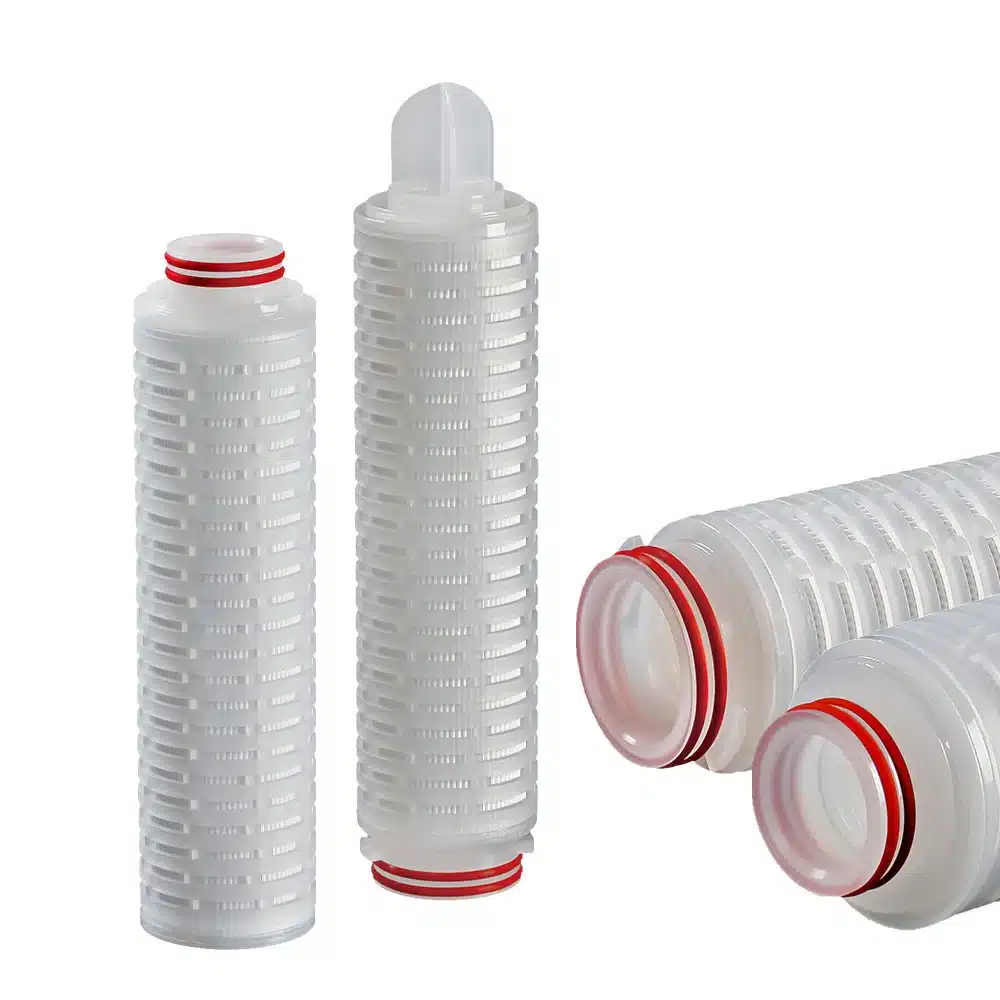
Nominal micron rated filter cartridges are widely used across industrial and commercial filtration systems, particularly where pre-filtration or coarse filtration is required.
Water Treatment and Pre-Filtration
In water treatment systems, nominal-rated cartridges are commonly used:
Upstream of membrane filters
To reduce turbidity and suspended solids
To protect downstream fine filters from premature fouling
Typical nominal micron ratings:
10 µm
20 µm
50 µm
These filters help extend the service life of more expensive absolute-rated membrane filters.
Industrial Liquid Filtration
Many industrial processes do not require absolute particle removal. Nominal micron rated cartridges are suitable for:
Cooling water filtration
Process water clarification
Paints, inks, and coatings
Oils and lubricants
Their depth structure allows them to capture a wide range of particle sizes while maintaining stable flow rates.
Cost-Sensitive Filtration Systems
In systems where operating cost is a key consideration, nominal filters offer:
Lower initial filter cost
Longer service life due to high dirt-holding capacity
Reduced frequency of filter replacement
This makes them an economical choice for large-scale or continuous-operation filtration systems.
Nominal vs Absolute Micron Rating: How to Choose
Understanding the difference between nominal and absolute micron ratings is essential for selecting the correct filter cartridge for a given application. Although both are used to describe filtration performance, they represent fundamentally different levels of particle retention and reliability.
Key Differences Between Nominal and Absolute Micron Ratings
| Aspect | Nominal Micron Rating | Absolute Micron Rating |
|---|---|---|
| Particle retention | Typically 85–95% | ≥99.9% |
| Pore size uniformity | Non-uniform | Highly uniform |
| Filtration mechanism | Depth filtration | Surface or membrane filtration |
| Testing standard | Manufacturer-dependent | Standardized integrity tests |
| Cost | Lower | Higher |
| Typical applications | Pre-filtration, coarse filtration | Critical and final filtration |
Nominal micron ratings indicate approximate filtration performance, while absolute micron ratings represent a defined and verifiable cutoff.
Performance Considerations
Filtration Efficiency
Nominal-rated filters are designed to remove most, but not all, particles at the stated micron size. This is acceptable in many industrial systems where minor particle passage does not affect product quality or equipment safety.
Absolute-rated filters, by contrast, are required when:
Consistent particle removal is critical
Downstream contamination must be minimized
Regulatory or quality standards must be met
Flow Rate and Pressure Drop
Because nominal filters use a depth structure with a gradient density, they generally offer:
Higher flow rates
Lower initial pressure drop
Greater tolerance for high particulate loads
Absolute-rated filters, especially membrane cartridges, have tighter pore control, which may result in:
Higher pressure drop
Greater sensitivity to fouling
More frequent replacement in dirty applications
Cost and Lifecycle Economics
From a cost perspective:
Nominal filters typically have a lower purchase price
Their high dirt-holding capacity often leads to longer service intervals
Overall operating cost can be significantly lower in non-critical applications
Absolute filters, while more expensive, provide:
Predictable performance
Process consistency
Reduced risk in sensitive systems
The optimal choice depends on total cost of ownership, not just initial filter price.
When to Choose Nominal Micron Rated Filter Cartridges
Nominal micron rated cartridges are the right choice when:
The application does not require complete particle removal
The filter is used as pre-filtration
Protecting downstream equipment is the primary goal
High flow and low pressure drop are important
Operating cost must be controlled
Common examples include:
Pre-filtration before membrane systems
Industrial water treatment
Cooling and utility water systems
Oil and lubricant filtration
Paints, coatings, and general process fluids
When Absolute Micron Rating Is Required
Absolute-rated cartridges should be selected when:
Product quality or safety is critical
Regulatory compliance is required
Filtration consistency must be validated
Final filtration or sterile filtration is involved
Typical applications include:
Pharmaceutical and biopharmaceutical processing
Food and beverage final filtration
Microelectronics and ultrapure water systems
Critical chemical processes
In many well-designed filtration systems, nominal and absolute filters are used together, forming a multi-stage filtration strategy.
Common Mistakes When Using Nominal Micron Ratings
Despite their widespread use, nominal micron rated filters are often misunderstood or misapplied. Common mistakes include:
Assuming nominal rating represents a fixed pore size
Using nominal filters as final filtration in critical applications
Comparing nominal ratings between different manufacturers without performance data
Selecting too fine a nominal rating, leading to unnecessary pressure drop
Ignoring upstream contaminant load and system conditions
Avoiding these mistakes helps ensure stable system performance and longer filter life.
Best Practices for Selecting Nominal Micron Rated Filter Cartridges
To select the correct nominal micron rating, consider the following steps:
Identify the purpose of filtration
Is the filter protecting equipment, improving clarity, or preparing fluid for finer filtration?Understand the contaminant profile
Particle size distribution and concentration matter more than average particle size.Evaluate downstream requirements
Nominal filters are often chosen to protect membrane or absolute-rated filters.Balance efficiency and flow
Higher retention usually means higher pressure drop.Consult performance data
Look for retention efficiency curves, beta ratios, and application recommendations.
Working with an experienced filter cartridge manufacturer can help ensure the selected nominal rating aligns with system needs.
Final Thoughts: Understanding Nominal Micron Rating for Better Filtration Design
Nominal micron rating is a practical and cost-effective filtration concept when applied correctly. Rather than aiming for maximum filtration precision, nominal-rated filter cartridges focus on system protection, operational efficiency, and economic performance.
By understanding:
What nominal micron rating truly means
How it differs from absolute micron rating
Where each type is most appropriate
engineers and buyers can design filtration systems that are both effective and economical.
In modern filtration systems, nominal micron rated cartridges remain an essential component—especially when used as part of a well-planned, multi-stage filtration strategy.
References
By exploring these related guides, you will gain a more comprehensive understanding of how to optimize your filtration system for efficiency, cost-effectiveness, and compliance with industry standards.
Recommended Filter Cartridges

 English
 Spanish