Single Layer vs Multi-Layer Pleated Filter Cartridges: Key Differences, Performance, and Selection Guide

INTRODUCTION
Single-layer pleated filter cartridges use one membrane layer for cost-effective prefiltration, while multi-layer designs use gradient structures to deliver higher dirt holding capacity, longer service life, and more stable filtration performance in critical applications.
While both designs aim to remove contaminants efficiently, their internal structure significantly impacts filtration efficiency, dirt holding capacity, pressure drop, service life, and operating cost. Choosing the wrong type can result in frequent filter changeouts, higher operational expenses, unstable filtration performance, or even product contamination.
This comprehensive guide explains the structural principles, performance differences, and application scenarios of single-layer and multi-layer pleated filters—helping engineers, procurement managers, and filtration specialists select the most suitable option for their systems.
Quick Decision Guide
If you need a fast recommendation before diving deeper:
Choose a Single-Layer Pleated Filter if:
✔ Your process has a relatively low particle load
✔ The cartridge is used primarily for prefiltration
✔ High flow rate is more important than maximum retention
✔ Budget sensitivity is a major concern
Choose a Multi-Layer Pleated Filter if:
✔ Filtration is critical to product quality
✔ You want longer service life
✔ Replacement downtime is costly
✔ Stable micron retention is required
✔ Lifecycle cost matters more than upfront price
For a deeper technical understanding, continue reading.

What Are Pleated Filter Cartridges?
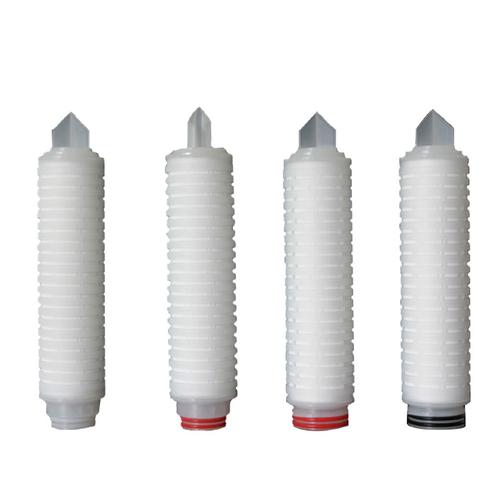
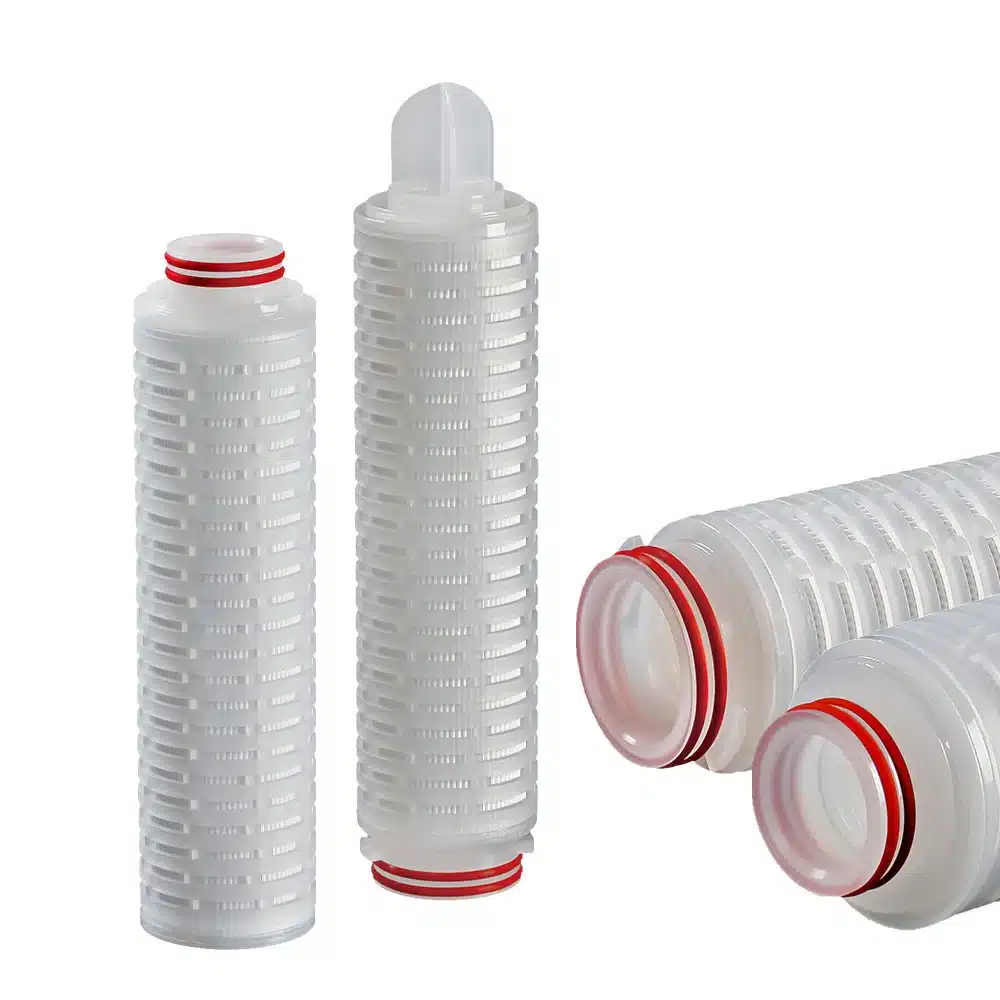
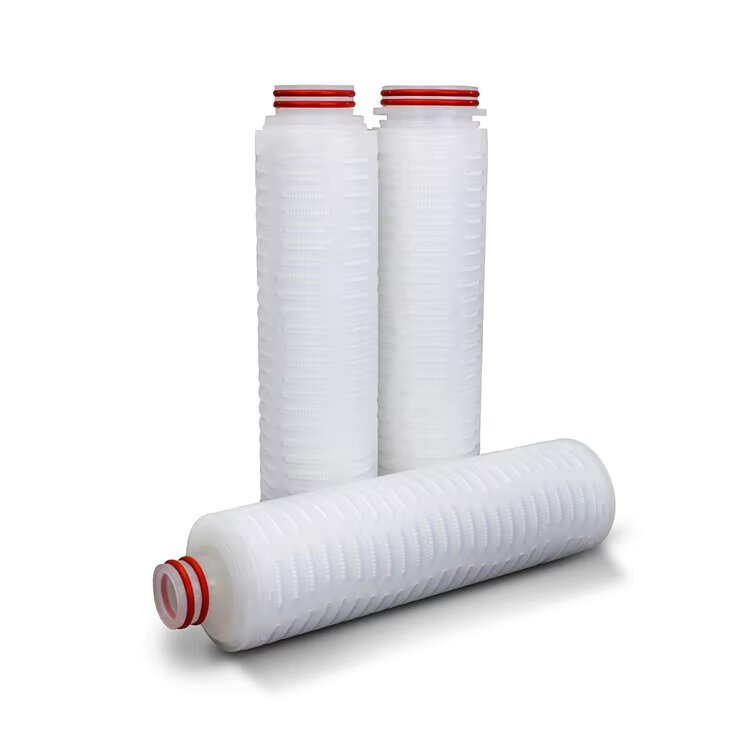
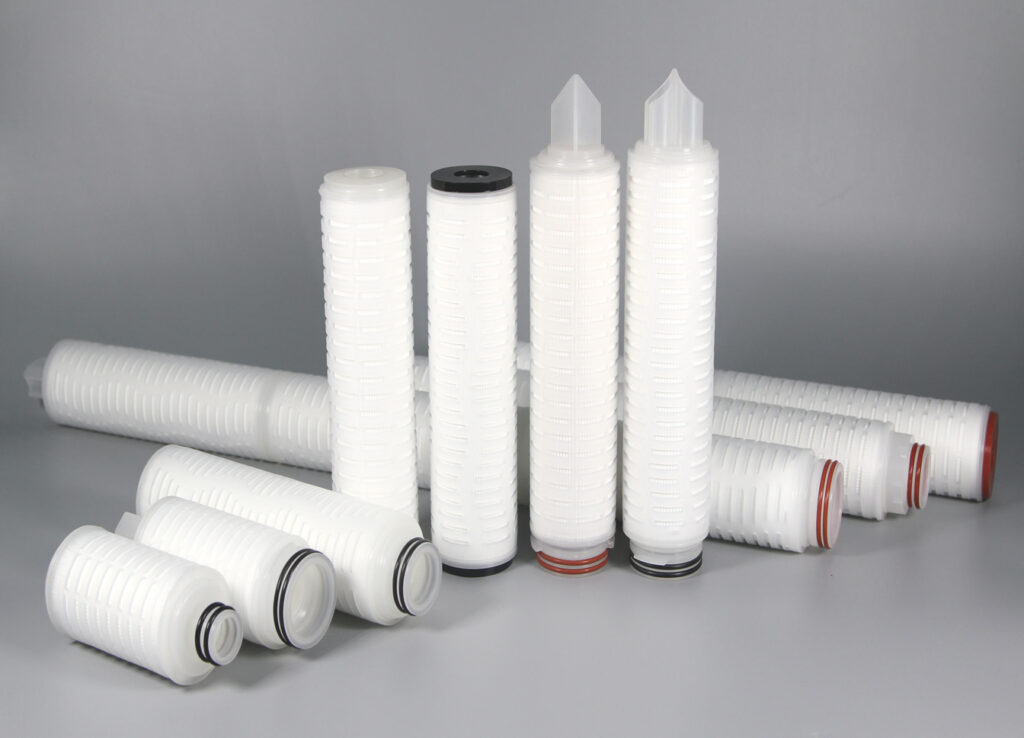
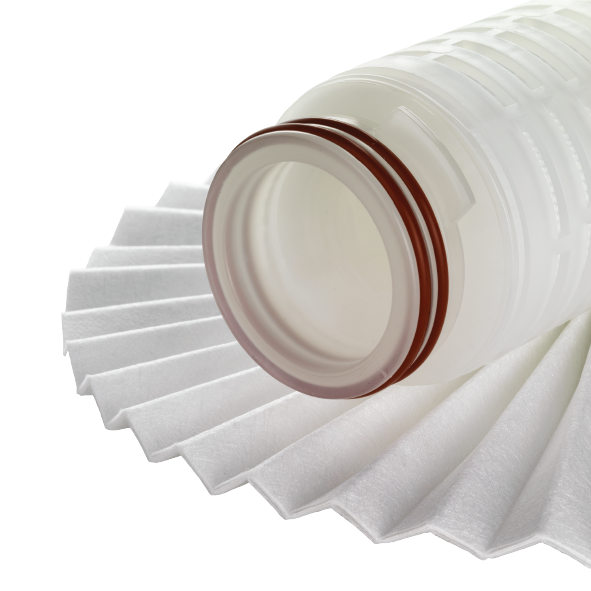
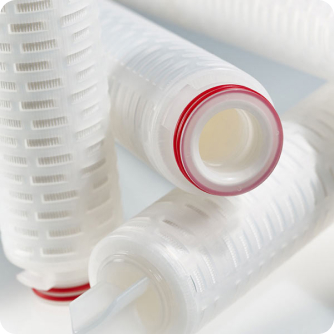
Pleated filter cartridges are surface filtration devices engineered to maximize filtration area within a compact cylindrical format. Instead of relying on thick media to trap contaminants throughout the depth of the material, pleated filters use folded membrane sheets to dramatically increase usable surface area.
More filtration area means:
Higher throughput
Lower differential pressure
Longer operational lifespan
Reduced energy consumption
Because of these advantages, pleated cartridges are commonly deployed in processes that demand consistent and predictable filtration performance.
Typical membrane materials include:
Polypropylene (PP) Pleated Filter Cartridge – excellent chemical compatibility and cost efficiency
Polyethersulfone (PES) Pleated Filter Cartridge – widely used for sterile filtration
Polytetrafluoroethylene (PTFE) Pleated Filter Cartridge – superior chemical resistance
Polyvinylidene fluoride (PVDF) Pleated Filter Cartridge – strong mechanical properties
Nylon Pleated Filter Cartridge – ideal for certain solvents and fine chemicals
These materials allow pleated filters to serve both prefiltration and final filtration roles across diverse industrial environments.
Surface Filtration vs Depth Filtration
Understanding this distinction is essential when evaluating cartridge structures.
Surface filtration:
Particles are captured on the membrane surface
Delivers precise micron ratings
Enables predictable performance
Depth filtration:
Particles are trapped within thick media
Higher dirt loading
Less precise retention
Single-layer and multi-layer pleated cartridges both operate primarily as surface filters—but multi-layer designs introduce a gradient structure that mimics some depth-filter advantages.
What Is a Single-Layer Pleated Filter Cartridge?
A single-layer pleated filter cartridge consists of one uniform membrane layer supported by upstream and downstream protective materials. The pore structure is consistent across the media, allowing particles larger than the rated micron size to be retained at the surface.
Because of its straightforward design, this type of cartridge is widely regarded as a reliable and economical filtration solution.
Structure and Filtration Mechanism
The filtration process is relatively simple:
Fluid enters the cartridge.
Particles larger than the pore size are captured on the membrane surface.
Clean fluid passes through.
Since there are no additional layers to distribute contaminants, particle accumulation occurs quickly at the surface, forming what is known as a filter cake.
Initially, this cake can improve filtration efficiency—but as it thickens, differential pressure rises, eventually requiring cartridge replacement.
Key Advantages of Single-Layer Filters
Lower Initial Pressure Drop
With only one membrane barrier, flow resistance is minimized. This makes single-layer filters particularly suitable for systems where maintaining high throughput is critical.
Lower pressure drop can also reduce pump workload and energy usage.
Higher Flow Potential
In many applications, single-layer cartridges support higher flow rates than comparable multi-layer designs—especially when processing relatively clean fluids.
This makes them ideal for:
Prefiltration stages
Utility water systems
Bulk chemical filtration
Cost-Effective Procurement
For operations managing dozens or hundreds of cartridges, upfront cost differences can significantly impact procurement budgets.
Single-layer filters often provide an attractive balance between performance and affordability, particularly when contamination levels are predictable.
Simpler Validation
In regulated industries, simpler structures sometimes translate to easier validation and documentation processes.
Fewer layers mean fewer variables affecting extractables, compatibility, and integrity testing.
Limitations of Single-Layer Pleated Filters
No filtration solution is universally superior. Understanding limitations is essential for making informed decisions.
Lower Dirt Holding Capacity
Because particles accumulate on a single surface, clogging occurs faster under heavy contaminant loads.
This leads to:
More frequent replacements
Increased downtime
Higher labor costs
Shorter Service Life in Challenging Conditions
When fluid contains variable particle sizes, the membrane may block prematurely—even if the average particle concentration appears manageable.
Less Stable Retention Under Load
As differential pressure rises, some membranes may experience deformation, potentially impacting retention consistency.
For non-critical processes this may be acceptable—but in high-purity manufacturing, stability is often non-negotiable.

What Is a Multi-Layer Pleated Filter Cartridge?
Multi-layer pleated cartridges incorporate two or more filtration layers, often arranged in a gradient density structure. The upstream layer captures larger particles, while downstream layers progressively remove finer contaminants.
This staged capture mechanism improves both capacity and retention stability.
Layered Filtration Technology Explained
Rather than forcing all particles to accumulate on one surface, multi-layer filters distribute contaminant loading across several layers.
Typical gradient flow:
Outer layer → intermediate layer → final membrane
Benefits include:
Reduced surface blinding
More uniform pressure distribution
Enhanced particle capture efficiency
This design effectively merges the precision of membrane filtration with some advantages traditionally associated with depth filters.
Major Benefits of Multi-Layer Filters
Longer Operational Lifespan
By spreading contaminant loading across multiple layers, these cartridges typically last significantly longer than single-layer equivalents in particle-heavy processes.
Longer lifespan directly translates to:
Fewer changeouts
Reduced maintenance
Higher system uptime
For facilities running continuous production, uptime is often more valuable than cartridge price.
Superior Dirt Holding Capacity
Gradient structures allow larger particles to be trapped before they reach the final membrane.
This prevents premature blockage and preserves flow characteristics longer.
Industries that benefit most include:
Pharmaceutical manufacturing
Semiconductor processing
Fine chemical production
High-purity water systems
More Stable Filtration Efficiency
Multi-layer cartridges tend to maintain retention performance even as differential pressure increases.
This stability is critical when filtration directly affects product safety or batch quality.
Reduced Risk of Downstream Contamination
In high-value manufacturing environments, even minor contamination events can trigger costly product loss.
Multi-layer filters provide an additional safety margin—something many engineers consider worth the investment.
Potential Drawbacks of Multi-Layer Filters
Balanced analysis improves credibility and aligns with EEAT expectations.
Higher Upfront Cost
These cartridges typically require more advanced manufacturing processes and additional materials, resulting in higher purchase prices.
However, evaluating price alone rarely reveals the full economic picture—a topic we will explore later in lifecycle cost analysis.
Slightly Higher Initial Pressure Drop
Additional layers naturally increase resistance. While usually manageable, system design should account for this factor.
Proper sizing is essential to avoid unintended flow restrictions.

Single Layer vs Multi-Layer Pleated Filters: Key Differences
| Feature | Single Layer | Multi-Layer |
|---|---|---|
| Structure | One membrane | Multiple gradient layers |
| Dirt Holding Capacity | Moderate | High |
| Service Life | Shorter in heavy loads | Longer |
| Filtration Stability | Good | Excellent |
| Initial Cost | Lower | Higher |
| Lifecycle Cost | Can increase with replacements | Often lower |
| Best Use | Prefiltration, low solids | Critical processes |
There is no universal winner—the correct choice depends entirely on process requirements.
How Filter Structure Impacts Filtration Performance
Understanding how structural design affects real-world performance helps prevent costly specification mistakes.
Dirt Holding Capacity
Dirt holding capacity determines how much particulate matter a filter can retain before reaching terminal pressure drop.
Multi-layer designs excel here because they capture particles progressively, preventing early blockage.
Higher capacity often means:
Longer runs
Fewer shutdowns
Predictable maintenance intervals
Pressure Drop Behavior
Pressure drop should be evaluated not only at startup but throughout the filter’s operational life.
Single-layer filters often begin with lower resistance but may experience faster pressure escalation as particles accumulate.
Multi-layer filters typically demonstrate more gradual pressure increase, supporting operational stability.
Flow Rate Stability
Stable flow is essential for automated processes.
Sudden pressure spikes can disrupt production parameters, especially in tightly controlled environments like pharmaceutical filling lines or semiconductor wet processes.
Gradient filtration helps smooth these fluctuations.
Particle Retention Consistency
Consistent retention protects downstream equipment and ensures final product integrity.
In applications where micron-level deviations are unacceptable, engineers frequently favor multi-layer configurations.
Application-Based Recommendations
| Application | Recommended Structure |
|---|---|
| RO Prefiltration | Single-layer |
| Utility Water | Single-layer |
| Food Processing | Depends on solids |
| Pharmaceuticals | Multi-layer |
| Microelectronics | Multi-layer |
| Fine Chemicals | Multi-layer |
Selecting based on application—not price—is the hallmark of a mature filtration strategy.
Cost vs Value — Is a Multi-Layer Pleated Filter Worth the Higher Price?
One of the most common questions procurement teams ask is:
“Why should we pay more for a multi-layer filter when a single-layer cartridge is cheaper?”
This is the wrong question.
Experienced filtration engineers rarely evaluate filters based solely on purchase price. Instead, they focus on lifecycle cost — the total expense incurred throughout the operational life of the cartridge.
Understanding Lifecycle Cost
Lifecycle cost includes far more than the unit price of the filter:
Cartridge purchase cost
Replacement frequency
Production downtime
Labor expenses
Disposal costs
Energy consumption
Product loss risk
When these variables are analyzed together, the economic picture often changes dramatically.
For example:
A single-layer cartridge may cost 30–50% less upfront, but if it requires twice as many replacements, the total annual cost can exceed that of a multi-layer filter.
Cost Per Cubic Meter Filtered
Advanced facilities increasingly rely on a more meaningful metric:
Cost per cubic meter (or gallon) filtered
This approach shifts the conversation from price to performance.
Example Scenario:
| Factor | Single Layer | Multi-Layer |
|---|---|---|
| Cartridge Price | Lower | Higher |
| Service Life | 1 month | 3 months |
| Annual Replacements | 12 | 4 |
| Downtime Events | Frequent | Minimal |
Even with a higher unit price, the multi-layer option often delivers superior economic efficiency.
Downtime: The Hidden Expense
In continuous manufacturing environments, downtime can be extraordinarily expensive.
Consider industries such as:
Biopharmaceutical production
Semiconductor fabrication
Beverage bottling
Specialty chemicals
An unscheduled shutdown may cost thousands — sometimes millions — per hour.
If a longer-lasting filter reduces even one unexpected stoppage, the ROI becomes obvious.
When Lower Price Makes Sense
Despite the advantages of multi-layer designs, single-layer cartridges remain the smart choice in certain conditions:
Low particle load
Stable contamination profile
Non-critical filtration stages
Budget-constrained operations
The key is alignment between filter capability and process risk.
Overspecifying filtration can be just as wasteful as underspecifying it.
When Should You Choose a Single-Layer Filter?
Single-layer pleated cartridges are far from obsolete — in fact, they are essential components in many well-designed filtration trains.
Choose single-layer filters when:
The cartridge is used for prefiltration
Protecting a downstream membrane is the primary goal
Fluid cleanliness is relatively consistent
High throughput is required
Capital expenditure must be minimized
Many large facilities intentionally deploy tiered filtration strategies, combining both cartridge types to optimize performance and cost.
For example:
Stage 1: Single-layer prefilter
Stage 2: Multi-layer final filter
This configuration reduces the contaminant burden on the final membrane, dramatically extending its lifespan.
When Is a Multi-Layer Filter the Smarter Investment?
Multi-layer cartridges excel wherever filtration directly influences product quality, regulatory compliance, or equipment protection.
Strong use cases include:
Sterile or near-sterile processes
High-purity water systems
Solvent filtration
Final filtration before packaging
Microelectronics manufacturing
Critical chemical production
In these environments, filtration failure is simply not acceptable.
The additional structural redundancy of multi-layer media provides valuable risk mitigation.
Expert Tips for Selecting the Right Pleated Filter Cartridge
Filtration engineers typically evaluate multiple operational variables before finalizing cartridge specifications.
Below are some of the most important considerations.
Analyze Particle Size Distribution — Not Just Micron Rating
Many buyers focus exclusively on nominal micron ratings, overlooking particle distribution.
A fluid containing mixed particle sizes can clog a single-layer membrane rapidly, even if the average particle size appears manageable.
Gradient multi-layer structures handle variability much more effectively.
Evaluate Differential Pressure Limits
Every membrane has a mechanical tolerance.
Operating too close to maximum differential pressure can lead to:
Media deformation
Reduced retention
Unexpected failure
Systems with fluctuating pressure often benefit from the resilience of multi-layer designs.
Confirm Chemical Compatibility
Membrane structure matters — but so does material selection.
Always verify compatibility with:
Acids
Bases
Oxidizers
Organic solvents
Process additives
Failure to do so may result in membrane degradation or extractables contamination.
Consider Total Flow Requirements
Under-sizing cartridges is a common and costly mistake.
Higher flow rates increase velocity through the membrane, accelerating fouling.
In demanding systems, combining proper sizing with multi-layer media can significantly improve stability.
Account for Changeout Logistics
Filter replacement is not just a maintenance task — it is an operational event.
Ask:
Does the process require shutdown?
Are sterile procedures involved?
How long does replacement take?
Reducing changeout frequency can produce substantial operational savings.
Common Buyer Mistakes to Avoid
Even experienced procurement teams occasionally overlook critical filtration variables.
Avoiding the following pitfalls can prevent expensive system inefficiencies.
Choosing Based Only on Price
The cheapest cartridge is rarely the most economical.
Filtration should be evaluated as a performance investment — not a commodity purchase.
Ignoring Dirt Holding Capacity
A filter that clogs quickly disrupts production planning.
Capacity is often a stronger predictor of operational efficiency than micron rating alone.
Over-Specifying Micron Ratings
Specifying a finer micron than necessary increases pressure drop and shortens lifespan without delivering meaningful benefits.
Precision is valuable — but only when justified.
Failing to Plan for Contamination Spikes
Processes rarely remain perfectly stable.
Unexpected particle surges can overwhelm single-layer membranes.
Multi-layer filters provide a valuable safety buffer.
Treating All Pleated Filters as Equal
Manufacturing quality varies significantly across suppliers.
Critical indicators of a reliable cartridge include:
Integrity testing
Extractables validation
Lot traceability
Cleanroom production
Consistent pleat geometry
For regulated industries, documentation is just as important as performance.
Frequently Asked Questions (FAQ)
Are multi-layer filters always better?
No. The optimal choice depends entirely on process conditions. Multi-layer filters outperform single-layer designs in high-particle or critical applications, but may be unnecessary for low-risk filtration stages.
Do multi-layer filters reduce replacement frequency?
In most particle-heavy environments, yes. Their higher dirt holding capacity typically results in longer service life.
Can single-layer filters achieve absolute filtration?
Yes — provided the membrane is engineered for absolute retention. However, performance stability under heavy loading may differ from gradient designs.
Do multi-layer filters increase pressure drop?
Initial pressure drop may be slightly higher, but the rate of pressure increase is often slower, supporting longer operational windows.
Which industries benefit most from multi-layer filtration?
Industries where contamination carries high financial or regulatory risk, including pharmaceuticals, semiconductor manufacturing, and specialty chemicals.
Which membrane material should I choose for a pleated filter cartridge?
The choice depends on your application: PP for general prefiltration, PES for sterile liquids, PTFE for aggressive chemicals, PVDF for mechanical strength, and Nylon for solvent systems.
The Future of Pleated Filter Technology
Filtration technology continues to evolve rapidly as industries demand higher purity, improved efficiency, and lower operating costs.
Several emerging trends are shaping the next generation of cartridge filters.
Gradient Membrane Engineering
Advanced gradient structures are becoming more precise, enabling optimized particle capture while minimizing pressure resistance.
This innovation effectively bridges the gap between membrane and depth filtration.
Nanofiber Filtration Layers
Nanofiber technology offers extremely high surface area with minimal flow restriction.
Potential benefits include:
Exceptional retention
Lower energy usage
Extended service life
As manufacturing scales, adoption is expected to accelerate.
High-Flow Cartridge Designs
Facilities are increasingly seeking ways to reduce housing footprint and simplify maintenance.
High-flow cartridges — capable of replacing multiple standard filters — are gaining traction in large-scale water and chemical processing systems.
Smarter Filtration Monitoring
Digital sensors that track differential pressure and predict changeout timing are beginning to transform filtration from a reactive task into a predictive strategy.
The result is improved uptime and better resource planning.
Final Thoughts: Making the Right Filtration Decision
There is no universally superior cartridge structure — only the one that best aligns with your process requirements.
Single-layer filters offer simplicity, affordability, and strong performance in stable environments.
Multi-layer filters deliver enhanced capacity, retention stability, and operational security when filtration becomes mission-critical.
The smartest facilities avoid treating filtration as a commodity. Instead, they approach it as a strategic component of process reliability and product quality.
When evaluating options, focus on:
Lifecycle economics
Operational risk
Process criticality
Maintenance strategy
A well-informed filtration decision does more than remove particles — it protects production, ensures consistency, and supports long-term profitability.