
PTFE vs PVDF Filter Cartridges: Which One Should You Choose?
INTRODUCTION
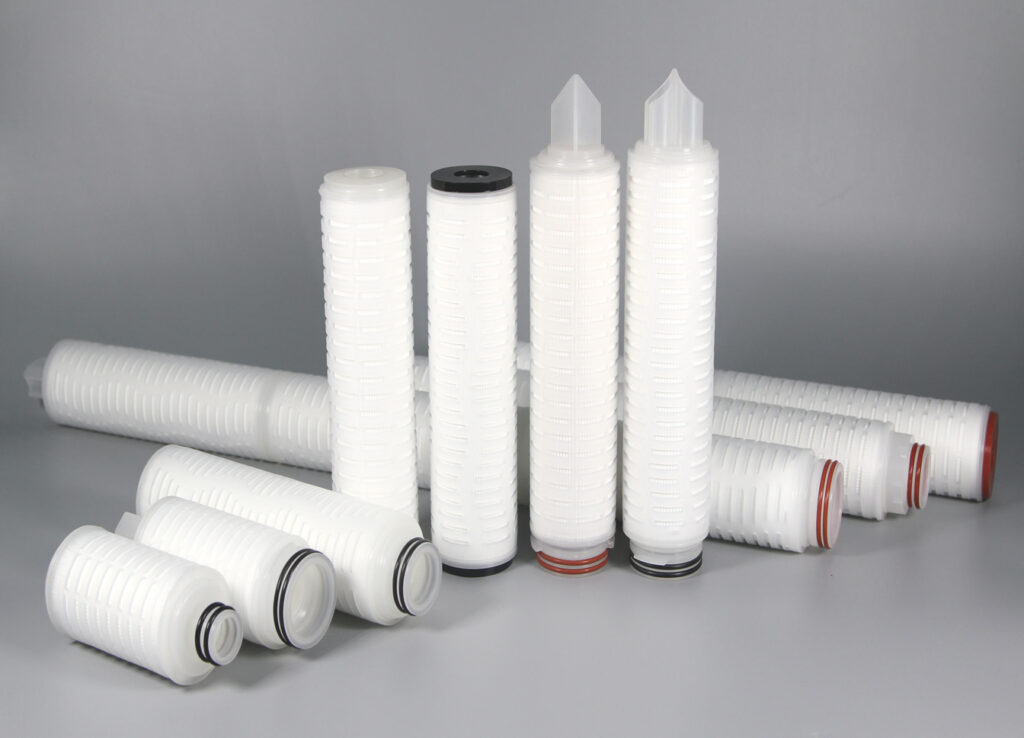
PTFE and PVDF filter cartridges are both widely used in industrial filtration, but they serve different purposes. PTFE filters offer superior chemical resistance and are ideal for gas and solvent filtration, while PVDF filters provide higher flow rates and are better suited for aqueous and biopharmaceutical applications.
Both materials are widely used in high-purity, chemical, biopharmaceutical, food & beverage, and water treatment applications. However, they are designed for very different filtration challenges. Choosing the wrong membrane can lead to excessive pressure drop, shortened service life, product contamination, or unnecessary operating costs.
This guide provides a technical, application-driven comparison of PTFE vs PVDF filter cartridges to help engineers, plant managers, and procurement teams make the right decision with confidence.
PTFE vs PVDF Filter Cartridges: Quick Comparison Overview
| Parameter | PTFE Filter Cartridge | PVDF Filter Cartridge |
|---|---|---|
| Membrane Nature | Hydrophobic (standard) | Naturally Hydrophilic |
| Chemical Resistance | Excellent (almost universal) | Very good |
| Typical Applications | Gas, solvents, aggressive chemicals | Water-based liquids, biopharma |
| Operating Temperature | Up to 260°C | Up to 140°C |
| Protein Binding | Extremely low | Very low |
| Flow Rate (Liquid) | Lower (needs pre-wetting) | High |
| Cost Level | Higher | Medium |
| Sterilization | SIP / CIP compatible | SIP compatible |
This comparison table summarizes the core differences, but real selection depends on process conditions, which we will analyze in detail below.
What Are PTFE Filter Cartridges?
PTFE Membrane Structure and Filtration Principle
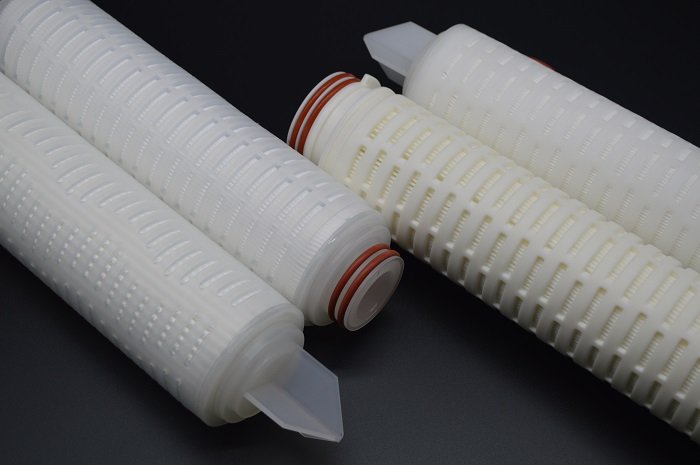
PTFE filter cartridges use expanded PTFE (ePTFE) membranes, produced by stretching pure PTFE resin to create a microporous structure. The result is a membrane with:
Highly uniform pore size distribution
Extremely high porosity
Chemically inert surface
In pleated filter cartridges, PTFE membranes are supported by polypropylene (PP) or stainless steel layers to provide mechanical strength while maintaining high filtration efficiency.
PTFE membranes are most commonly used in absolute-rated filtration, where precise particle or microorganism retention is required, such as 0.1 μm, 0.22 μm, or 0.45 μm.
Key Performance Characteristics of PTFE Filters
1. Exceptional Chemical Resistance
PTFE is resistant to almost all chemicals, including:
Strong acids (H₂SO₄, HCl, HNO₃)
Strong alkalis
Organic solvents (acetone, IPA, toluene)
Oxidizing agents
This makes PTFE filter cartridges the preferred choice for chemical processing and solvent filtration.
2. High Temperature Stability
PTFE can operate continuously at temperatures up to 260°C, far exceeding PVDF. This is critical for high-temperature gas filtration and sterilization processes.
3. Hydrophobic Surface
Standard PTFE membranes repel water. This property is ideal for:
Gas filtration
Vent filtration
Compressed air systems
For liquid filtration, PTFE cartridges require pre-wetting with alcohol or surfactant-treated variants.
4. Extremely Low Extractables
PTFE is chemically inert and exhibits minimal leachables, which is crucial for pharmaceutical and semiconductor applications.
Typical Industries Using PTFE Filter Cartridges
PTFE pleated filter cartridges are widely used in:
Chemical processing plants
Semiconductor and microelectronics manufacturing
Pharmaceutical API production
Solvent filtration systems
Sterile gas and tank vent filtration
In these industries, chemical compatibility and process safety outweigh cost considerations, making PTFE the logical choice.
Get a Custom Filtration Solution
What Are PVDF Filter Cartridges?
PVDF Membrane Material Explained
PVDF (Polyvinylidene Fluoride) is a semi-crystalline fluoropolymer known for its balance of chemical resistance, mechanical strength, and hydrophilicity.
Unlike PTFE, PVDF membranes used in pleated filter cartridges are typically naturally hydrophilic, allowing direct use in aqueous filtration without pre-wetting.
PVDF membranes often feature an asymmetric pore structure, where larger pores on the upstream side provide high flow rates, while smaller pores downstream ensure precise retention.
Key Performance Characteristics of PVDF Filters
1. High Flow Rate and Low Pressure Drop
PVDF membranes are optimized for liquid filtration. Their hydrophilic nature allows immediate wetting, resulting in:
Faster start-up
Lower differential pressure
Higher throughput per cartridge
2. Excellent Mechanical Strength
PVDF membranes have higher tensile strength than PTFE, making them suitable for systems with pressure fluctuations.
3. Low Protein Binding
PVDF exhibits very low protein adsorption, which is why it is widely used in biopharmaceutical filtration, especially for:
Buffer filtration
Media filtration
Final filtration of biologics
4. Good Chemical Compatibility
While not as universal as PTFE, PVDF performs well with:
Most acids and bases
Alcohols
Common cleaning agents used in CIP systems
Typical Industries Using PVDF Filter Cartridges
PVDF pleated filter cartridges are commonly used in:
Biopharmaceutical manufacturing
Food and beverage processing
Water purification systems
Medical and laboratory filtration
Cosmetics and personal care production
In these applications, high flow rate, cleanliness, and regulatory compliance are often more important than extreme chemical resistance.
PTFE vs PVDF Filter Cartridges: Detailed Technical Comparison
Filtration Efficiency and Micron Ratings
Both PTFE and PVDF filter cartridges are available in absolute micron ratings, typically including:
0.1 μm – for mycoplasma or ultrafine particle control
0.22 μm – for sterile filtration
0.45 μm – for clarification and bioburden reduction
However, their effective performance differs depending on fluid type:
PTFE excels in gas and solvent filtration
PVDF excels in aqueous liquid filtration
This distinction directly impacts system efficiency and operating cost.
Hydrophobic vs Hydrophilic Behavior
This is one of the most misunderstood differences between PTFE and PVDF.
PTFE (Hydrophobic)
Repels water
Ideal for gas and vent filtration
Requires pre-wetting for liquid use
PVDF (Hydrophilic)
Naturally wets with water
Ideal for liquid filtration
No pre-conditioning required
In pharmaceutical and food applications, eliminating pre-wetting steps reduces validation complexity and operational risk, which is why PVDF is often preferred.
Chemical Compatibility: Initial Comparison
At a high level:
PTFE offers near-universal chemical compatibility
PVDF offers excellent, but not unlimited, compatibility
For example:
Strong oxidizing acids → PTFE preferred
Alcohols and buffers → PVDF performs very well
Mixed solvent systems → PTFE often required
PTFE vs PVDF Filter Cartridges: Detailed Technical Comparison
Chemical Compatibility: Where the Difference Becomes Critical
Chemical compatibility is often the deciding factor between PTFE and PVDF filter cartridges, especially in chemical processing, pharmaceutical API production, and semiconductor manufacturing.
PTFE filter cartridges are widely regarded as the most chemically resistant polymer filtration media available. They can withstand:
Strong inorganic acids (sulfuric, nitric, hydrochloric)
Strong alkalis
Aromatic and chlorinated solvents
Ketones, esters, and hydrocarbons
Oxidizing agents
Because of this, PTFE is frequently selected for unknown or changing chemical environments, where process conditions may vary over time.
PVDF filter cartridges, while not as chemically universal as PTFE, still offer excellent resistance to:
Alcohols (ethanol, IPA)
Aqueous acids and bases
Buffers and pharmaceutical intermediates
Common CIP cleaning chemicals
However, PVDF may degrade or swell when exposed to certain aggressive solvents or high concentrations of oxidizers. In such cases, PTFE provides a higher safety margin.
Engineering takeaway:
If chemical compatibility data is incomplete or the process involves mixed solvents, PTFE is the safer long-term choice.
Operating Temperature and Pressure Resistance
Temperature and pressure directly affect membrane integrity, filtration efficiency, and cartridge service life.
PTFE Filter Cartridges
Continuous operating temperature up to 260°C
Excellent dimensional stability at elevated temperatures
Suitable for high-temperature gas filtration and steam sterilization
PVDF Filter Cartridges
Maximum continuous operating temperature around 140°C
Well-suited for hot water and steam-in-place (SIP) processes
Not recommended for extremely high-temperature gas systems
In terms of pressure resistance:
PVDF membranes typically offer higher mechanical strength
PTFE membranes rely more on support layers (PP or stainless steel)
For systems with frequent pressure fluctuations, PVDF cartridges may demonstrate better mechanical durability.
Service Life and Total Cost of Ownership
Many procurement decisions focus on initial cartridge price, but experienced engineers evaluate total cost of ownership (TCO).
Key factors influencing TCO include:
Cartridge lifespan
Flow stability over time
Cleaning and sterilization frequency
Downtime during replacement
PTFE cartridges generally have:
Higher upfront cost
Longer service life in harsh environments
Lower risk of unexpected chemical failure
PVDF cartridges typically offer:
Lower initial cost
Higher throughput in aqueous systems
Shorter lifespan in aggressive chemical environments
In pharmaceutical and food applications where processes are stable and well-defined, PVDF often provides the best balance of cost and performance.
In chemical or solvent-based processes, PTFE frequently delivers lower long-term cost despite higher purchase price.
How to Choose Between PTFE and PVDF Filter Cartridges
Choose PTFE Filter Cartridges If Your Application Involves:
Aggressive or unknown chemical compositions
Organic solvents or mixed solvent systems
High-temperature gas or vent filtration
Semiconductor-grade or ultra-pure chemical filtration
Situations requiring maximum chemical safety margin
PTFE pleated filter cartridges are often selected when process risk reduction is more important than initial cost.
Choose PVDF Filter Cartridges If Your Application Requires:
High-flow aqueous liquid filtration
Biopharmaceutical-grade purity
Minimal protein adsorption
Simplified validation and start-up (no pre-wetting)
Lower pressure drop and energy consumption
PVDF pleated filter cartridges are the preferred solution for biopharma, food & beverage, and high-purity water systems.
Regulatory Compliance and Industry Standards
For regulated industries, membrane selection must align with applicable standards and certifications.
Both PTFE and PVDF filter cartridges are commonly available with compliance to:
FDA 21 CFR (Food Contact)
EU Food Contact Regulations
USP Class VI (Biopharmaceutical use)
ISO 9001 / ISO 14001 manufacturing systems
In addition, high-quality cartridges support:
Integrity testing (Bubble Point, Diffusion, Water Intrusion)
SIP and CIP compatibility
Validation documentation and traceability
PVDF cartridges are particularly popular in biopharmaceutical applications due to their low extractables and excellent validation history.
PTFE cartridges are frequently specified in chemical and semiconductor industries where regulatory compliance is combined with extreme chemical resistance.
Recommended PTFE and PVDF Filter Cartridge Solutions
To help engineers and procurement teams streamline selection, many manufacturers offer dedicated product lines, including:
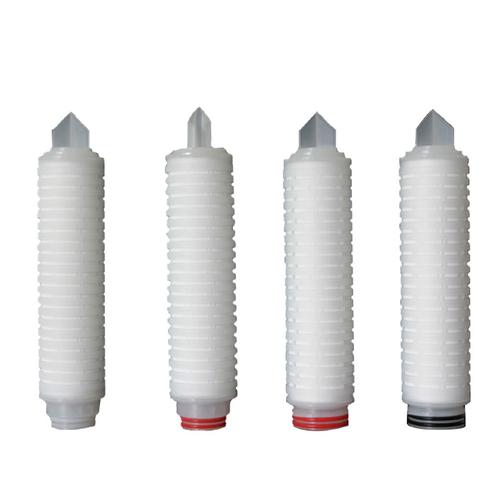
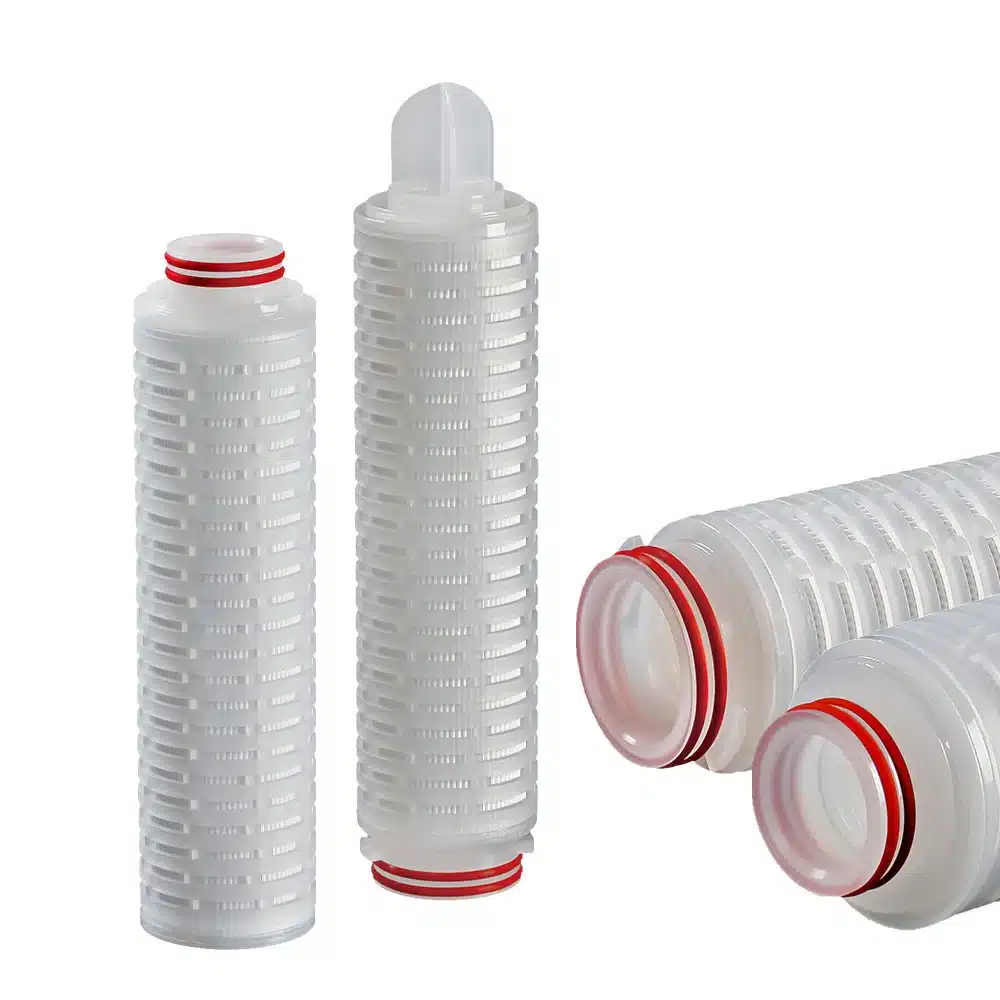
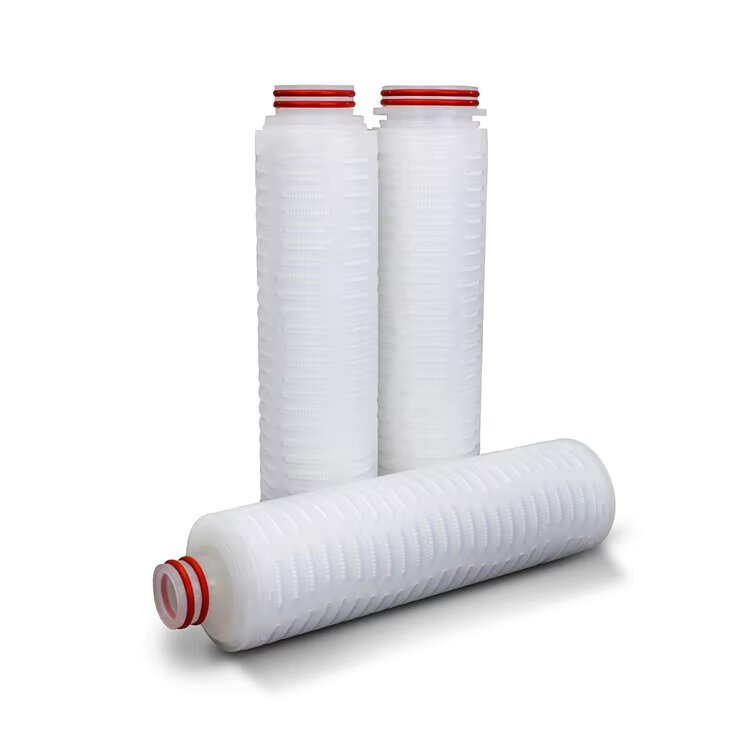
PTFE Pleated Filter Cartridges for gas, solvent, and chemical filtration
Hydrophobic PTFE Filter Cartridges for sterile vent and compressed air systems
PVDF Pleated Filter Cartridges for biopharmaceutical and food-grade liquid filtration
Pharmaceutical-Grade Filter Cartridges designed for validated processes
When selecting a supplier, it is essential to evaluate:
Membrane origin and consistency
Manufacturing quality control
Validation support and technical documentation
Customization options (length, micron rating, end caps)
These factors significantly impact long-term filtration performance and compliance.
Frequently Asked Questions About PTFE and PVDF Filter Cartridges
Is PTFE or PVDF better for pharmaceutical filtration?
Both can be used, but PVDF is generally preferred for aqueous pharmaceutical processes due to its hydrophilic nature and low protein binding.
Can PVDF replace PTFE in solvent filtration?
In mild solvent environments, yes. For aggressive or mixed solvents, PTFE is recommended.
Are PTFE filter cartridges always hydrophobic?
Standard PTFE membranes are hydrophobic, but hydrophilic-treated PTFE variants are available for specific liquid applications.
What micron rating should I choose?
This depends on the required level of particle or microorganism retention. Common ratings include 0.22 μm for sterile filtration and 0.45 μm for clarification.
Final Thoughts: Making the Right Choice for Your Filtration System
There is no universal “better” membrane between PTFE and PVDF. The optimal choice depends on:
Fluid chemistry
Operating temperature and pressure
Regulatory requirements
Process stability
Total cost of ownership
By understanding the fundamental differences between PTFE and PVDF filter cartridges, engineers and procurement teams can reduce risk, optimize performance, and ensure long-term process reliability.
Need Expert Help Choosing the Right Filter Cartridge?
If you are evaluating PTFE or PVDF filter cartridges for your application, professional technical support can significantly reduce selection errors and validation time.
Experienced manufacturers can provide:
Application-specific recommendations
Chemical compatibility guidance
Sample testing support
OEM and customized filtration solutions
The right membrane choice is not just a product decision—it is a process optimization strategy.
Recommended Filter Cartridges

 English
 Spanish