
Sand Filtration vs Microfiltration: Key Differences in Water Treatment Systems
INTRODUCTION
In water treatment system design, sand filtration and microfiltration are often mentioned together. However, these two technologies serve very different roles and operate at completely different levels of filtration control.
Understanding the difference between sand filtration and microfiltration is essential for designing stable pretreatment systems and protecting downstream membrane equipment.
1. What Is Sand Filtration?
Sand filtration is a traditional physical filtration method that uses a granular media bed—typically quartz sand or multi-media layers—to remove suspended solids from water.
Key characteristics of sand filtration:
Filtration is achieved through depth filtration
Particle removal depends on media size, bed condition, and flow rate
Filtration precision is not fixed or guaranteed
Typical removal range:
Large suspended solids
Sand, silt, rust particles
Some algae and organic debris
In most applications, sand filters provide an equivalent filtration range of approximately 20–100 microns, but this value is not precisely controlled.
As a result, sand filtration is primarily used to reduce the solids load on downstream processes rather than to control final water quality.
2. What Is Microfiltration (MF)?
Microfiltration is a membrane-based filtration technology that uses a defined pore-size membrane to physically block particles above a specific micron rating.
Key characteristics of microfiltration:
Filtration is based on pore-size exclusion
Micron rating is manufactured and measurable
Performance is stable and repeatable
Typical MF pore size:
0.1–1.0 micron
At this level, microfiltration is capable of:
Removing bacteria
Effectively controlling fine suspended solids
Reducing turbidity and SDI
Providing consistent feed water quality for UF and RO systems
From an engineering perspective, microfiltration is the first step where filtration performance becomes fully controllable.
3. Core Differences Between Sand Filtration vs Microfiltration
| Aspect | Sand Filtration | Microfiltration |
|---|---|---|
| Filtration principle | Depth filtration | Membrane separation |
| Micron control | Not fixed | Precisely defined |
| Typical range | 20–100 μm (approx.) | 0.1–1.0 μm |
| Bacteria removal | No | Yes |
| Performance stability | Low | High |
| Automation level | Low | Medium–High |
| Typical system position | Front-end pretreatment | Final pretreatment stage |
These differences explain why sand filtration and microfiltration cannot replace each other, but instead work together in modern system designs.
4. Why Sand Filtration Alone Is Not Enough for Membrane Systems
Although sand filters are effective for removing large particles, they cannot reliably protect membrane systems.
Common issues when sand filtration is used as the only pretreatment include:
Fine colloids passing through the filter bed
Bacteria entering membrane modules
Unstable SDI values
Rapid membrane fouling
For UF and RO systems, membrane lifespan and operating cost are highly sensitive to feed water quality. Even small variations in pretreatment performance can significantly impact cleaning frequency and membrane replacement cycles.

5. The Role of Microfiltration in Pretreatment Design
Microfiltration serves as a control barrier between conventional pretreatment and membrane separation.
A typical pretreatment configuration is:
Raw Water
→ Sand Filter (bulk solids removal)
→ Microfiltration (particle size control)
→ UF / RO Membrane System
In this configuration:
Sand filtration reduces the solids load
Microfiltration ensures consistent micron-level protection
Downstream membranes operate under stable conditions
This layered approach transforms pretreatment from a basic filtration step into a designed protection system.
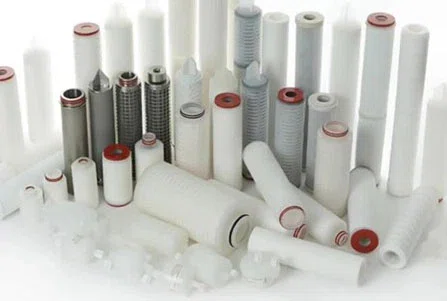
6. Why PP Pleated Microfiltration Cartridges Are Widely Used
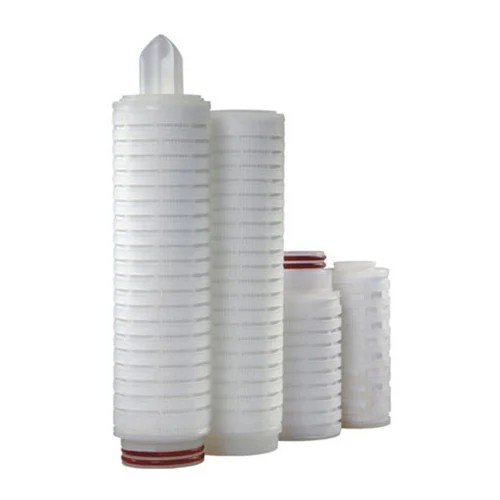
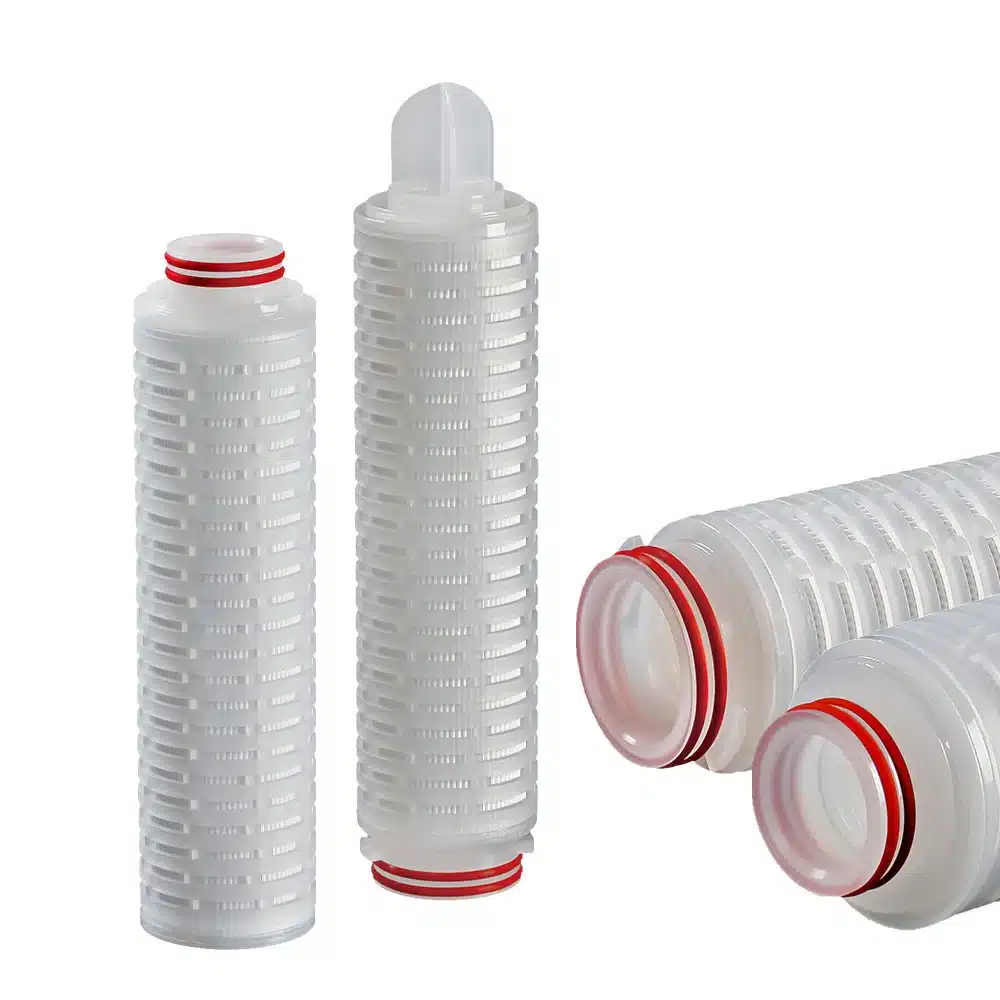
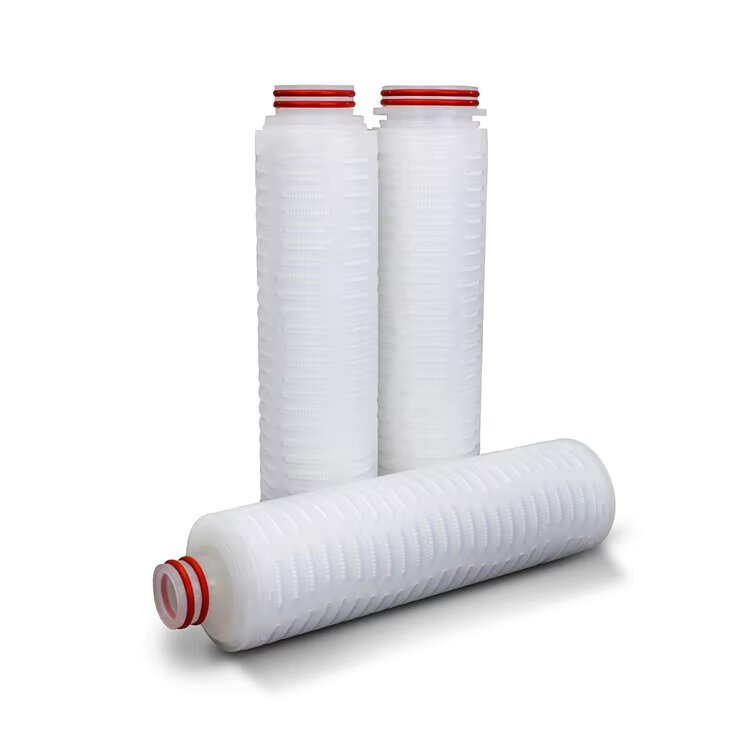
Among MF solutions, PP pleated filter cartridges are commonly selected for pretreatment due to their structural and operational advantages:
Uniform pore-size distribution
High dirt-holding capacity
Low pressure drop
Chemical compatibility with CIP processes
Cost-effective replacement
By using PP pleated microfiltration cartridges, system designers can achieve predictable filtration performance while maintaining operational flexibility.
In practice, these cartridges are not simply consumables, but critical components that determine system reliability.
7. Conclusion
Sand filtration and microfiltration serve fundamentally different purposes in water treatment systems.
Sand filtration reduces bulk contamination
Microfiltration controls particle size and system stability
In modern membrane-based water treatment processes, microfiltration is an essential step that bridges traditional pretreatment and high-precision membrane separation.
Understanding this distinction allows engineers, operators, and system designers to build filtration systems that are not only functional, but also reliable, efficient, and economical over the long term.
Recommended Filter Cartridges

 English
 Spanish