
Filter Cartridges for Power Plant Condensate Water Systems: Types, Design and Selection Guide
INTRODUCTION
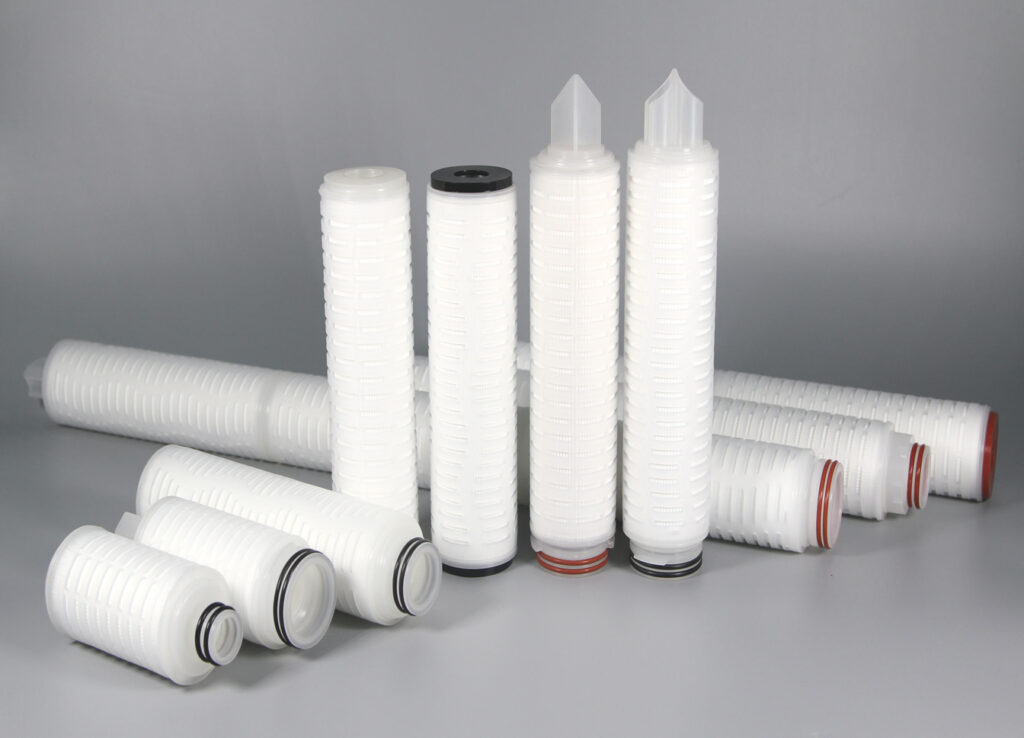
Power plants operate under extremely strict water purity requirements. Even tiny particles in the condensate water system can cause corrosion, reduce heat transfer efficiency, and damage critical equipment such as boilers and turbines. For this reason, filtration plays a crucial role in maintaining the reliability and safety of condensate systems.
Filter cartridges used in power plant condensate water systems are specifically designed to remove iron oxides, corrosion particles, and suspended solids generated during the steam condensation process. A properly designed filtration system can significantly extend equipment life, improve water quality, and reduce operational costs.
This article explains the types of filter cartridges used in condensate water systems, how filtration systems are designed, and how to select the right cartridges for optimal performance.
Understanding Power Plant Condensate Water Systems
In a typical power plant, steam leaving the turbine is condensed back into water inside the condenser. This water, known as condensate, is then pumped back into the boiler system for reuse.
However, during this cycle the condensate may contain contaminants such as:
Iron oxide from pipe corrosion
Copper oxide from condenser tubes
Suspended solids and debris
Corrosion products generated in the system
If these particles are not removed efficiently, they may accumulate in the boiler or damage the turbine.
A condensate filtration system is therefore installed to remove these impurities before the water enters the condensate polishing system or the boiler feedwater system.
Typical Condensate Water Filtration Process
A standard condensate filtration process in power plants generally follows this sequence:
Condenser
↓
Condensate Pump
↓
Condensate Filter System
↓
Condensate Polishing System
↓
Boiler Feedwater System
The filtration stage between the condensate pump and polishing system is essential because it removes corrosion particles before they reach sensitive equipment.
Types of Filter Cartridges Used in Condensate Water Systems
Several types of filter cartridges are commonly used in power plant condensate filtration systems. Each type serves a different role depending on the filtration stage and operating conditions.
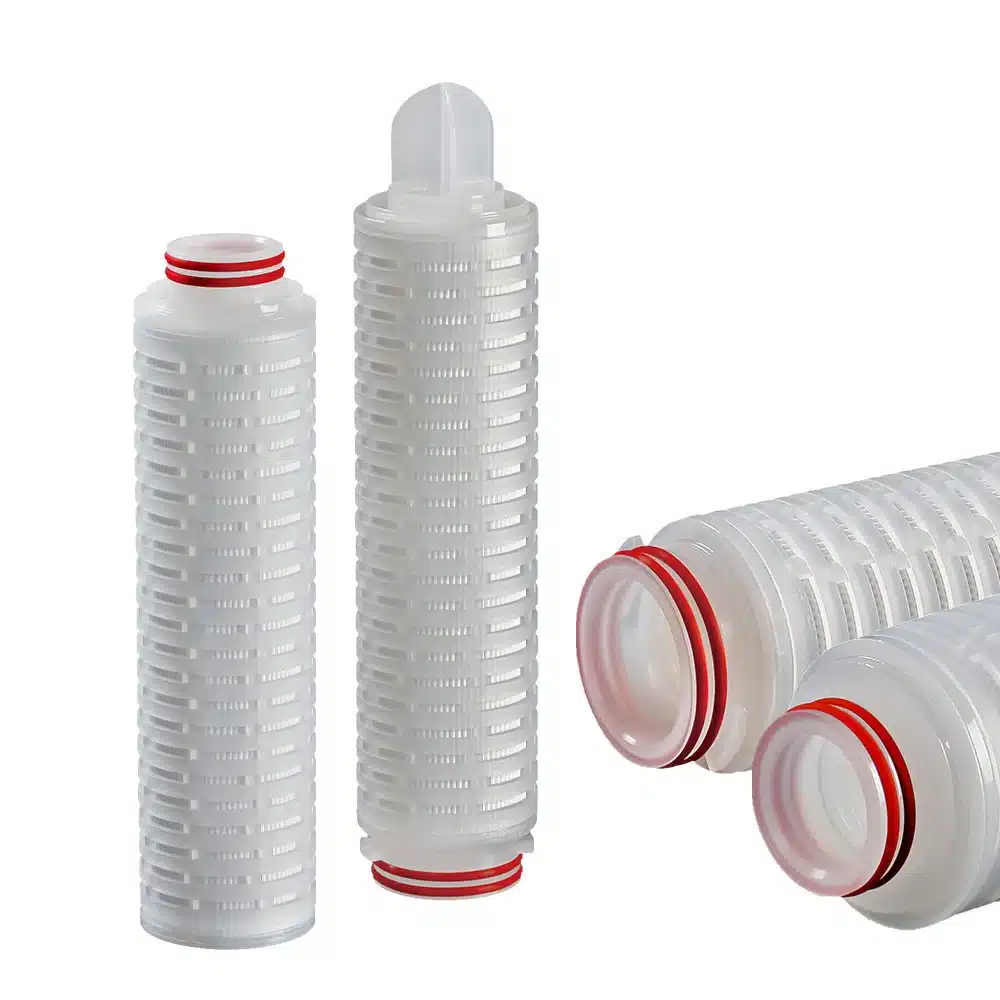
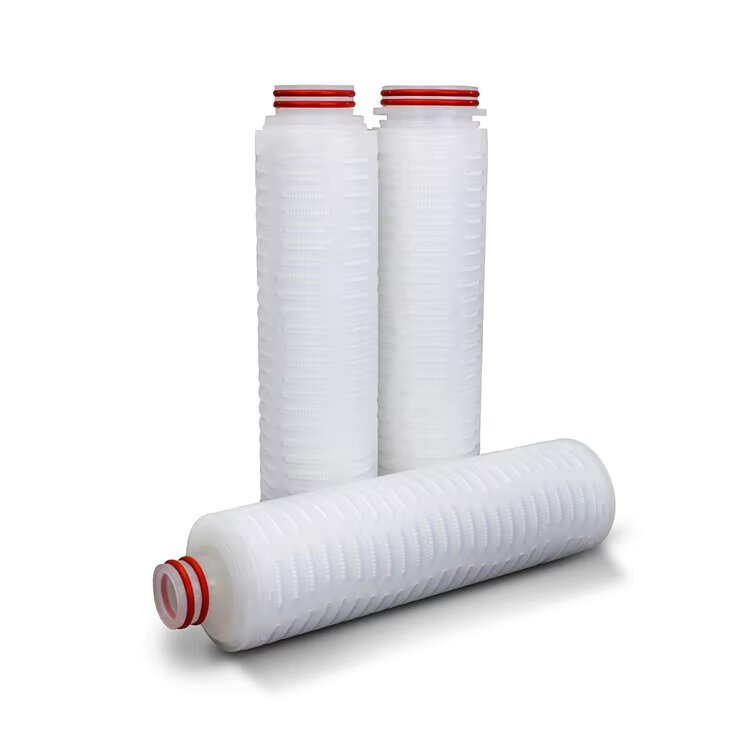
1 Backwashable Pleated Filter Cartridge
Backwashable pleated filter cartridges are the most widely used filters in condensate water systems.
These cartridges feature a pleated structure that provides a large filtration surface area, allowing high flow rates and efficient particle removal.
Key Features
Large filtration area due to pleated design
Low pressure drop
High flow capacity
Backwashable design for extended service life
Resistant to high temperature condensate water
Typical Specifications
| Parameter | Value |
|---|---|
| Filtration rating | 1–10 μm |
| Cartridge length | 60″ or 70″ |
| Material | Polypropylene |
| Flow rate | 2–5 m³/h per cartridge |
Application
These cartridges are mainly installed in the primary condensate filtration system to remove corrosion products such as iron oxide.
2 String Wound Filter Cartridge
String wound filter cartridges are depth filters made by winding yarn around a core in a precise pattern.
They are widely used in power plants because of their high dirt-holding capacity and strong structural stability.
Advantages
High contaminant holding capacity
Deep filtration structure
Stable performance at high temperatures
Cost-effective solution
Typical Filtration Ratings
1 μm
5 μm
10 μm
Application
String wound cartridges are often used in:
Condensate polishing systems
Pre-filtration stages
Removal of corrosion particles and suspended solids
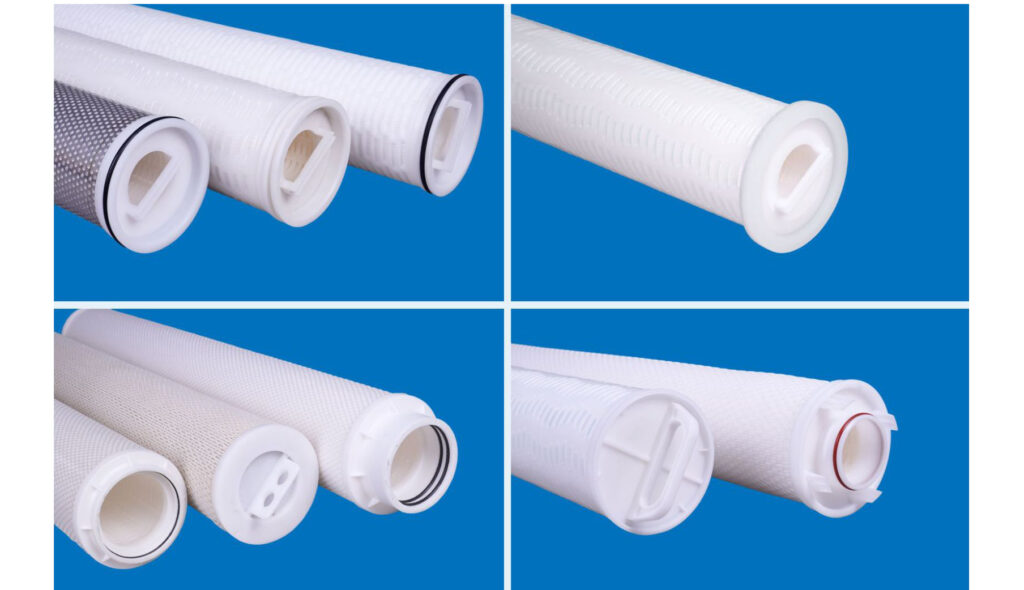
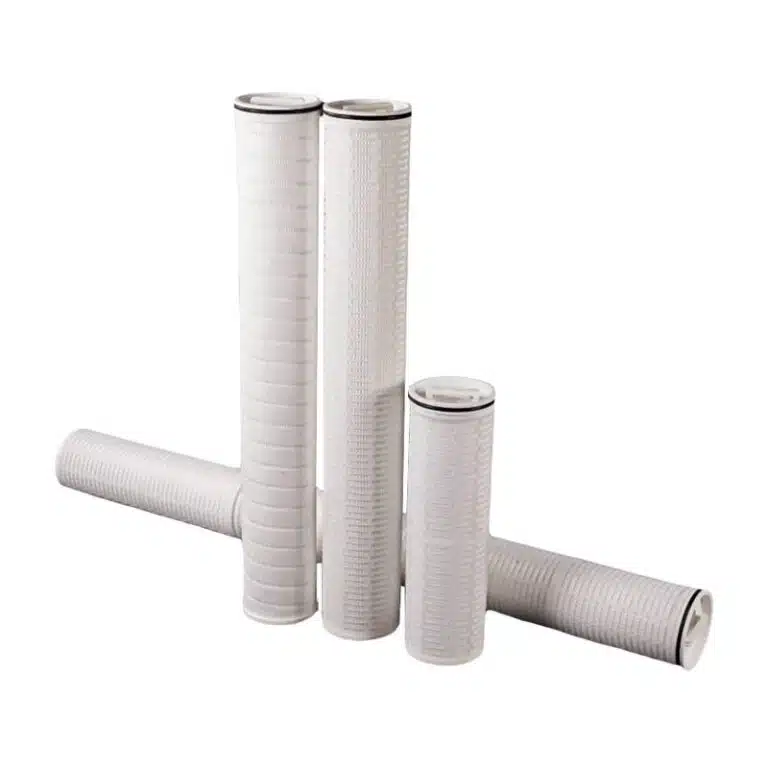
3 High Flow Filter Cartridge
High flow filter cartridges are designed for systems that require extremely high flow rates with minimal space.
Instead of using dozens of standard cartridges, a high flow cartridge can replace multiple conventional filters.
Key Characteristics
Large diameter design
High filtration area
Low pressure drop
Easy replacement
Benefits for Power Plants
Reduced number of cartridges
Lower maintenance costs
Improved filtration efficiency
These cartridges are commonly used in large power plants where condensate flow rates are very high.
4 Glass Fiber Depth Filter Cartridge
Glass fiber filter cartridges are used for high-efficiency fine filtration.
They are particularly effective at removing extremely fine particles that cannot be captured by standard filters.
Features
High filtration efficiency
Excellent particle retention
Stable performance under high temperature conditions
Filtration Range
0.5–5 μm
Application
Glass fiber cartridges are typically used in the final filtration stage before the condensate polishing system.
Typical Filter Cartridge Configuration for Condensate Systems
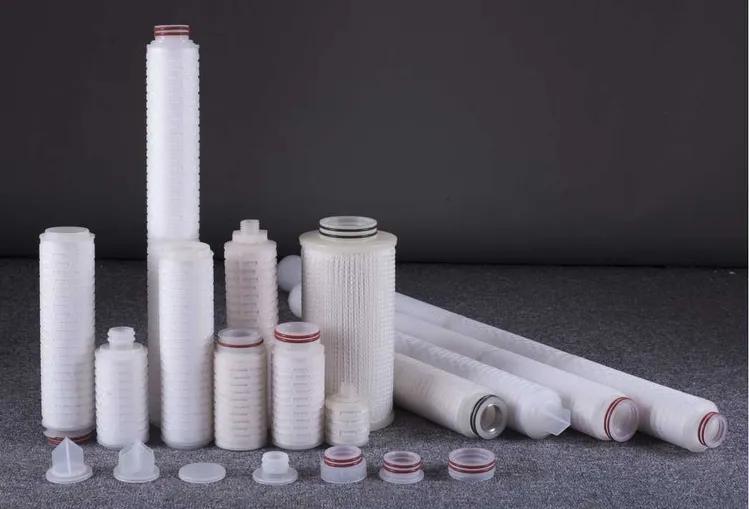
A well-designed condensate filtration system often uses multiple filtration stages.
Below is a typical configuration used in many power plants.
| Filtration Stage | Filter Type | Micron Rating | Purpose |
|---|---|---|---|
| Pre-filtration | PP pleated filter cartridge | 10 μm | Remove large particles |
| Main filtration | Backwashable pleated cartridge | 3–5 μm | Remove corrosion products |
| Fine filtration | Glass fiber filter cartridge | 1 μm | Remove fine particles |
This multi-stage filtration design improves filtration efficiency and extends the life of downstream equipment.
Key Design Factors for Condensate Filtration Systems
Designing a condensate filtration system requires careful consideration of several important factors.
Filtration Accuracy
Most condensate filtration systems operate within the following micron ratings:
1 μm to 5 μm
This range provides an optimal balance between filtration efficiency and system pressure drop.
Cartridge Length
Power plant systems often use long cartridges such as:
60 inch
70 inch
Long cartridges reduce the number of filters required and improve flow capacity.
Operating Temperature
Condensate water temperature is usually between:
60°C and 85°C
Therefore, filter materials must withstand high temperature conditions without deformation.
Flow Rate
Typical flow rate per cartridge:
2–5 m³/h
This depends on the filtration rating and system design.
Backwash Capability
Backwashable filter cartridges are widely used in power plants because they can be cleaned and reused.
Benefits include:
Longer service life
Lower replacement cost
Reduced system downtime
Contaminants Removed in Condensate Filtration
The primary purpose of condensate filtration is to remove corrosion products that may damage downstream equipment.
Common contaminants include:
| Contaminant | Source |
|---|---|
| Iron oxide | Pipe corrosion |
| Copper oxide | Heat exchanger tubes |
| Suspended solids | System deposits |
| Corrosion particles | Equipment wear |
Efficient filtration can remove more than 98% of these contaminants, ensuring safe operation of the boiler and turbine systems.
Advantages of Proper Condensate Water Filtration
Installing a well-designed filtration system provides several benefits for power plant operation.
Improved Water Quality
Effective filtration removes corrosion particles and improves overall condensate purity.
Protection of Critical Equipment
Filters protect boilers, turbines, pumps, and heat exchangers from particle damage.
Reduced Maintenance Costs
Clean water reduces scaling and corrosion, lowering maintenance expenses.
Increased System Efficiency
Removing particles improves heat transfer efficiency and overall plant performance.
How to Choose the Right Filter Cartridge for Power Plant Systems
Selecting the correct filter cartridge depends on several factors:
Water Quality
The concentration of iron oxide and suspended solids determines the filtration rating required.
System Flow Rate
Large power plants often require high flow filter cartridges.
Operating Conditions
Temperature and pressure must be compatible with filter materials.
Maintenance Requirements
Backwashable filters are ideal for systems that require long service life and reduced downtime.
Conclusion
Filtration plays a critical role in maintaining the performance and reliability of power plant condensate water systems. By removing corrosion particles, suspended solids, and metal oxides, filter cartridges protect critical equipment and ensure high water purity.
Commonly used filter cartridges include pleated filter cartridges, string wound filters, high flow cartridges, and glass fiber depth filters. A properly designed multi-stage filtration system can significantly improve condensate quality and extend the service life of boilers, turbines, and polishing units.
When selecting filter cartridges for power plant condensate systems, engineers should carefully evaluate filtration accuracy, flow rate, temperature resistance, and maintenance requirements.
With the right filtration solution, power plants can achieve safer operation, lower maintenance costs, and higher overall efficiency.
Recommended Filter Cartridges
 English
 Spanish