
Filter Cartridges for Thermal Power Plant Boiler Water Systems
INTRODUCTION
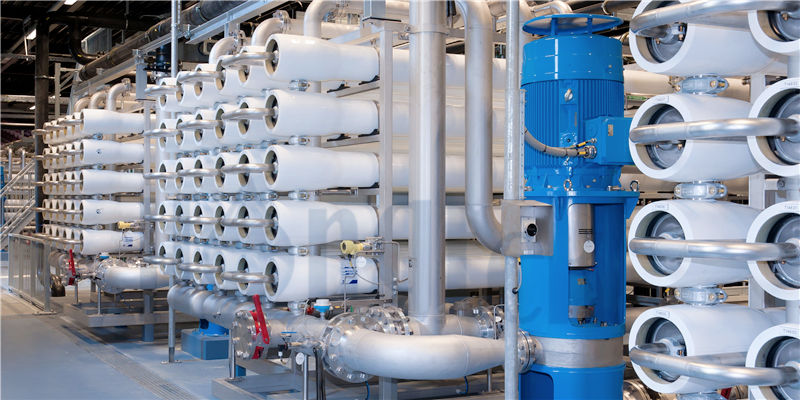
Efficient water treatment is essential for the reliable operation of modern thermal power plants. Boilers operate under extremely high temperatures and pressures, and even small amounts of contaminants in the feedwater can lead to serious problems such as scaling, corrosion, turbine damage, and reduced efficiency. For this reason, filtration plays a critical role in maintaining water purity throughout the power generation process.
In a typical Thermal Power Plant Boiler Water Treatment system, multiple filtration stages are used to remove suspended solids, corrosion products, and microscopic particles. Different types of filter cartridges are installed at various stages of the water treatment process to ensure that boiler feedwater meets strict quality standards.
This article explains the filtration requirements of boiler water systems in thermal power plants and provides guidance on how to choose the right filter cartridges for each stage of the process.
Why Filtration Is Critical in Boiler Water Systems
Boiler systems require extremely clean water to operate safely and efficiently. Contaminants present in untreated water can create several operational problems.
Scaling and Deposits
Minerals and suspended particles can accumulate on boiler tubes, forming scale that reduces heat transfer efficiency. Over time, scale buildup can cause overheating and equipment failure.
Corrosion
Iron particles and dissolved oxygen can accelerate corrosion in pipelines and heat exchangers. Corrosion products may circulate through the system and damage pumps, valves, and turbines.
Turbine Damage
Impurities carried by steam may reach the turbine blades, leading to erosion and reduced turbine performance.
Reduced System Efficiency
Contaminated water reduces heat transfer efficiency and increases energy consumption, which directly affects power plant operating costs.
Because of these risks, filtration systems are installed throughout the boiler water treatment process to maintain high water purity.
Boiler Water Treatment Process in Thermal Power Plants
The water treatment process in a thermal power plant typically includes several stages:
Raw water pretreatment
Activated carbon filtration
Reverse osmosis (RO) purification
Condensate recovery filtration
Boiler feedwater polishing
Steam and gas filtration
Each stage has specific filtration requirements and uses different types of filter cartridges.
Raw Water Pretreatment Filtration
The first step in boiler water treatment is removing large suspended solids from the raw water supply. Raw water may contain sand, rust, organic debris, and other particulate contaminants.
Pre-filtration helps protect downstream treatment equipment such as multimedia filters, ion exchange units, and reverse osmosis membranes.
Common Filter Cartridges
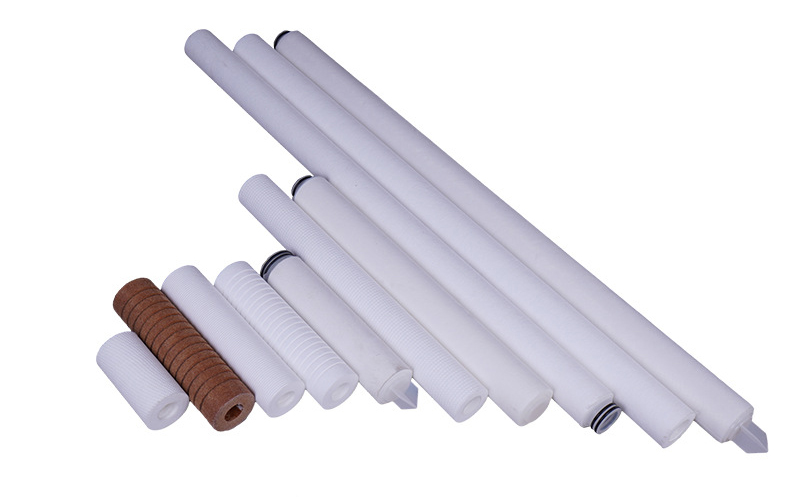
Typical cartridge types used for raw water pretreatment include:
These depth-type filters are designed to capture large particles and handle high dirt loads.
Typical Filtration Rating
10–50 microns
Benefits
Removes suspended solids
Reduces turbidity
Protects downstream equipment
Extends service life of fine filters
Pre-filtration is essential for maintaining stable operation in large-scale power plant water treatment systems.
RO System Protection Filtration
Many thermal power plants use reverse osmosis systems to produce high-purity water for boiler feed. RO membranes are extremely sensitive to particulate contamination.
To protect RO membranes, fine filtration is installed before the RO system.
Recommended Cartridge Types
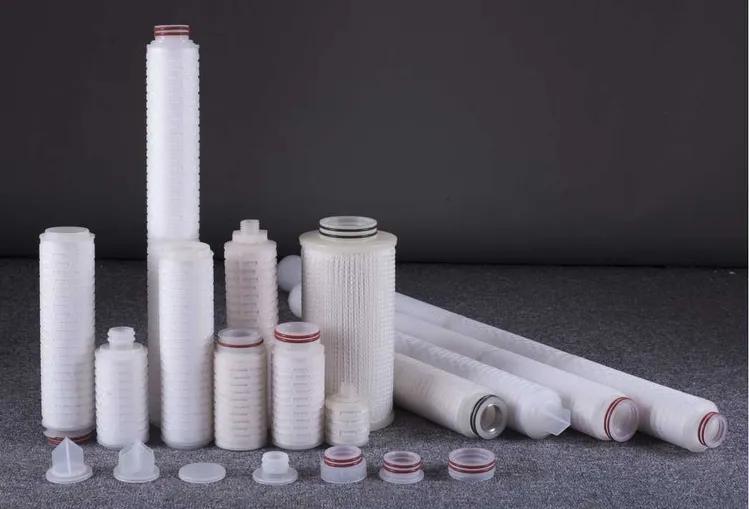
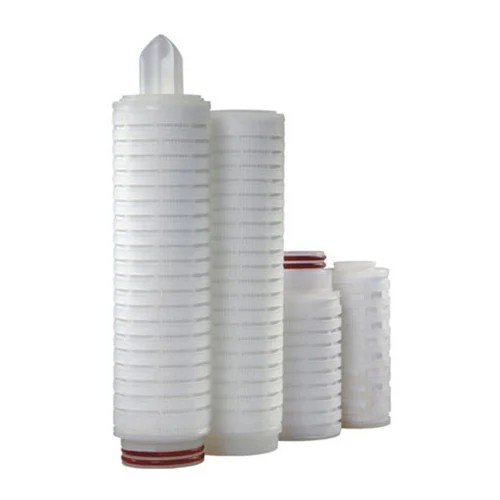
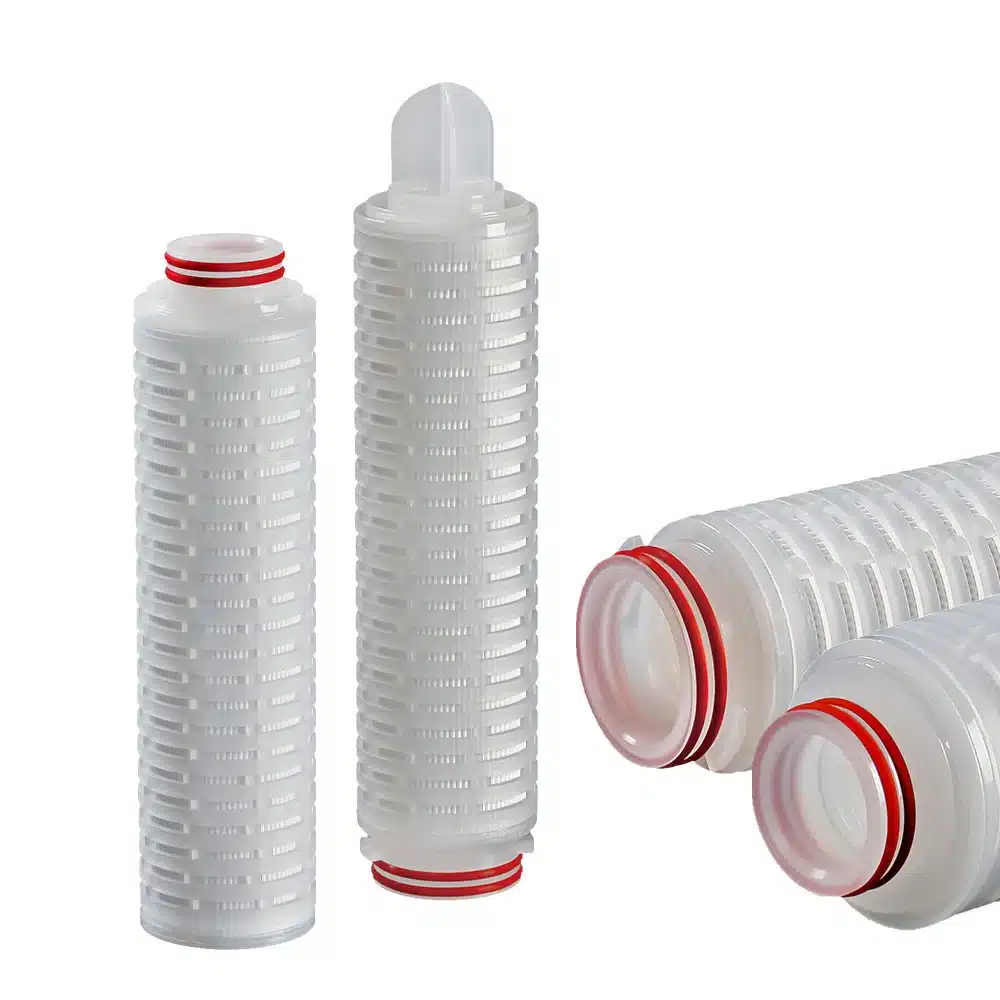
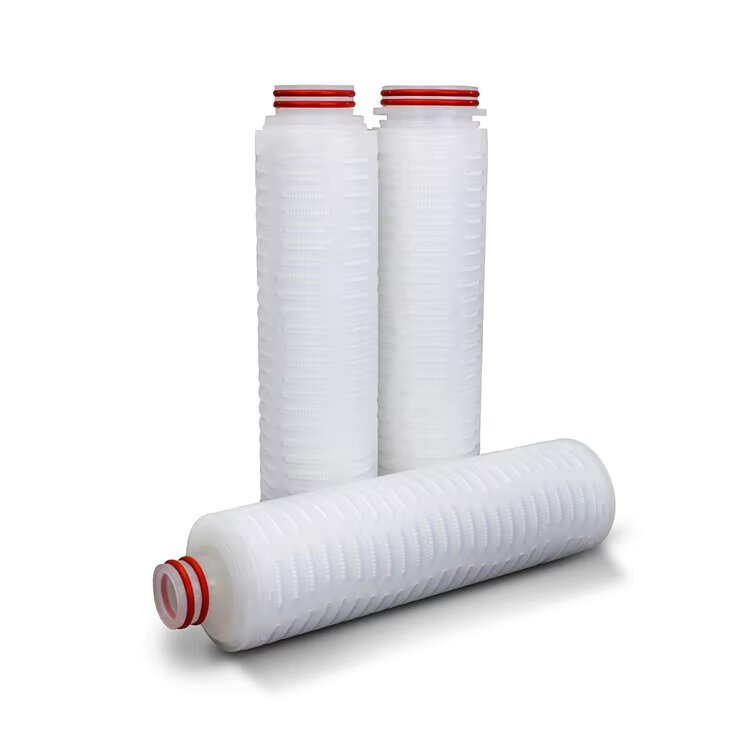
PP Pleated Filter Cartridge
Glass Fiber Filter Cartridge
Typical Filtration Rating
1–5 microns
Advantages
Prevents membrane fouling
Improves RO efficiency
Extends membrane lifespan
Reduces maintenance costs
Pleated filter cartridges are often preferred because they provide large filtration surface areas and lower pressure drops compared with depth filters.
Condensate Water Filtration
In steam power plants, a large portion of water is recovered as condensate after the steam condenses in the turbine condenser. Although condensate water is relatively clean, it may still contain corrosion products such as iron oxide particles.
To remove these particles, condensate filtration systems are installed.
This process is part of the Power Plant Condensate Water System used in most large thermal power plants.
Common Filter Cartridge Types
Glass Fiber Filter Cartridge
Filtration Rating
1–10 microns
Purpose
Remove corrosion products
Remove iron oxide particles
Maintain water purity in the condensate return system
High flow filter cartridges are widely used in power plants because they can handle large volumes of water with fewer cartridges and lower pressure drop.
Boiler Feedwater Polishing Filtration
Before water enters the boiler, additional polishing filtration may be required to remove extremely fine particles.
Even small particles can deposit on boiler tubes and reduce heat transfer efficiency.
Recommended Filter Cartridge Types
PES Membrane Filter Cartridge
Nylon Membrane Filter Cartridge
Glass Fiber Filter Cartridge
Typical Filtration Rating
0.45–1 micron
Key Functions
Remove fine particles
Improve water clarity
Prevent boiler scaling and deposits
Membrane pleated filters provide precise filtration performance and stable particle removal efficiency.
Steam and Gas Filtration
Steam and compressed gases used in power plant systems may contain oil mist, particles, or microorganisms. Gas filtration helps protect sensitive equipment and maintain system cleanliness.
Recommended Cartridge Type
Typical Filtration Rating
0.01–0.22 microns
Benefits
Removes oil aerosols
Eliminates particles
Prevents contamination in steam and gas lines
Hydrophobic PTFE membranes are ideal for gas filtration because they repel water while allowing gas to pass through efficiently.
Typical Filter Cartridge Configuration in Boiler Water Systems
A typical thermal power plant filtration system may include the following configuration:
| Process Stage | Filter Cartridge Type | Filtration Rating |
|---|---|---|
| Raw Water Pretreatment | PP Melt Blown / String Wound | 10–50 μm |
| RO Protection Filtration | PP Pleated / Glass Fiber | 1–5 μm |
| Condensate Filtration | PP Pleated / High Flow | 1–10 μm |
| Feedwater Polishing | PES / Nylon / Glass Fiber | 0.45–1 μm |
| Steam & Gas Filtration | PTFE | 0.01–0.22 μm |
This multi-stage filtration approach ensures that water entering the boiler system meets strict purity requirements.
Key Factors When Choosing Filter Cartridges for Power Plants
Selecting the correct filter cartridge is essential for maintaining stable power plant operation.
High Flow Capacity
Power plant water treatment systems process very large volumes of water. Filters must support high flow rates without excessive pressure drop.
Large diameter pleated filters and high flow cartridges are commonly used for this purpose.
High Dirt Holding Capacity
Water systems in power plants often contain corrosion products and suspended solids. Filters with high dirt holding capacity reduce replacement frequency and maintenance costs.
Temperature Resistance
Boiler systems operate at elevated temperatures. Filter materials must maintain structural integrity and performance under high-temperature conditions.
Chemical Compatibility
Filter materials must be compatible with treatment chemicals used in power plant water systems, such as:
Oxygen scavengers
Corrosion inhibitors
Cleaning chemicals
Low Pressure Drop
Low pressure drop reduces energy consumption and ensures stable water flow throughout the system.
Advantages of Pleated Filter Cartridges in Power Plant Applications
Pleated filter cartridges are widely used in thermal power plant filtration systems because they offer several advantages.
Larger Filtration Surface Area
Pleated structures provide significantly larger filtration areas compared with depth filters, which improves flow capacity.
Longer Service Life
Because of their larger surface area and higher dirt holding capacity, pleated filters typically last longer before replacement is required.
Lower Operating Costs
Longer service life and lower pressure drop reduce operational and maintenance costs.
Consistent Filtration Efficiency
Pleated membrane filters provide reliable and stable filtration performance, which is critical for protecting boilers and turbines.
Conclusion
Reliable filtration is a critical component of the Thermal Power Plant Boiler Water Treatment process. Without effective filtration, contaminants can cause scaling, corrosion, and equipment damage in boiler systems.
Thermal power plants typically use a multi-stage filtration system that includes:
Raw water pre-filtration
RO protection filtration
Condensate filtration
Boiler feedwater polishing
Steam and gas filtration
Common filter cartridges used in these systems include melt blown filters, pleated filters, membrane filters, and PTFE gas filters.
By selecting the correct filter cartridge type, filtration rating, and system configuration, power plant operators can improve equipment reliability, reduce maintenance costs, and ensure efficient power generation.
A well-designed filtration system not only protects critical equipment but also contributes to the long-term performance and stability of the entire power plant.
Boiler Water Filtration FAQ
What filters are used in thermal power plant boiler water systems?
Thermal power plants typically use several types of filter cartridges, including PP melt blown filters, pleated filter cartridges, glass fiber filters, membrane filters, and PTFE gas filters. These filters remove suspended solids, corrosion particles, and contaminants from boiler feedwater and condensate systems.
Why is filtration important for boiler feedwater?
Filtration removes suspended particles and corrosion products that could cause scaling, fouling, or damage to boiler tubes and turbines. Clean feedwater improves heat transfer efficiency and extends equipment life.
What micron rating is used for boiler water filtration?
Typical filtration ratings in boiler water systems include:
10–50 μm for raw water pre-filtration
1–5 μm for RO protection filtration
1–10 μm for condensate filtration
0.45–1 μm for feedwater polishing
What filter cartridges are used for condensate water filtration?
Condensate water systems often use pleated filter cartridges, glass fiber filter cartridges, or high flow filter cartridges to remove iron oxide and corrosion particles from recovered condensate.
How do pleated filter cartridges improve power plant filtration?
Pleated filter cartridges provide a larger filtration surface area, which allows higher flow rates, longer service life, and lower pressure drop compared with traditional depth filters.
What causes contamination in boiler water systems?
Common contamination sources include:
corrosion products from pipelines
suspended particles in raw water
iron oxide from condensate systems
scale-forming minerals
What is feedwater polishing filtration?
Feedwater polishing is the final filtration stage before water enters the boiler. It removes extremely fine particles to ensure high-purity boiler feedwater.
What filters protect RO membranes in power plants?
Pleated filter cartridges or glass fiber filters with a filtration rating of 1–5 microns are typically used to protect RO membranes from particulate fouling.
Why are high flow filter cartridges used in power plants?
High flow cartridges handle large volumes of water while reducing the number of filter elements required, which lowers maintenance costs and simplifies system operation.
What materials are commonly used in power plant filter cartridges?
Common filter materials include:
polypropylene (PP)
glass fiber
PES membrane
nylon membrane
PTFE membrane
These materials provide high filtration efficiency and chemical compatibility with power plant water treatment systems.
Recommended Filter Cartridges

 English
 Spanish