
Process Chemicals Filter Cartridges for the Microelectronics Industry
INTRODUCTION
The Microelectronics Industry is one of the most demanding industrial sectors when it comes to liquid filtration. Semiconductor manufacturing processes require extremely high purity chemicals and liquids. Even a tiny particle or trace contamination can cause wafer defects, reduce production yield, or damage expensive processing equipment.
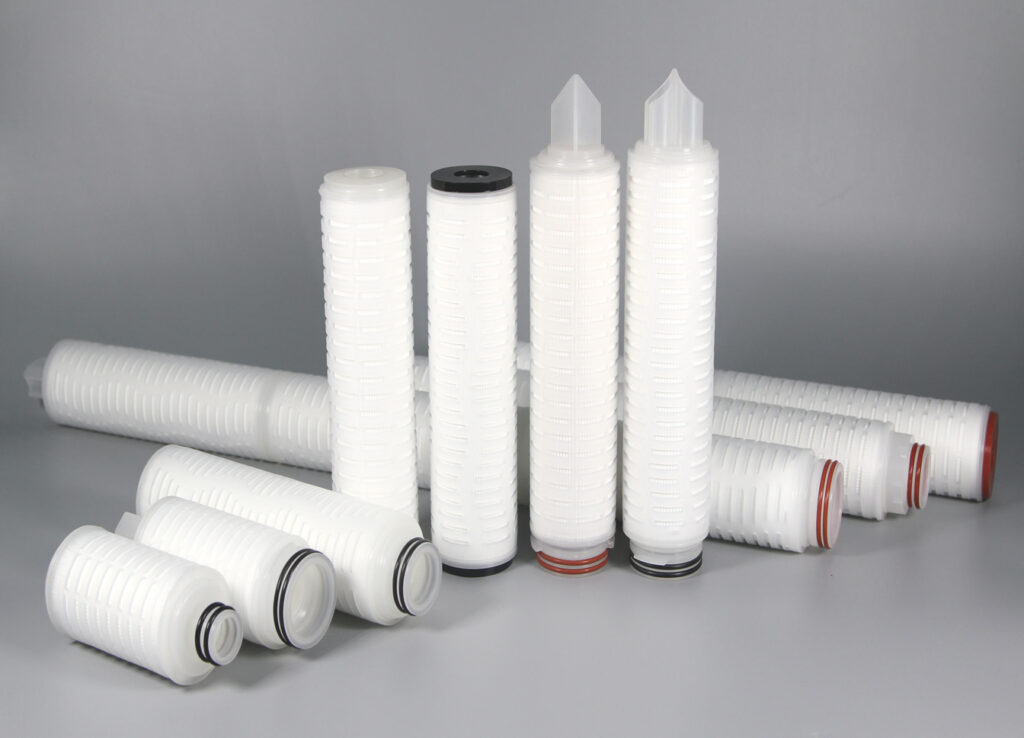
In semiconductor fabrication plants, also known as fabs, a wide range of process chemicals are used, including acids, solvents, developers, and ultra-pure water. To ensure these chemicals remain free from particles, organic contaminants, and metal ions, advanced filter cartridges are installed throughout the chemical supply and distribution systems.
This article explains the main types of filter cartridges used for process chemicals filtration in the microelectronics industry, their typical applications, and key considerations when selecting the right filtration solution.
Why Filtration Is Critical in Semiconductor Chemical Processing
Semiconductor fabrication involves multiple highly sensitive steps such as photolithography, etching, cleaning, and chemical mechanical polishing. These processes rely on extremely pure chemicals.
Common contaminants that must be removed include:
Submicron particles
Gel particles from chemicals
Metal ions
Organic contaminants
Microbubbles
Even particles smaller than 0.1 μm can cause circuit defects on advanced semiconductor wafers.
Because of this, chemical filtration systems in semiconductor facilities are designed to meet extremely strict cleanliness standards defined by organizations such as SEMI.
High-performance membrane filter cartridges and pre-filtration cartridges are widely used to achieve the required purity.
Common Process Chemicals Used in Semiconductor Manufacturing
The microelectronics industry uses a wide range of aggressive chemicals, including:
Hydrofluoric acid (HF)
Sulfuric acid (H₂SO₄)
Nitric acid (HNO₃)
Hydrochloric acid (HCl)
Ammonium hydroxide (NH₄OH)
Hydrogen peroxide (H₂O₂)
Isopropyl alcohol (IPA)
Photoresist chemicals
Developers
Organic solvents
Each chemical requires a filtration solution that offers excellent chemical compatibility, high purity materials, and extremely low extractables.
Main Filter Cartridges Used for Process Chemicals Filtration
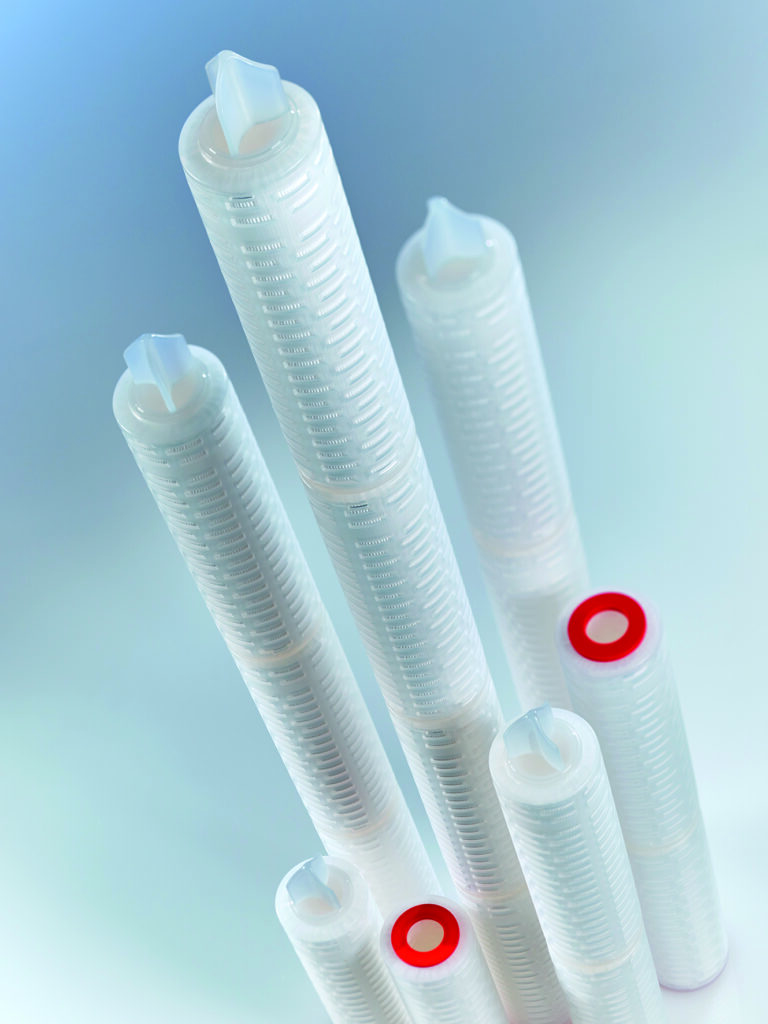
Several types of filter cartridges are commonly used in semiconductor chemical filtration systems. Each material provides unique advantages depending on the chemical environment and filtration requirements.
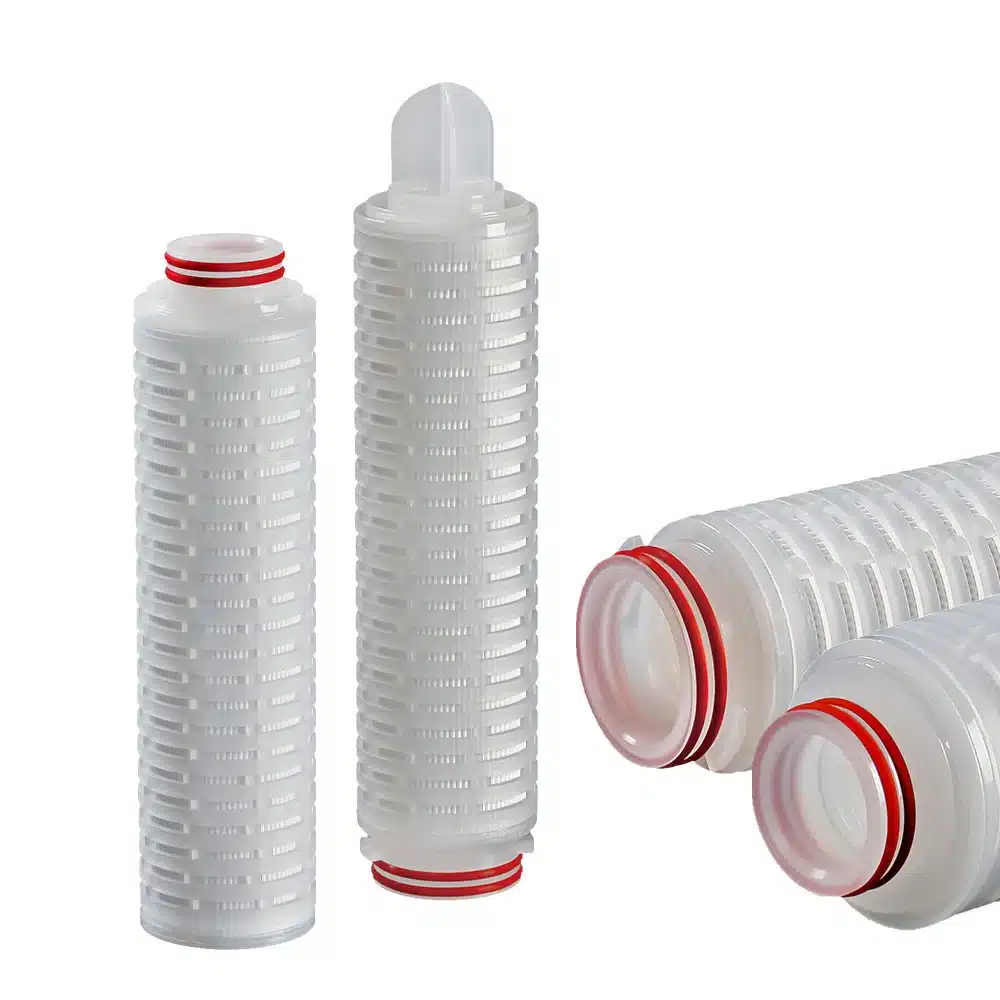
1. PTFE Pleated Filter Cartridge
The PTFE membrane filter cartridge is one of the most widely used filters in semiconductor chemical processing systems.
Key Characteristics
Exceptional chemical resistance
Suitable for strong acids and solvents
Extremely low extractables
High filtration efficiency
Stable structure in aggressive chemicals
PTFE membranes are chemically inert, making them ideal for filtering aggressive semiconductor chemicals.
Typical Applications
PTFE filter cartridges are widely used for filtering:
Photoresist chemicals
Developer solutions
Organic solvents
High purity acids
Process chemical delivery systems
Filtration Accuracy
Typical filtration ratings include:
0.1 μm
0.05 μm
0.02 μm
These ultra-fine ratings are essential for removing microscopic contaminants that could damage semiconductor wafers.
Important Considerations
When selecting PTFE filter cartridges for semiconductor chemicals, several factors must be considered:
Use ultra-high purity PTFE membranes
Ensure low TOC release
Avoid adhesives in construction
Perform 100% integrity testing
TOC levels are closely monitored using Total Organic Carbon analysis to prevent organic contamination.
2. PVDF Membrane Filter Cartridge
PVDF membrane filter cartridges are also commonly used in semiconductor chemical filtration systems.
PVDF offers excellent resistance to strong acids and oxidizing chemicals.
Key Advantages
High mechanical strength
Good chemical compatibility
Excellent flow performance
Low particle shedding
Typical Applications
PVDF filters are commonly used for:
Sulfuric acid filtration
Nitric acid filtration
Hydrogen peroxide filtration
High purity chemical distribution systems
Important Considerations
When selecting PVDF filter cartridges:
Hydrophilic PVDF membranes are often preferred
Materials must meet semiconductor purity standards
Metal ion release must be extremely low
3. Nylon Membrane Filter Cartridge
Nylon membrane filters are widely used in applications involving organic solvents and less aggressive chemicals.
Key Features
Naturally hydrophilic membrane
High mechanical strength
Good compatibility with many solvents
Typical Applications
Nylon filter cartridges are commonly used for:
Solvent filtration
Photoresist filtration
Chemical blending systems
Laboratory chemical preparation
Important Considerations
Although nylon membranes perform well with many solvents, they are not suitable for all chemicals.
Limitations include:
Not recommended for strong acids
Limited resistance to strong oxidizers
Chemical compatibility testing is required
4. PES Membrane Filter Cartridge
PES membrane filters are frequently used in high-purity liquid filtration.
PES membranes provide excellent flow performance and low adsorption properties.
Key Advantages
High permeability
Low pressure drop
Low protein binding
Stable filtration efficiency
Typical Applications
PES filter cartridges are often used for:
Diluted chemicals
Ultra-pure water systems
Chemical preparation processes
Semiconductor cleaning solutions
Important Considerations
PES membranes have some chemical limitations:
Not suitable for strong organic solvents
Maximum operating temperature usually below 80°C
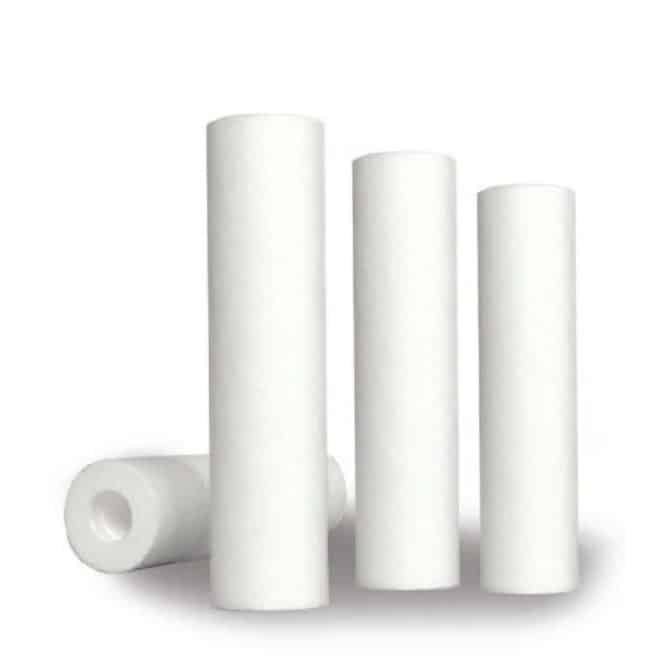
5. PP Pleated Filter Cartridge (Pre-Filtration)
Polypropylene pleated filter cartridges are widely used as pre-filters in semiconductor chemical filtration systems.
Pre-filtration plays a critical role in protecting expensive membrane filters.
Key Features
High dirt holding capacity
Excellent chemical compatibility
Cost-effective filtration
High flow rate
Typical Applications
PP pleated filter cartridges are commonly used for:
Bulk chemical filtration
Chemical storage tank filtration
Pre-filtration before membrane filters
Ultra-pure water pre-treatment
Typical Filtration Ratings
1 μm
5 μm
10 μm
Important Considerations
Although PP filters are effective pre-filters, they cannot replace membrane filtration for final particle removal.
Low particle shedding is critical for semiconductor applications.
6. High Flow Filter Cartridge
High flow filter cartridges are designed for large-volume chemical filtration systems.
These filters can handle significantly higher flow rates compared with standard filter cartridges.
Key Advantages
Large filtration surface area
Reduced number of filter cartridges
Lower system maintenance
Lower pressure drop
Typical Applications
High flow filter cartridges are commonly used in:
Bulk chemical delivery systems
Central chemical supply systems
Semiconductor chemical distribution networks
Important Considerations
High flow filters must be manufactured with extremely clean materials to prevent contamination.
Fiber shedding and extractables must be minimized.
Typical Filtration Ratings in Semiconductor Chemical Systems
Different stages of semiconductor chemical filtration require different filtration ratings.
| Process Stage | Typical Filtration Rating |
|---|---|
| Bulk chemical filtration | 1 – 5 μm |
| Chemical distribution system | 0.2 – 0.45 μm |
| Point-of-use filtration | 0.05 – 0.1 μm |
| Photolithography chemicals | 0.02 – 0.05 μm |
The final filtration stage is often installed directly before the semiconductor processing equipment to ensure maximum chemical purity.
Key Requirements for Microelectronics Chemical Filtration
Chemical filtration systems used in semiconductor manufacturing must meet extremely strict requirements.
Ultra-Low Particle Release
Particles must be strictly controlled to avoid wafer defects.
Typical semiconductor filtration standards require:
Less than 10 particles per ml at 0.1 μm
Ultra-Low Metal Ion Contamination
Metal ions such as:
Sodium (Na)
Iron (Fe)
Copper (Cu)
Zinc (Zn)
must be controlled to extremely low levels to avoid electrical defects in semiconductor devices.
Low Organic Contamination
Organic contamination is monitored through Total Organic Carbon (TOC) measurements.
High-purity filtration systems typically require:
TOC levels below 10 ppb
High Cleanliness Manufacturing
Filter cartridges for semiconductor chemical filtration must be produced under strict cleanroom conditions.
Typical requirements include:
Cleanroom production environments
Ultra-pure water rinsing
Double clean packaging
Particle testing before shipment
Typical Semiconductor Chemical Filtration System
A typical semiconductor chemical filtration system includes multiple filtration stages.
Chemical storage tanks supply chemicals to the filtration system before they reach process tools.
Typical configuration:
│
Pre-Filter (1–5 μm PP Filter Cartridge)
│
Membrane Filter (0.1–0.2 μm PTFE or PVDF)
│
Point-of-Use Filter (0.02–0.05 μm PTFE)
│
Semiconductor Processing Equipment
This multi-stage filtration approach ensures that chemicals remain free from contamination throughout the entire delivery system.
Key Factors When Selecting Filter Cartridges for Semiconductor Chemicals
Choosing the right filter cartridge for semiconductor chemical filtration requires careful consideration of several factors.
| Selection Factor | Requirement |
|---|---|
| Chemical compatibility | Must resist strong acids and solvents |
| Filtration accuracy | 0.02 – 0.2 μm |
| Extractables | Extremely low |
| Cleanliness | Semiconductor-grade materials |
| Integrity testing | Required for membrane filters |
Proper filter selection helps ensure stable semiconductor manufacturing processes and protects expensive fabrication equipment.
Conclusion
Process chemical filtration plays a vital role in the Microelectronics Industry. The purity of chemicals directly affects semiconductor yield, device performance, and manufacturing stability.
To achieve the required purity levels, semiconductor filtration systems typically use a combination of:
PTFE membrane filter cartridges
PVDF membrane filter cartridges
Nylon membrane filter cartridges
PES membrane filter cartridges
PP pleated filter cartridges
High flow filter cartridges
By selecting the correct filter materials, filtration ratings, and system configurations, semiconductor manufacturers can maintain ultra-clean chemical processes and ensure the reliability of modern microelectronic devices.
FAQ Questions
1. Why is filtration important in semiconductor chemical processing?
Filtration removes particles, gels, and contaminants from process chemicals. Even sub-micron particles can damage semiconductor wafers and reduce production yield.
2. What filter cartridges are commonly used in semiconductor chemical filtration?
Common filter cartridges include:
PTFE membrane filter cartridges
PVDF membrane filter cartridges
Nylon membrane filter cartridges
PES membrane filter cartridges
PP pleated filter cartridges
These filters provide high purity and chemical compatibility.
3. What micron rating is used for semiconductor chemical filtration?
Typical filtration ratings include:
1–5 μm for pre-filtration
0.2 μm for chemical distribution
0.05–0.1 μm for point-of-use filtration
0.02 μm for photolithography chemicals
4. Why are PTFE filter cartridges widely used in semiconductor filtration?
PTFE membranes provide excellent resistance to strong acids, solvents, and aggressive chemicals, making them ideal for high purity semiconductor processes.
5. What is point-of-use filtration in semiconductor manufacturing?
Point-of-use filtration refers to the final filtration stage installed directly before semiconductor processing equipment to remove ultra-fine particles.
6. What are the purity requirements for semiconductor chemical filtration?
Semiconductor chemical filtration requires:
Ultra-low particle release
Low metal ion contamination
Extremely low extractables
Low organic carbon levels
7. What is TOC in semiconductor filtration?
TOC stands for Total Organic Carbon, which measures organic contamination in liquids. Semiconductor filtration systems require extremely low TOC levels.
8. What materials are suitable for strong acid filtration?
PVDF and PTFE membrane filter cartridges are commonly used for strong acids such as sulfuric acid, nitric acid, and hydrofluoric acid.
9. Why is pre-filtration used in semiconductor filtration systems?
Pre-filters remove larger particles and protect membrane filters, extending filter service life and reducing system maintenance costs.
10. How do filter cartridges improve semiconductor manufacturing yield?
High-efficiency filtration removes microscopic contaminants that can cause wafer defects, improving process stability and manufacturing yield.
View All Our Filter Cartridges

 English
 Spanish