
How to Select Filter Cartridges for Fruit Juice Processing Systems
INTRODUCTION
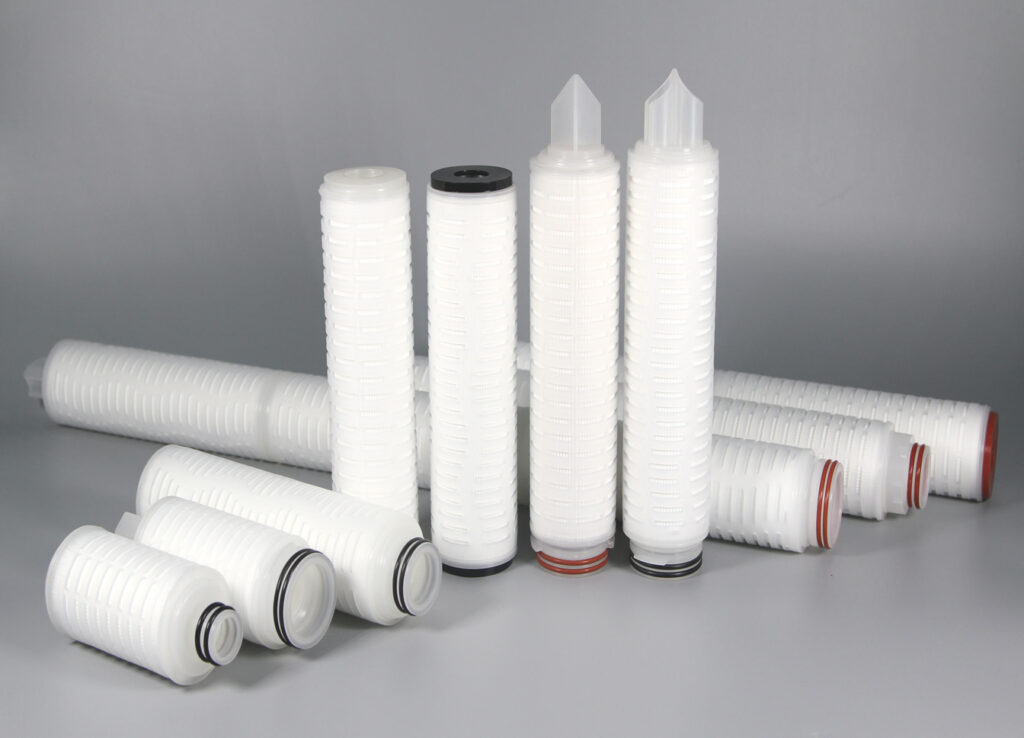
Fruit juice production requires strict filtration to ensure product clarity, taste, shelf life, and microbial safety. During juice processing, different filtration stages are used to remove pulp fibers, suspended solids, microorganisms, and other impurities.
Modern fruit juice filtration systems typically combine depth filter cartridges and membrane pleated filter cartridges to achieve efficient multi-stage filtration.
This article explains which filter cartridges are used in fruit juice processing systems, their functions in each stage, and how to select the right filters for juice manufacturing.
Why Filtration Is Important in Fruit Juice Production
Filtration plays several critical roles in juice manufacturing:
🍊 Remove pulp fibers and solid particles
🍊 Improve juice clarity and appearance
🍊 Prevent sediment formation during storage
🍊 Remove microorganisms and bacteria
🍊 Protect downstream equipment and filling machines
Without proper filtration, fruit juice may appear cloudy, spoil quickly, or develop off-flavors.
Typical Fruit Juice Filtration Process
A typical fruit juice filtration system consists of several filtration stages:
Raw Juice
↓
Coarse Filtration
↓
Clarification Filtration
↓
Fine Filtration
↓
Sterile Filtration
↓
Filling System
Each stage uses a different type of filter cartridge with specific micron ratings.
1. Raw Juice Pre-Filtration
The first filtration stage removes large particles, pulp fibers, and fruit residues from freshly extracted juice.
Recommended Filter Cartridges
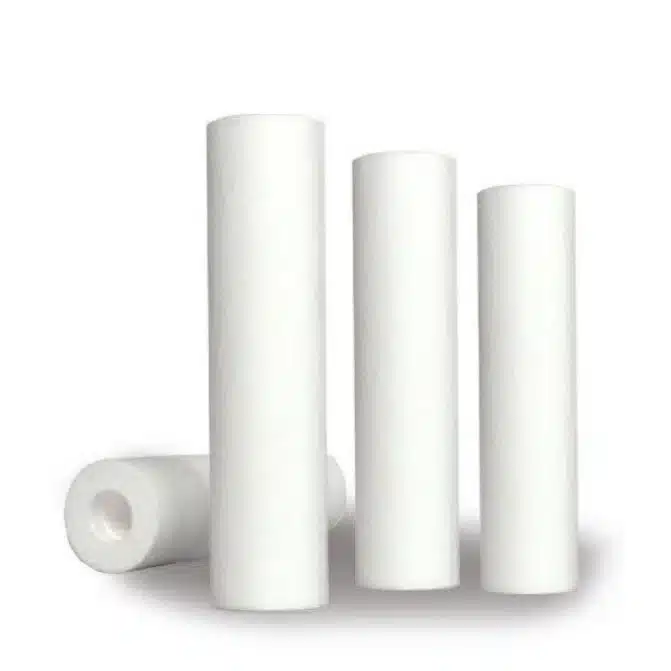
PP Melt Blown Filter Cartridge
Micron Rating
10 – 50 μm
Material
Polypropylene depth filtration media
Features
High dirt holding capacity
Low cost
Suitable for liquids with high suspended solids
Long service life in pre-filtration systems
Typical Applications
Apple juice
Orange juice
Pineapple juice
Mango juice
For raw juice filtration, 30 μm or 50 μm filters are commonly used.
String Wound Filter Cartridge
Micron Rating
5 – 50 μm
Structure
Yarn wound fiber filtration structure
Advantages
Extremely high dirt holding capacity
Excellent resistance to clogging
Ideal for high pulp content liquids
Applications
Unclarified fruit juice
High fiber juices such as mango or peach juice
2. Clarification Filtration
After coarse filtration, clarification filtration removes fine suspended particles and colloids, improving juice transparency.
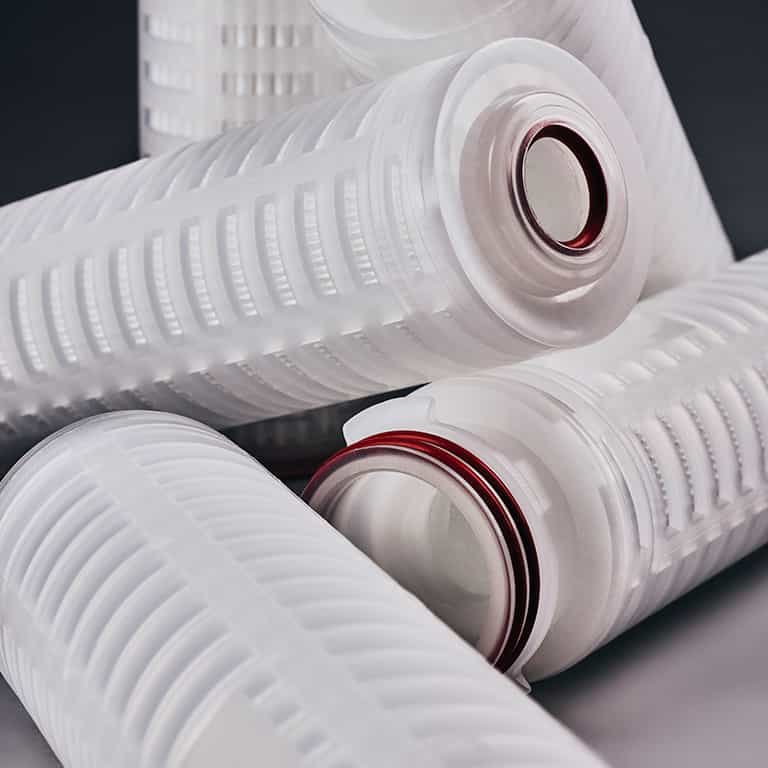
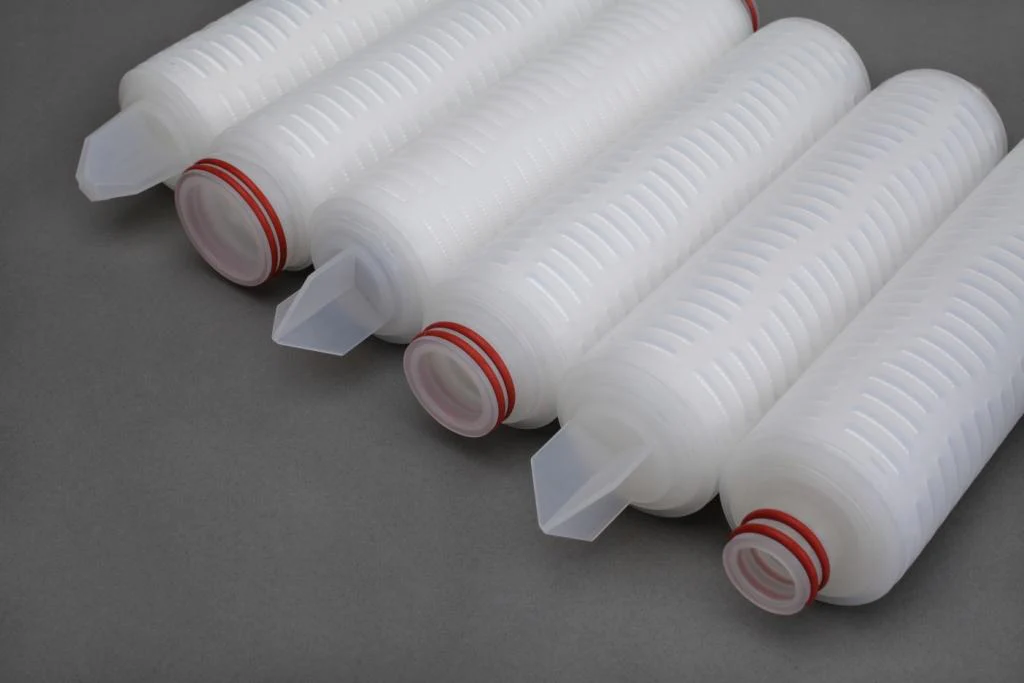
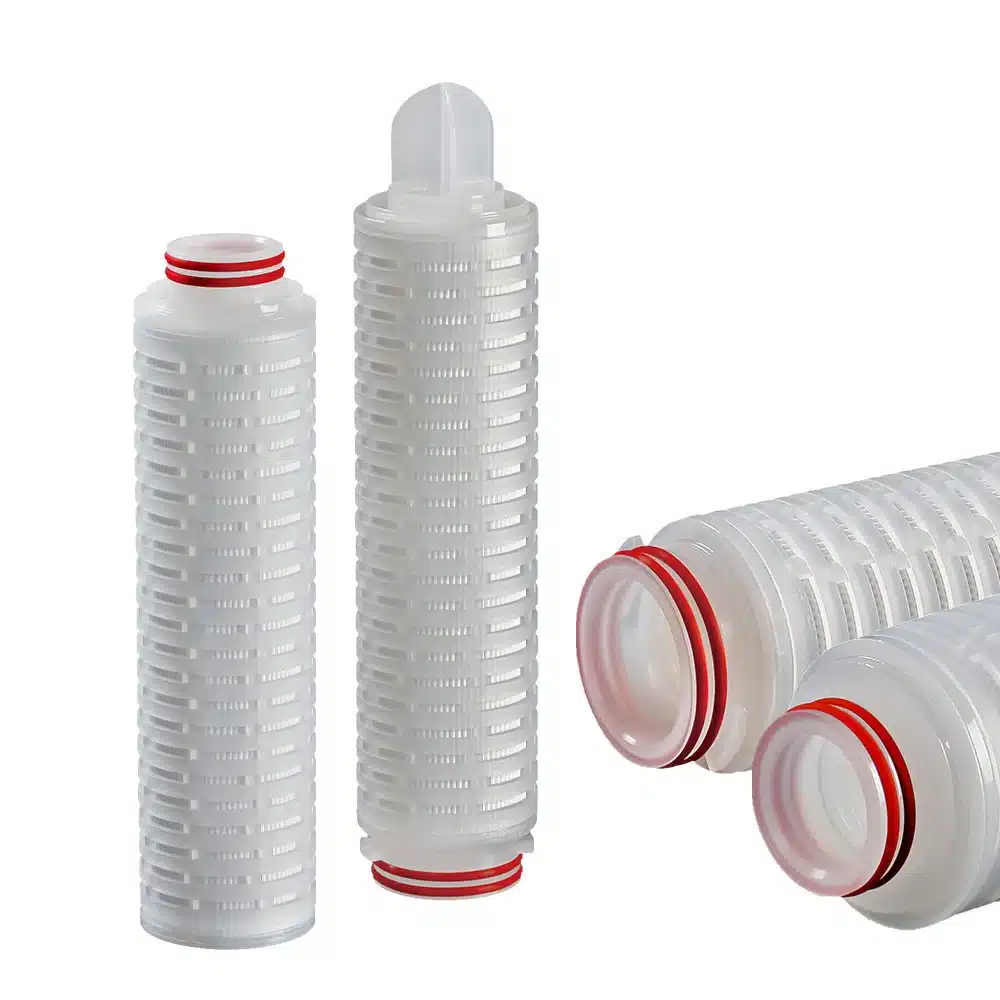
PP Pleated Filter Cartridge
Micron Rating
1 – 10 μm
Key Features
Large filtration surface area
High flow rate
Low pressure drop
Longer service life than depth filters
Applications
Fruit juice clarification
Removal of small pulp particles
Protection of membrane filters
Typical micron ratings used in juice clarification include:
| Juice Type | Recommended Micron |
|---|---|
| Apple juice | 1–5 μm |
| Grape juice | 1–3 μm |
| Citrus juice | 3–10 μm |
3. Fine Filtration
Fine filtration further removes very small particles that may cause turbidity or sediment formation during storage.
PES Membrane Filter Cartridge
Micron Rating
0.45 – 0.8 μm
Advantages
High flow rate
Excellent filtration accuracy
Low protein adsorption
Food-grade materials
Typical Uses
Final clarification before sterile filtration
Removal of yeast and small microorganisms
This stage significantly improves juice stability and appearance.
4. Sterile Filtration
Sterile filtration removes bacteria, yeast, and microorganisms, which helps extend the shelf life of juice products.
PES Sterile Membrane Filter Cartridge
Micron Rating
0.22 μm
Features
High microbial retention efficiency
Steam sterilization capability
FDA compliant materials
Suitable for beverage production
Applications
Cold filling juice systems
NFC juice production
High-quality fruit beverages
Sterile filtration is particularly important for cold-filled juice products without preservatives.
5. Syrup and Ingredient Filtration
Many fruit juice beverages contain sugar syrup, flavor additives, or vitamins. These ingredients must also be filtered before mixing.
Nylon Membrane Filter Cartridge
Micron Rating
0.45 – 1 μm
Advantages
High mechanical strength
Excellent chemical resistance
Suitable for viscous liquids
Applications
Sugar syrup filtration
Flavor additive filtration
Beverage ingredient filtration
6. Water Filtration in Juice Production
Water used in juice processing must be filtered to maintain product quality.
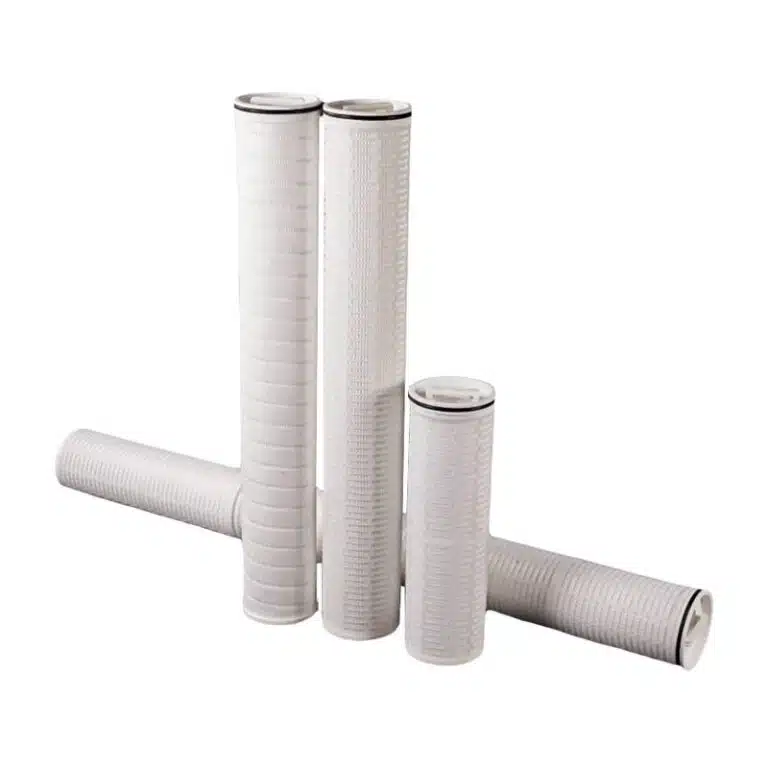
High Flow Filter Cartridge
Micron Rating
5 – 20 μm
Advantages
Large flow capacity
Reduced number of cartridges
Lower operating costs
Typical Applications
Process water filtration
Cleaning water systems
Ingredient water treatment
Typical Fruit Juice Filtration Configuration
A common filtration setup in fruit juice processing plants may include:
| Filtration Stage | Filter Type | Micron Rating |
|---|---|---|
| Raw juice filtration | Melt blown filter | 30–50 μm |
| Secondary filtration | String wound filter | 10–20 μm |
| Clarification | PP pleated filter | 1–5 μm |
| Fine filtration | Membrane filter | 0.45 μm |
| Sterile filtration | PES membrane filter | 0.22 μm |
This multi-stage system ensures efficient particle removal and microbial safety.
Key Considerations When Selecting Filter Cartridges for Juice Processing
1. Food Grade Materials
Filter cartridges must comply with food safety standards such as:
FDA food contact regulations
EU food-grade standards
2. Low Extractables
Filters should not release substances that may affect:
juice taste
aroma
color
3. High Flow Rate
Industrial juice production lines may process:
10 – 50 m³/h
Therefore, filters with large surface areas, such as pleated cartridges, are recommended.
4. Temperature Resistance
Fruit juice processing may involve pasteurization at temperatures between:
60°C – 90°C
Filter cartridges must withstand these temperatures without deformation.
5. CIP and SIP Compatibility
Food and beverage filtration systems often require:
CIP (Clean-in-Place) cleaning
SIP (Steam-in-Place) sterilization
Filters must be compatible with these processes.
Advantages of Using Pleated Filter Cartridges in Juice Filtration
Pleated filter cartridges are widely used in beverage filtration because they offer several advantages:
✔ Large filtration surface area
✔ High flow rate and low pressure drop
✔ Longer service life
✔ Reduced replacement frequency
✔ Improved filtration efficiency
These advantages make pleated filters ideal for clarification and final filtration stages.
Conclusion
Fruit juice production requires multi-stage filtration systems to ensure product clarity, stability, and safety. Different types of filter cartridges are used at each stage of the filtration process.
The most commonly used filter cartridges in fruit juice processing include:
PP Melt Blown Filter Cartridge
String Wound Filter Cartridge
PP Pleated Filter Cartridge
PES Membrane Filter Cartridge
Nylon Membrane Filter Cartridge
High Flow Filter Cartridge
By selecting the appropriate filters and micron ratings, juice manufacturers can improve product quality, shelf life, and production efficiency.
View All Our Filter Cartridges
 English
 Spanish