
Filter Cartridges for Seawater Desalination Pretreatment Systems
INTRODUCTION
Seawater desalination has become one of the most important technologies for producing fresh water in coastal regions, islands, and arid areas. Modern desalination plants typically use reverse osmosis (RO) technology to remove salt and dissolved minerals from seawater.
However, seawater contains large amounts of suspended solids, sand, algae, microorganisms, and organic matter. If these contaminants enter the RO system directly, they can cause severe membrane fouling, pressure increase, and reduced desalination efficiency.
For this reason, pretreatment filtration systems are essential in seawater desalination plants. Cartridge filtration is commonly used as the final protection stage before the RO membrane.
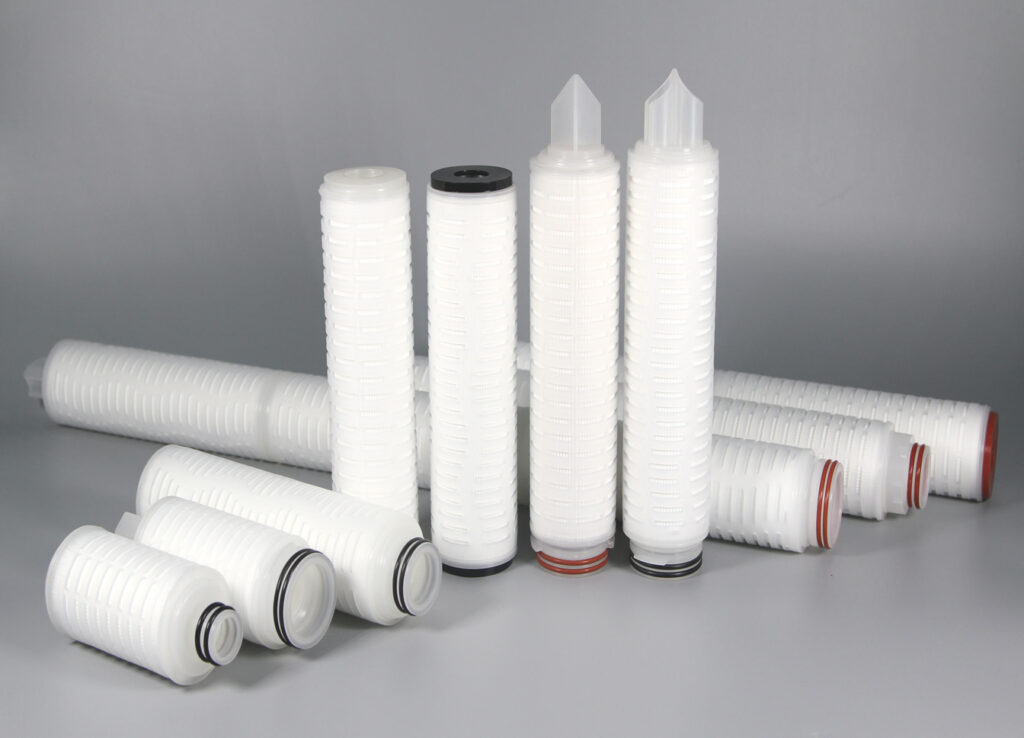
This article explains which filter cartridges are used in seawater desalination pretreatment systems, how they work, and how to choose the right filtration configuration.
Why Pretreatment Filtration Is Critical in Seawater Desalination
Pretreatment is designed to remove contaminants that may damage or foul the RO membranes. Without effective filtration, desalination systems may experience frequent membrane cleaning, reduced water production, and higher operating costs.
The main objectives of seawater pretreatment filtration include:
🌊 Removing suspended solids and sand
🌊 Eliminating algae and organic particles
🌊 Reducing turbidity and colloids
🌊 Lowering the Silt Density Index (SDI)
🌊 Protecting reverse osmosis membranes
Most RO membrane manufacturers recommend that the feed water entering the RO system should have an SDI value below 3–5 to ensure stable operation.
Typical Seawater Desalination Pretreatment Process
A typical seawater desalination pretreatment system consists of several filtration stages:
Seawater Intake
↓
Coarse Filtration
↓
Media Filtration (Sand Filter or Multimedia Filter)
↓
Cartridge Filtration
↓
Reverse Osmosis Membrane System
Cartridge filters are usually installed after the media filters and before the RO membranes, acting as the final barrier for suspended particles.
1. Coarse Filtration of Seawater
The first stage of seawater filtration removes large particles such as sand, shells, and marine debris.
Although intake screens and media filters handle most large solids, cartridge filters are often used to further improve water quality.
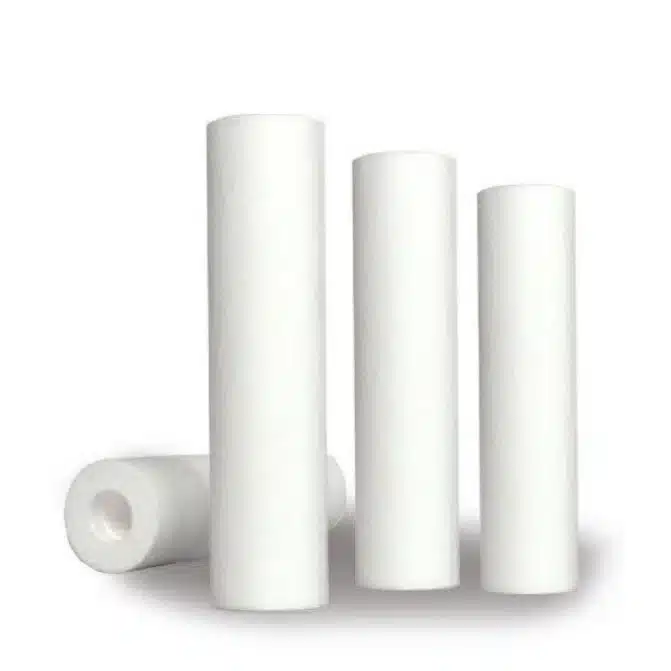
PP Melt Blown Filter Cartridge
PP melt blown filters are widely used for primary seawater filtration due to their deep filtration structure.
Micron Rating
20 – 50 μm
Key Features
High dirt holding capacity
Multi-layer depth filtration structure
Cost-effective solution for large-scale systems
Good chemical resistance to seawater
Typical Applications
Seawater intake filtration
Pretreatment before sand filters
Industrial seawater treatment systems
In many desalination plants, 30 μm or 50 μm filters are used in the early filtration stage.
String Wound Filter Cartridge
String wound filters are another common choice for high-turbidity seawater.
Micron Rating
10 – 50 μm
Advantages
Excellent dirt holding capacity
Strong resistance to clogging
Suitable for water containing large amounts of suspended solids
Typical Applications
Coastal seawater treatment plants
Pretreatment for highly turbid seawater
Protection for downstream filtration systems
2. Fine Pretreatment Filtration
After media filtration, smaller suspended particles and colloids may still remain in seawater. These contaminants can easily foul RO membranes if not removed.
Fine filtration is therefore required before the final cartridge filtration stage.
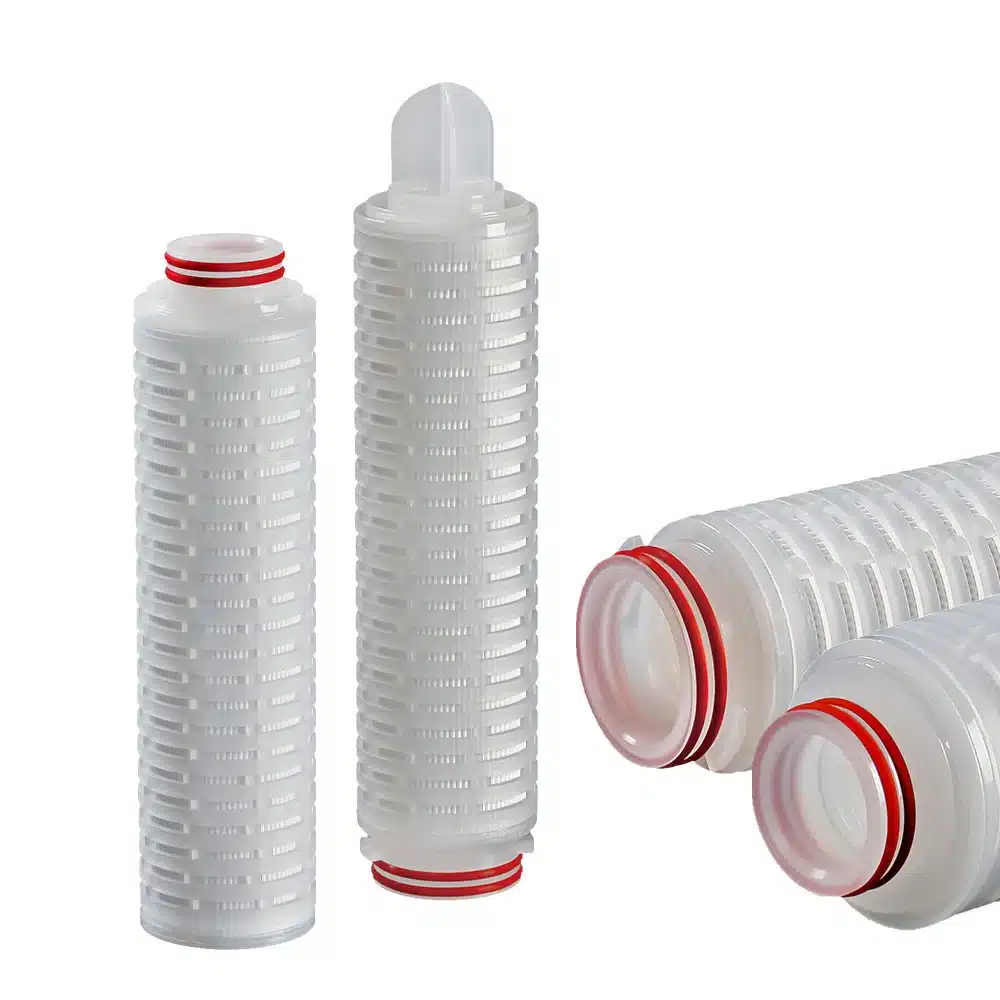
PP Pleated Filter Cartridge
Pleated filter cartridges are widely used in desalination systems because of their large filtration surface area and high flow capacity.
Micron Rating
5 – 10 μm
Advantages
Large effective filtration area
Low pressure drop
Higher flow rate than depth filters
Longer service life
Functions in Desalination Systems
Removing fine suspended solids
Reducing turbidity
Improving SDI values
Protecting downstream filters and RO membranes
3. Final Cartridge Filtration Before RO
The final filtration stage is extremely important because it directly protects the reverse osmosis membranes.
If particles enter the RO system, they can cause:
Membrane fouling
Increased pressure drop
Reduced desalination efficiency
Shorter membrane lifespan
Two types of filter cartridges are commonly used at this stage.
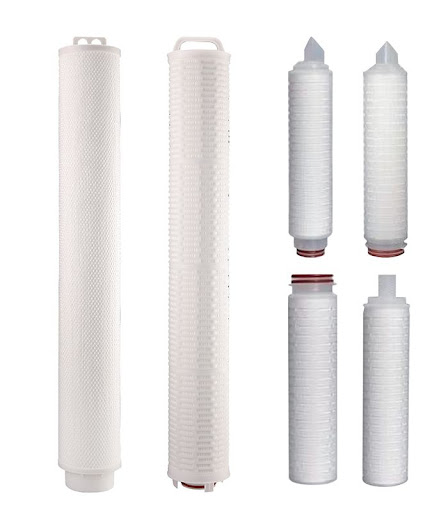
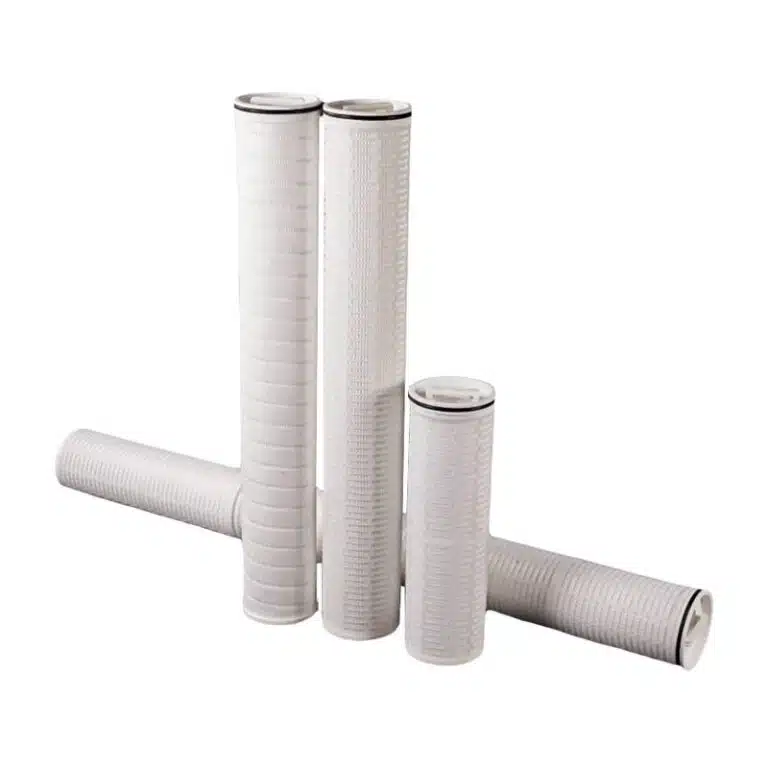
High Flow Filter Cartridge
High flow filters are designed for large desalination plants with high water flow rates.
Micron Rating
1 – 5 μm
Advantages
Very large filtration area
High flow capacity per cartridge
Reduced number of cartridges required
Lower maintenance costs
Applications
Large municipal desalination plants
Industrial seawater desalination systems
Offshore desalination facilities
High flow filters significantly reduce the footprint and maintenance requirements of filtration systems.
PP Pleated Filter Cartridge
Pleated cartridges are also commonly used as the final filtration stage before RO membranes.
Micron Rating
1 – 5 μm
Advantages
Stable filtration accuracy
High particle removal efficiency
Reliable protection for RO membranes
In many seawater desalination plants, 5 μm pleated filters are used as the standard RO protection filter.

Typical Cartridge Filtration Configuration for Seawater Desalination
A typical pretreatment cartridge filtration system may include the following stages:
| Filtration Stage | Filter Cartridge Type | Micron Rating |
|---|---|---|
| Coarse filtration | PP melt blown filter | 30–50 μm |
| Secondary filtration | String wound filter | 10–20 μm |
| Fine filtration | Pleated filter cartridge | 5–10 μm |
| Final RO protection | High flow or pleated filter | 1–5 μm |
This multi-stage filtration system ensures effective particle removal before the water enters the RO membranes.
Key Requirements for Filter Cartridges in Seawater Desalination
Filter cartridges used in seawater desalination systems must meet strict performance requirements.
Corrosion Resistance
Seawater contains high concentrations of salts and minerals. Filter materials must therefore have excellent chemical resistance.
Common materials include:
Polypropylene (PP)
Glass fiber filtration media
These materials offer good resistance to corrosion and chemical degradation.
High Dirt Holding Capacity
Seawater often contains high levels of suspended solids, especially near coastal areas. Filters must be able to capture large amounts of particles without frequent replacement.
Depth filters and pleated filters are commonly used for this reason.
High Flow Rate
Large desalination plants may process hundreds or even thousands of cubic meters of seawater per hour.
Filters must support high flow rates while maintaining low pressure drop.
Stable Filtration Efficiency
To protect RO membranes, filters must provide:
Consistent filtration accuracy
Reliable particle retention
Minimal fiber release
Advantages of Cartridge Filtration in Desalination Systems
Cartridge filtration offers several advantages compared with other filtration technologies:
✔ Compact system design
✔ Easy installation and replacement
✔ High filtration accuracy
✔ Effective protection for RO membranes
✔ Lower operating and maintenance costs
These benefits make cartridge filtration an essential component of modern seawater desalination plants.
Conclusion
Seawater desalination systems require efficient pretreatment to ensure stable operation and long membrane life. Cartridge filtration plays a critical role in removing suspended solids, colloids, and fine particles before the reverse osmosis process.
The most commonly used filter cartridges in seawater desalination pretreatment include:
PP Melt Blown Filter Cartridge
String Wound Filter Cartridge
PP Pleated Filter Cartridge
High Flow Filter Cartridge
By selecting the appropriate filter types and micron ratings, desalination plants can significantly improve RO membrane protection, water quality, and system efficiency.
View All Our Filter Cartridges
 English
 Spanish