Using High Flow Cartridge Filters in RO Pretreatment Systems
1. Overview of RO Pretreatment System Design
Reverse Osmosis (RO) systems are widely used in industrial water treatment, desalination, power generation, food and beverage processing, pharmaceuticals, and many other applications where high-quality water is required. While RO membranes are highly effective at removing dissolved salts and impurities, they are also sensitive components that require careful protection.
RO pretreatment systems are designed to remove suspended solids, colloids, turbidity, and other particulate contaminants before water enters the RO membranes. A well-designed pretreatment system not only improves permeate quality but also significantly extends membrane service life, reduces cleaning frequency, and lowers overall operating costs.
Typical RO pretreatment processes may include multimedia filtration, activated carbon filters, chemical dosing, and cartridge filtration. Among these stages, cartridge filtration is often the final and most critical barrier before the RO membranes. In recent years, high flow cartridge filters have become increasingly popular in RO pretreatment system design due to their high throughput, compact footprint, and operational efficiency.
2. Filtration Challenges Before RO Membranes
Water entering RO systems can originate from various sources such as surface water, groundwater, municipal water, or seawater. Each source presents unique filtration challenges:
Suspended solids and fine particles that can clog membrane feed channels
Colloidal matter that contributes to membrane fouling
Rust, sand, and silt from pipelines and storage tanks
Biological debris and organic particulates
If these contaminants are not effectively removed during pretreatment, they can lead to:
Increased pressure drop across RO membranes
Frequent membrane fouling and scaling
Reduced permeate flow and system efficiency
Higher chemical cleaning frequency and downtime
Traditional standard-size cartridge filters can handle these challenges, but as RO systems grow larger, they often require dozens or even hundreds of cartridges. This increases housing size, installation complexity, and maintenance workload. This is where high flow cartridge filters provide a clear engineering advantage.
3. Engineering Advantages of High Flow Cartridge Filters
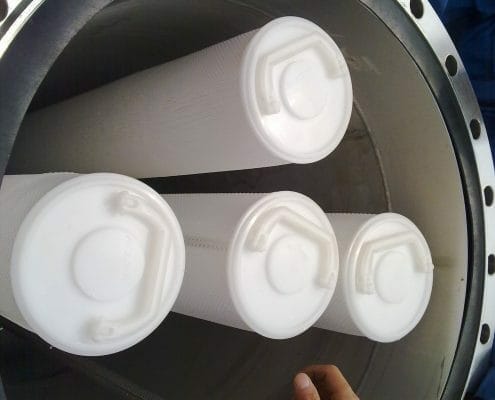
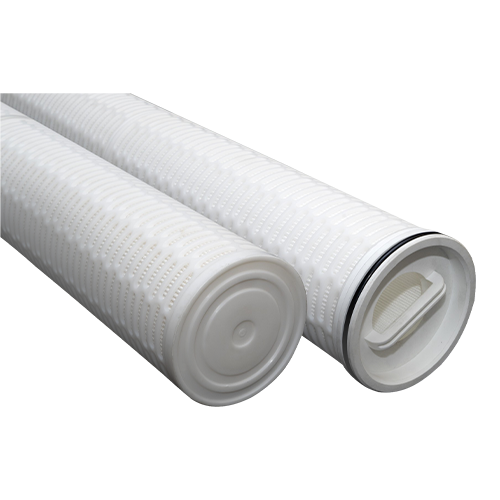
High flow cartridge filters are specifically designed to handle large volumes of water with fewer cartridges compared to conventional designs. From an engineering perspective, they offer several significant benefits for RO pretreatment systems.
High Flow Capacity with Fewer Elements
A single high flow cartridge can handle flow rates equivalent to multiple standard cartridges. This allows engineers to design pretreatment systems with:
Fewer cartridges per housing
Reduced housing size
Lower system pressure loss
Large Dirt-Holding Capacity
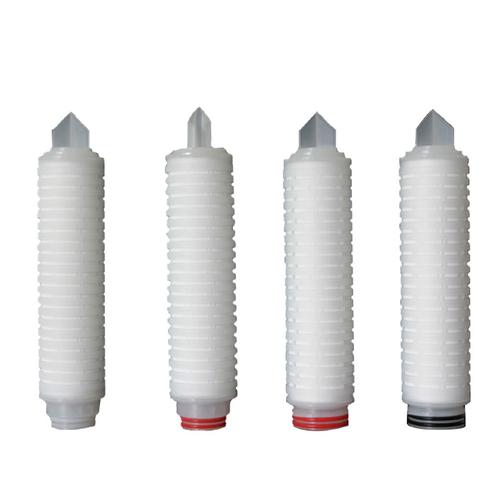
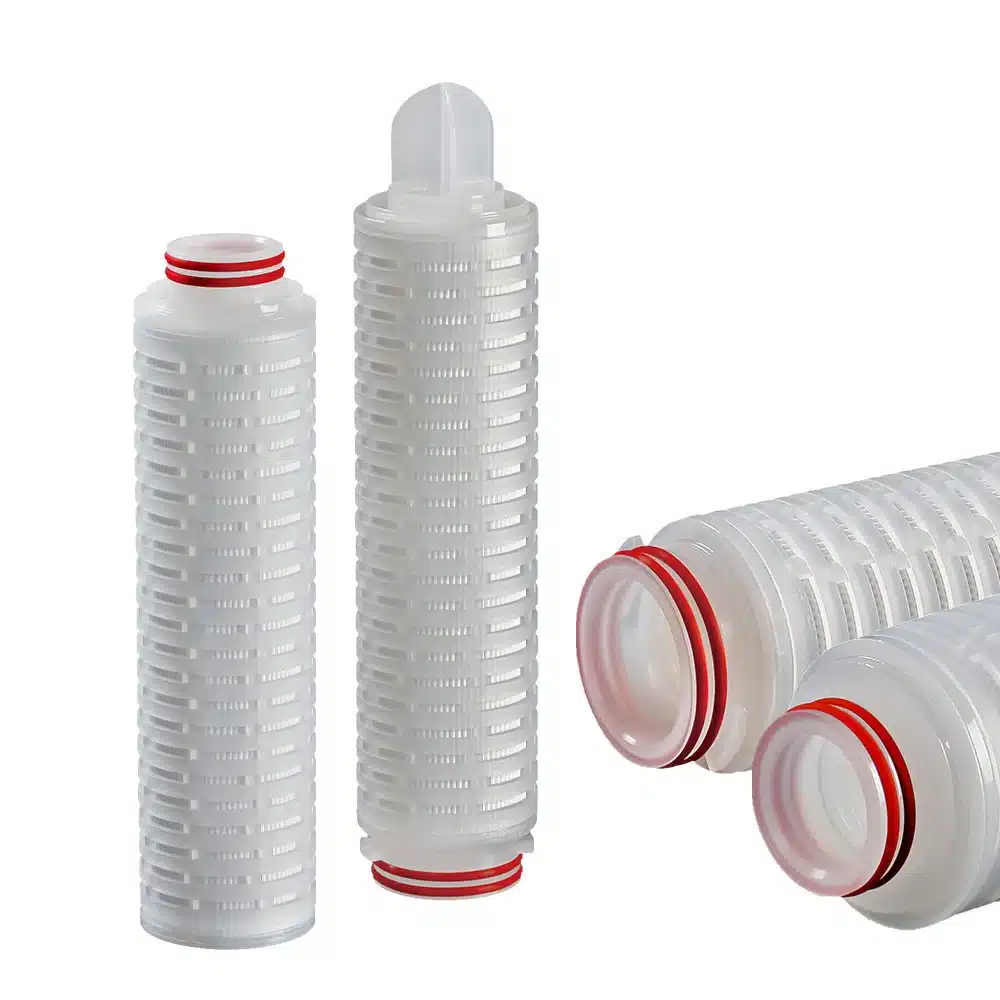
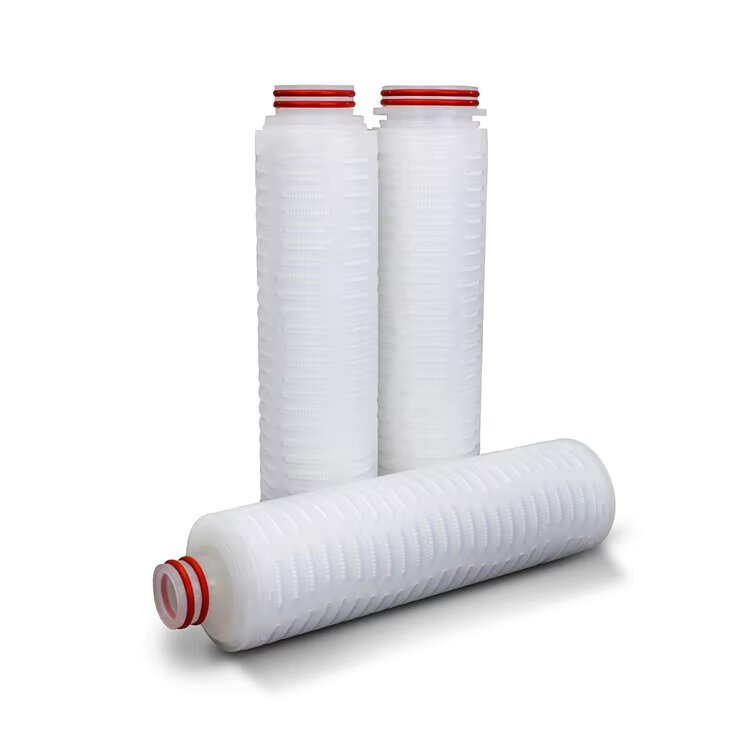
High flow cartridge filters typically feature a pleated structure with a large filtration surface area. This design enables:
Higher contaminant retention
Longer service life
Extended replacement intervals
Low Pressure Drop
Low initial pressure drop is critical in RO pretreatment. High flow cartridges are engineered to maintain efficient flow paths, minimizing energy consumption while ensuring effective filtration.
Simplified System Design
Because fewer cartridges are required, system design becomes simpler and more compact. This is especially valuable for large RO plants where space constraints and system scalability are important considerations.
4. Installation Layout and System Integration
Proper installation and integration of high flow cartridge filters are essential for optimal RO pretreatment performance.
Typical Installation Position
In most RO pretreatment systems, high flow cartridge filters are installed:
Downstream of multimedia or sand filters
Upstream of RO membranes
After chemical dosing (if applicable)
This positioning ensures that bulk solids are removed before fine filtration, maximizing cartridge life and protecting membranes.
Housing Compatibility
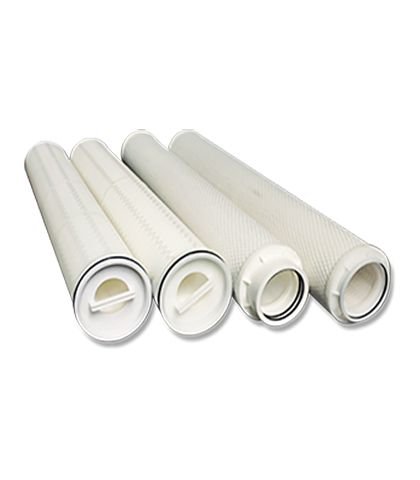
High flow cartridge filters are usually installed in dedicated high flow housings designed to accommodate large-diameter cartridges. Key considerations include:
End-cap configuration
Sealing method (O-ring or gasket)
Material compatibility with water chemistry
System Integration Considerations
When integrating high flow cartridge filters into an RO pretreatment system, engineers should evaluate:
Total system flow rate
Redundancy requirements
Differential pressure monitoring points
Proper integration ensures smooth operation and simplifies maintenance procedures.
5. Typical Operating Conditions
Understanding operating conditions is critical for selecting the right high flow cartridge filters for RO pretreatment applications.
Flow Rates
High flow cartridge filters are suitable for a wide range of flow rates, making them ideal for both medium and large-scale RO systems. Engineers should ensure that operating flow does not exceed the recommended limits to avoid reduced filtration efficiency.
Pressure Limits
RO pretreatment systems often operate under varying pressures. High flow cartridges are designed to withstand typical pretreatment pressures while maintaining structural integrity and consistent performance.
Temperature Range
Operating temperature affects filter material performance. Common materials such as polypropylene (PP) are suitable for most ambient and industrial water temperatures encountered in RO pretreatment.
6. Performance Improvement After High Flow Cartridge Installation
The impact of high flow cartridge filters on RO pretreatment performance can be observed across several key metrics.
Reduced Membrane Fouling
By effectively removing fine particles and colloids, high flow cartridge filters significantly reduce fouling potential on RO membranes.
Extended Membrane Life
Cleaner feed water leads to longer membrane service life and fewer membrane replacements, resulting in substantial cost savings.
Stable System Operation
Improved filtration stability reduces unexpected shutdowns and maintains consistent RO system performance over time.
7. Operational Case Study (Industrial Water Treatment)
In a large industrial water treatment project, a conventional pretreatment system using standard cartridge filters was upgraded to high flow cartridge filtration.
System Background
RO system capacity: Large-scale industrial application
Feed water: Surface water with moderate turbidity
Previous setup: Multiple standard cartridge housings
Upgrade Results
After switching to high flow cartridge filters:
Cartridge quantity was reduced significantly
Maintenance time decreased
Pressure drop stabilized over longer operating cycles
RO membrane cleaning frequency was reduced
This case demonstrates the practical benefits of high flow cartridge filters in real-world RO pretreatment systems.

8. Maintenance Strategy and Monitoring Differential Pressure
Effective maintenance is essential to maximize the value of high flow cartridge filters.
Differential Pressure Monitoring
Monitoring pressure drop across the filter housing is the most reliable method for determining cartridge replacement timing. A gradual increase indicates normal loading, while sudden spikes may signal abnormal feed conditions.
Replacement Guidelines
High flow filter cartridges should be replaced when:
Differential pressure reaches recommended limits
Flow rate decreases significantly
Scheduled preventive maintenance intervals are reached
Maintenance Efficiency
Because fewer cartridges are used, replacement is faster and safer, reducing labor costs and downtime.
9. Common Installation and Operation Mistakes
Despite their advantages, improper use of high flow cartridge filters can reduce system performance.
Incorrect Micron Rating Selection
Choosing a micron rating that is too fine may lead to premature clogging, while too coarse may allow particles to reach RO membranes.
Inadequate Pretreatment Upstream
High flow cartridges should not replace multimedia filters in high-turbidity applications. Proper upstream pretreatment is essential.
Poor Sealing or Installation
Incorrect installation can result in bypass, reducing filtration efficiency and risking membrane fouling.
10. Conclusion: Best Practices for Long-Term RO Operation
High flow cartridge filters have become an essential component in modern RO pretreatment system design. Their ability to handle large flow rates, reduce system complexity, and improve operational efficiency makes them an ideal choice for industrial RO applications.
By integrating high flow cartridge filters into a well-designed pretreatment system, operators can achieve:
Enhanced membrane protection
Lower operating and maintenance costs
Improved system reliability and longevity
For engineers and system designers seeking efficient and scalable RO pretreatment solutions, high flow cartridge filters represent a smart, future-ready filtration technology.
Recommended Filter Cartridges

 English
 Spanish