
Role of Micron Filtration in Removing Suspended Solids from Industrial Effluents
Abstract
Industrial effluents often contain high concentrations of suspended solids (SS), which can pose significant environmental and operational challenges. Micron filtration (MF) has emerged as an effective technology for the removal of suspended particles, ensuring compliance with discharge standards and enabling water reuse. This study evaluates the performance of various micron filtration membranes in treating industrial wastewater with diverse characteristics. Key parameters such as membrane pore size, feedwater composition, flux decline, and fouling mechanisms are analyzed. Results indicate that MF membranes with optimized pore sizes can achieve suspended solid removal efficiencies exceeding 95%, with operational parameters significantly influencing membrane longevity and cleaning frequency. The study also compares MF with conventional treatment methods, highlighting advantages, limitations, and potential integration into hybrid filtration systems. This research provides valuable insights for industrial wastewater management and contributes to the sustainable application of micron filtration technologies.
Keywords: Micron filtration; Suspended solids; Industrial effluents; Membrane filtration; Fouling; Water treatment
1. Introduction
1.1 Industrial Effluents and Environmental Concerns
Industrial wastewater is generated across multiple sectors including chemical manufacturing, food and beverage processing, textile dyeing, and metal processing. Such effluents often contain high concentrations of suspended solids, which contribute to water turbidity, reduce sunlight penetration in receiving water bodies, and impact aquatic ecosystems. In addition, suspended solids can increase sludge production and chemical oxygen demand (COD), creating challenges for downstream wastewater treatment processes.
1.2 Micron Filtration Overview
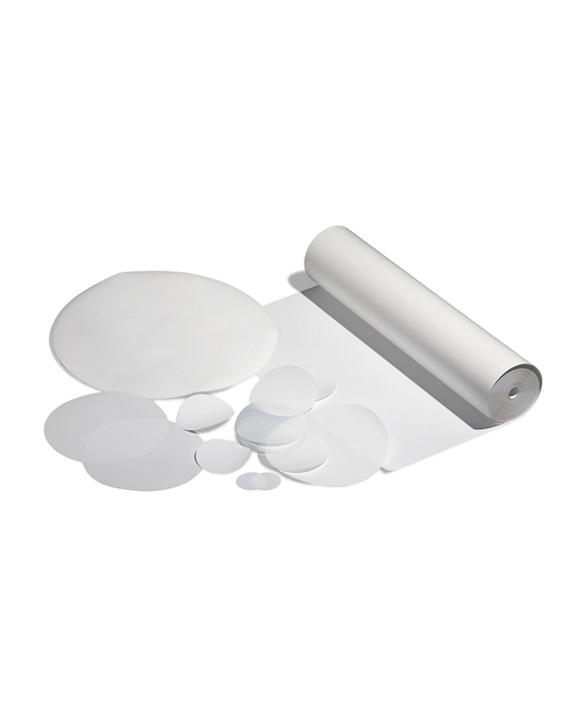
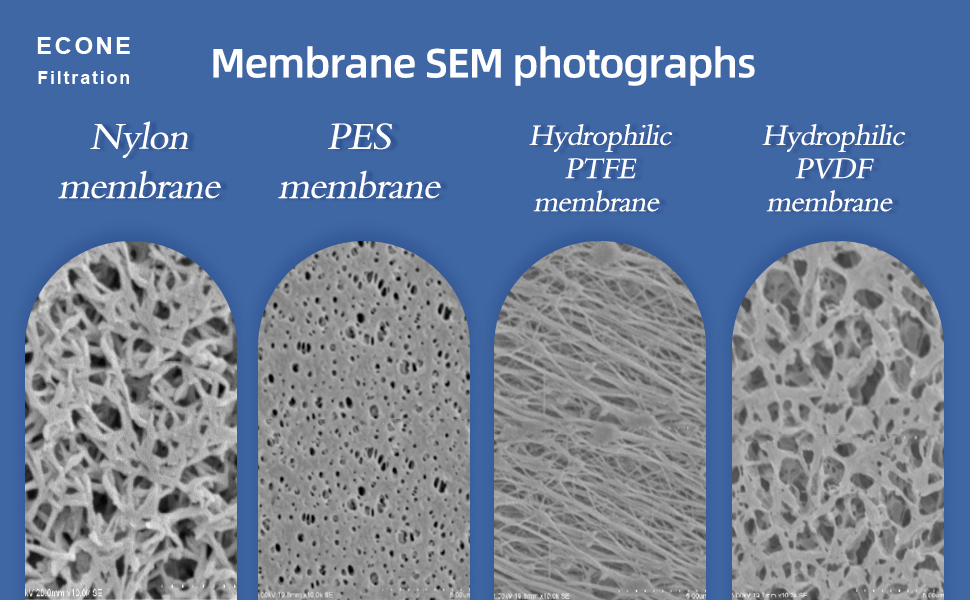
Micron filtration (MF) refers to a filtration process that removes particles typically in the range of 0.1–10 microns. MF membranes are generally made of polymeric materials such as polyvinylidene fluoride (PVDF), polypropylene (PP), or ceramic composites. These membranes can operate under constant pressure or constant flux, effectively retaining fine particulates while allowing water and dissolved constituents to pass.
1.3 Research Objectives
The aim of this study is to:
Evaluate the efficiency of MF membranes in removing suspended solids from industrial effluents.
Investigate the effects of membrane pore size, feedwater characteristics, and operating conditions on filtration performance.
Compare MF with conventional sedimentation and filtration methods, and assess potential integration into hybrid systems for industrial wastewater treatment.
2. Literature Review
2.1 Characteristics of Suspended Solids
Suspended solids in industrial wastewater vary in size, shape, and composition. Typical particle sizes range from 1–500 µm. Fine colloidal particles (<1 µm) are particularly challenging to remove using conventional sedimentation. SS can be classified as:
Inorganic particles: Sand, clay, metal oxides.
Organic particles: Food residues, microbial biomass, and polymeric wastes.
2.2 Conventional Removal Methods
Traditional methods for suspended solid removal include:
Gravity sedimentation: Effective for particles >50 µm but slow and space-intensive.
Sand filtration: Removes medium-sized particles but less effective for colloids.
Chemical coagulation/flocculation: Improves removal efficiency but increases sludge generation.
2.3 Micron Filtration Applications
Recent studies indicate that MF is highly effective in industrial wastewater treatment:
MF membranes with 0.5–5 µm pores can remove >90% of suspended solids.
Ceramic MF membranes show superior chemical resistance, making them suitable for harsh industrial effluents.
Fouling remains a key limitation; understanding fouling mechanisms is critical for sustainable operation.
3. Materials and Methods
3.1 Experimental Materials
Membranes tested:
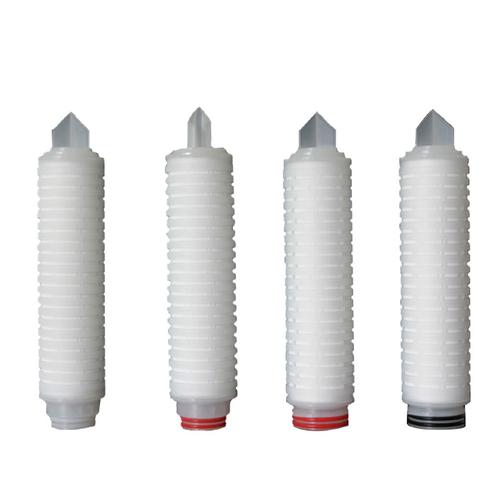
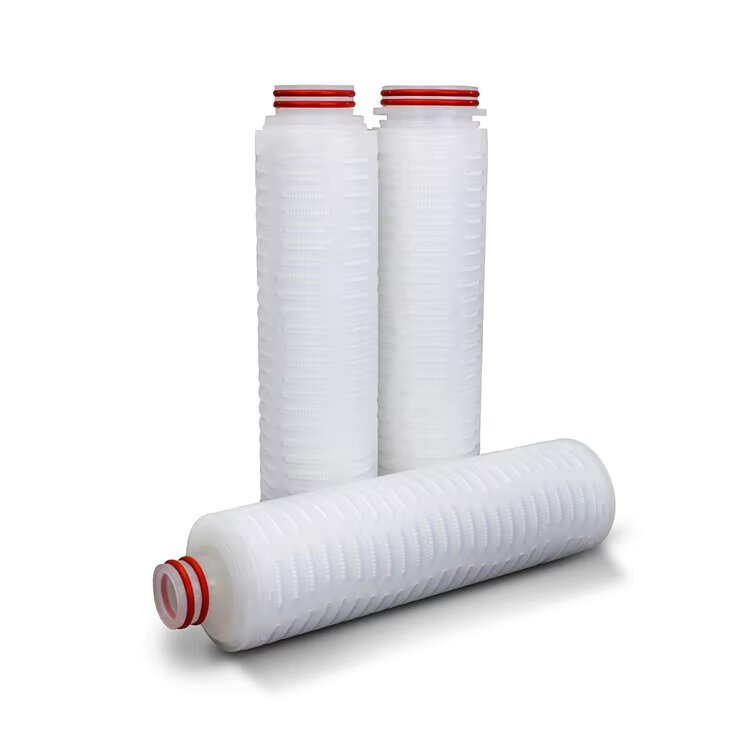
Polypropylene (PP) pleated MF membrane, pore size 1 µm
PVDF hollow fiber MF membrane, pore size 0.5 µm
Ceramic MF membrane, pore size 1 µm
Feedwater: Industrial wastewater from a textile dyeing plant, containing 120–500 mg/L suspended solids, pH 6.5–7.8, and COD 200–350 mg/L.
3.2 Experimental Setup
The MF system consists of:
Feed tank with stirrer for uniform SS distribution
High-pressure pump to maintain constant flux
MF membrane module
Pressure and flow sensors
Permeate collection and analysis system
Figure 1. Schematic of Experimental Micron Filtration Setup
(Image description: Feed tank → Pump → MF module → Permeate collection → Return line)
3.3 Analytical Methods
Total Suspended Solids (TSS): Measured according to Standard Methods 2540 D
Turbidity: Measured using a Nephelometer
Flux Monitoring: Measured as L/m²·h
Fouling Evaluation: Calculated as flux decline over operation time
Cleaning Protocol: Chemical cleaning with 0.5% NaOH and 0.5% HCl solutions
3.4 Experimental Design
Experiments were conducted under:
Three pore sizes: 0.5 µm, 1 µm, 5 µm
Fluxes: 50, 75, 100 L/m²·h
Temperatures: 20°C and 30°C
4. Results
4.1 Suspended Solid Removal Efficiency
Table 1. Removal Efficiency of Suspended Solids (%) Using Different MF Membranes
| Membrane Type | Pore Size (µm) | Feed SS (mg/L) | Removal Efficiency (%) | Permeate TSS (mg/L) |
|---|---|---|---|---|
| PP Pleated | 1 | 300 | 93 | 21 |
| PVDF Hollow Fiber | 0.5 | 300 | 96 | 12 |
| Ceramic MF | 1 | 300 | 94 | 18 |
Observation: Smaller pore size (0.5 µm) yields the highest removal efficiency (>95%).
4.2 Flux Decline and Fouling
Figure 2. Flux Decline Over Time for Different Membranes
(Graph: Y-axis: Flux (L/m²·h), X-axis: Operation time (h); PP shows 20% decline over 8 h, PVDF 15%, Ceramic 18%)
Fouling mainly due to cake layer formation; reversible with regular chemical cleaning.
4.3 Impact of Operating Conditions
Flux: Higher flux increases fouling rate.
Temperature: Slightly higher temperatures improve permeate flux due to decreased viscosity.
pH: Minimal effect in tested range (6.5–7.8).
5. Discussion
5.1 Advantages of Micron Filtration
Micron filtration demonstrates several clear benefits for removing suspended solids from industrial effluents:
High Removal Efficiency:
MF membranes with pore sizes of 0.5–1 µm achieve SS removal rates of 93–96%, surpassing conventional sedimentation and sand filtration techniques, which typically remove 50–70% of suspended solids.
This level of removal is crucial for meeting regulatory discharge limits and reducing the chemical oxygen demand (COD) in treated water.
Compact Design and Flexibility:
MF systems occupy less space than sedimentation tanks.
Modular design allows easy scalability for small-scale and large-scale industrial operations.
Compatibility with Diverse Effluents:
Polymeric membranes (PP, PVDF) are suitable for mild chemical environments.
Ceramic membranes are resistant to harsh chemicals and high temperatures, making them ideal for aggressive industrial wastewater streams.
5.2 Limitations and Operational Challenges
Despite the benefits, several challenges exist:
Membrane Fouling:
Cake layer formation is the primary fouling mechanism in industrial effluents with high SS content.
Accumulated particles reduce permeate flux and necessitate periodic chemical cleaning.
Membrane Lifespan:
Frequent cleaning cycles, abrasive particles, or chemical exposure may shorten membrane life.
Proper selection of membrane material and pore size is critical to minimize replacement costs.
Energy and Operational Costs:
Maintaining constant flux or pressure requires pumping energy.
Operational optimization, including flux adjustment and backwashing frequency, can reduce energy consumption.
5.3 Comparison with Conventional Methods
Table 2. Comparison of Micron Filtration and Conventional Methods
| Method | SS Removal Efficiency | Space Requirement | Operational Cost | Chemical Usage |
|---|---|---|---|---|
| Sedimentation | 50–65% | High | Low | None |
| Sand Filtration | 60–75% | Medium | Medium | None |
| Coagulation + Flocculation | 80–90% | Medium | Medium-High | High |
| Micron Filtration (MF) | 93–96% | Low | Medium | Low |
Observation: MF outperforms traditional methods in SS removal and requires less space, making it ideal for retrofitting existing industrial wastewater plants.
5.4 Optimization Strategies and Hybrid Systems
Membrane Material Innovations:
Ceramic/polymeric composite membranes combine chemical resistance and high flux.
Hybrid Filtration Systems:
MF + Ultrafiltration (UF) or MF + Coagulation enhances overall removal efficiency.
Example: MF removes coarse and fine suspended solids, while UF targets colloidal and microbial contaminants.
Cleaning and Maintenance Strategies:
Regular backwashing or chemical cleaning prevents irreversible fouling.
Monitoring flux decline and turbidity in real-time allows proactive maintenance scheduling.
6. Conclusion
Micron filtration is a highly effective and versatile technology for the removal of suspended solids from industrial effluents. The key findings of this study include:
MF membranes with optimized pore sizes (0.5–1 µm) can achieve removal efficiencies above 95%, significantly outperforming conventional sedimentation and sand filtration.
Flux decline due to fouling is the primary operational challenge but can be mitigated through proper membrane selection and routine cleaning protocols.
MF systems are space-efficient, scalable, and suitable for diverse industrial wastewater streams, including chemical, textile, and food-processing effluents.
Integrating MF into hybrid filtration systems enhances overall water treatment efficiency and supports sustainable wastewater management.
Future research should focus on novel membrane materials, energy-efficient operation, and integration with advanced treatment technologies to further improve industrial effluent quality and water reuse potential.
7. References
Baker, R.W. Membrane Technology and Applications, 4th Edition; Wiley: Chichester, UK, 2012.
Judd, S. The MBR Book: Principles and Applications of Membrane Bioreactors for Water and Wastewater Treatment, 2nd Edition; Elsevier: Oxford, UK, 2011.
Madaeni, S.S.; Samieirad, S. “Membrane Fouling in Micron Filtration: Mechanisms and Control Strategies,” Journal of Membrane Science, 2020, 597, 117712.
Cheryan, M. Ultrafiltration and Microfiltration Handbook, 2nd Edition; CRC Press: Boca Raton, FL, USA, 1998.
Rahimpour, A.; Jahanshahi, M. “Micron Filtration in Industrial Wastewater Treatment: Case Studies and Performance Evaluation,” Desalination, 2019, 452, 1–12.
Shon, H.K.; Vigneswaran, S.; Kim, I.S. “Fouling in Membrane Filtration for Water Treatment: A Review,” Environmental Engineering Science, 2006, 23(3), 399–416.
Li, Q.; He, Z.; Liu, H. “Ceramic Membrane Microfiltration for Textile Wastewater Treatment: Flux and Fouling Analysis,” Water Research, 2018, 144, 44–55.
8. Supplementary Materials (Optional)
Figure 1: Schematic of micron filtration experimental setup (feed tank → pump → MF module → permeate collection).
Figure 2: Flux decline curves for PP, PVDF, and ceramic membranes.
Table 1: Suspended solids removal efficiencies by membrane type.
Table 2: Comparison of MF with conventional treatment methods.
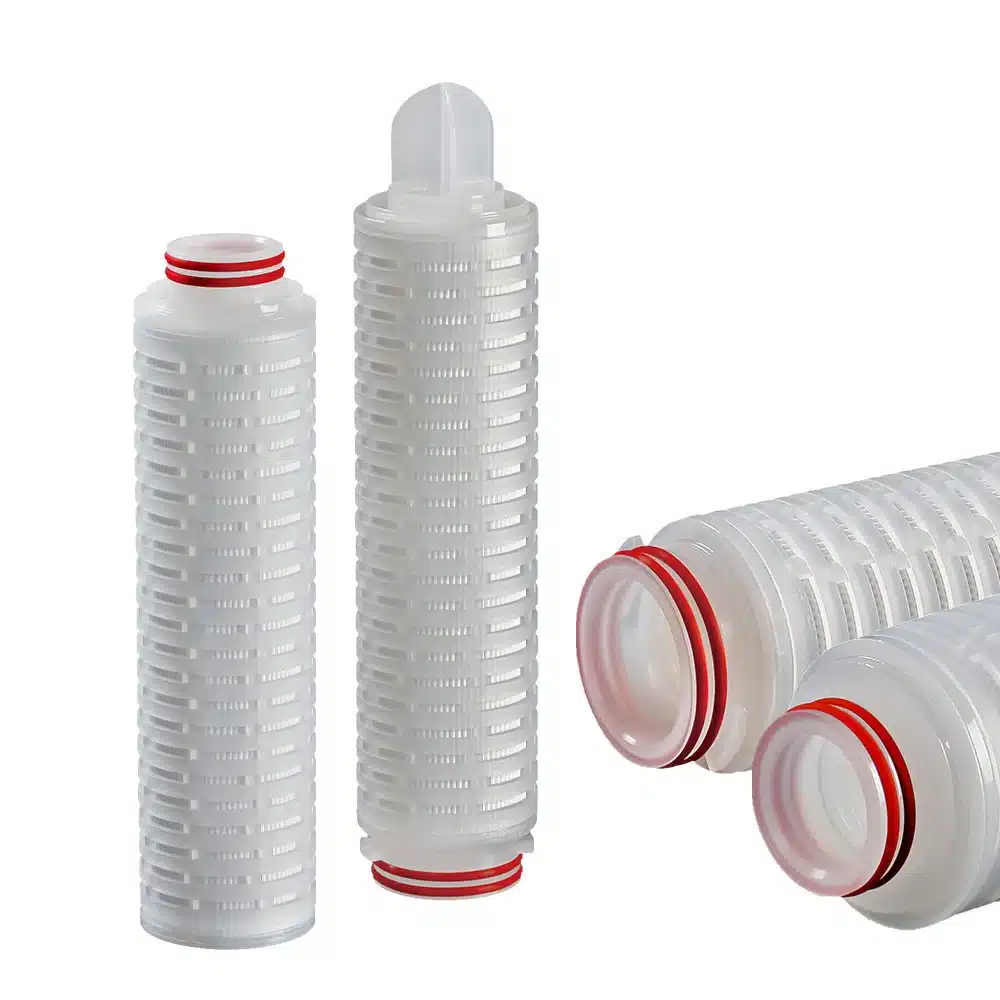
Recommended Filter Cartridges

 English
 Spanish