
Seawater Desalination Pretreatment Filters: Types and Configuration Solutions
INTRODUCTION
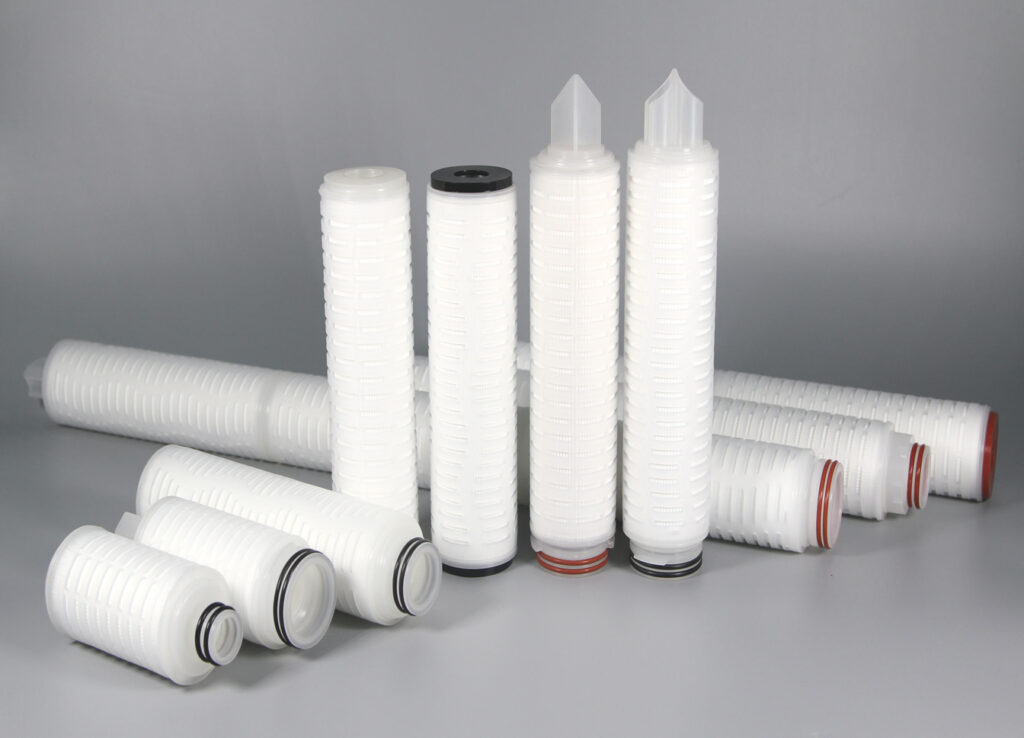
Seawater desalination has become a critical technology for providing clean water in areas with limited freshwater resources. The heart of every desalination system is the reverse osmosis (RO) membrane, which requires carefully pretreated seawater to function efficiently and last longer. One of the most important pretreatment steps is the use of filter cartridges, which remove suspended solids, colloids, and other impurities that can clog or damage the RO membranes.
In this article, we provide a comprehensive overview of common filter types, typical configurations, and practical recommendations for seawater desalination systems.
1. Purpose of Filter Cartridges in Seawater Desalination
Filter cartridges in a seawater RO system serve the following key purposes:
Protecting RO membranes: Prevent fouling and clogging by removing suspended particles, algae, rust, and other debris.
Reducing SDI (Silt Density Index): Maintain SDI15 values below 3–5, which is essential for membrane longevity.
Minimizing operating pressure fluctuations: Stable flow and reduced pressure drop extend both the filter and membrane life.
Ensuring system reliability: Proper pretreatment reduces downtime, maintenance costs, and operational risks.
It is important to note that filter cartridges are part of the pretreatment stage, not the main filtration step. Their role is to act as a protective barrier for the more sensitive RO membranes.
2. Common Filter Cartridge Types
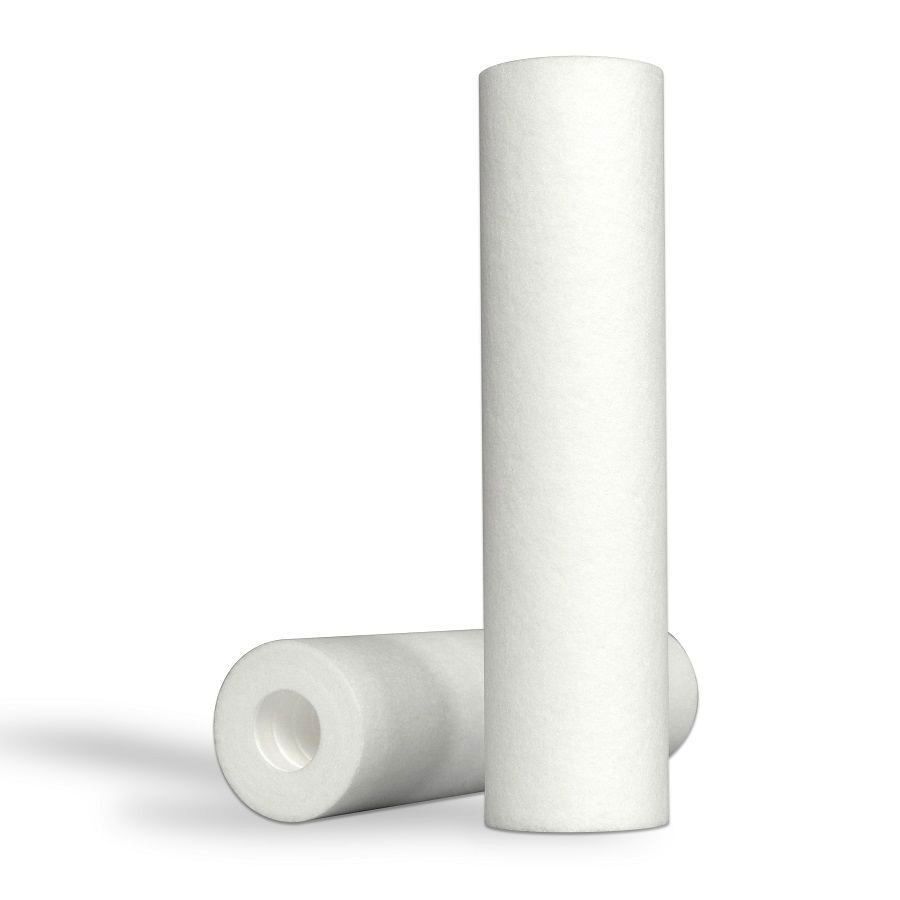
2.1 PP Melt-Blown Filters
Micron Rating: 5 µm, 1 µm
Features: Cost-effective, moderate dirt-holding capacity, widely used
Position: Typically installed after multimedia filters or sand filtration
Advantages:
Low initial cost
Simple installation and replacement
Limitations:
Less effective against colloids or biological contamination compared to pleated filters
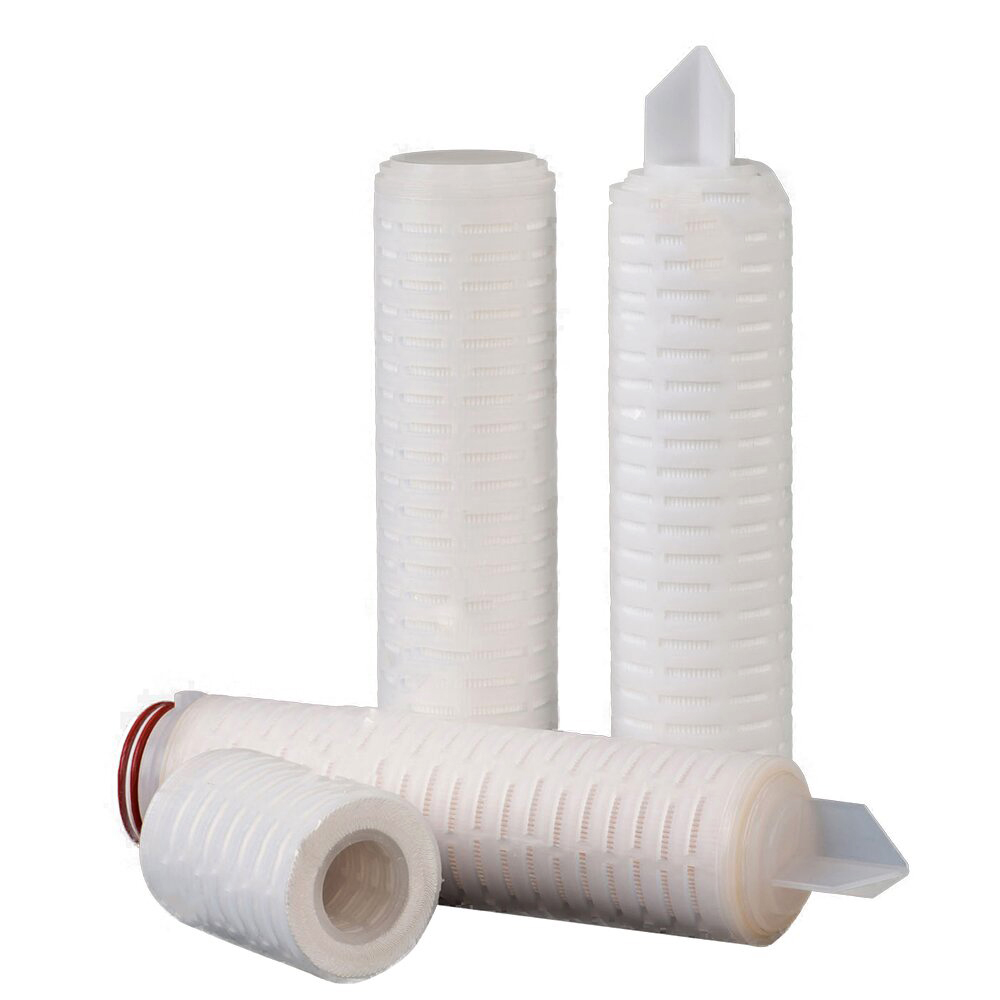
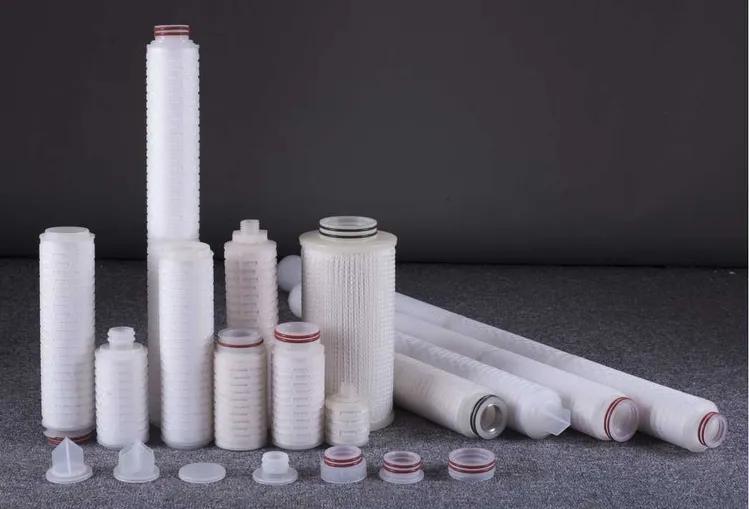
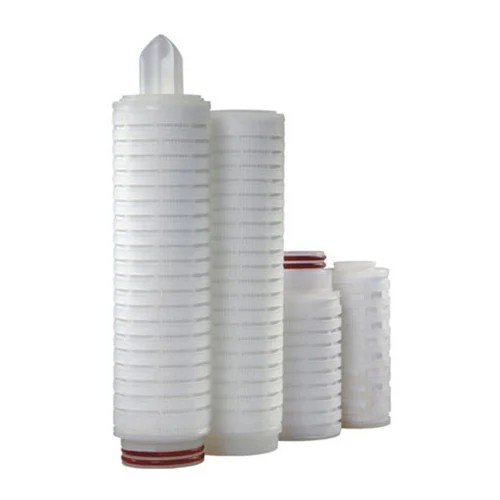
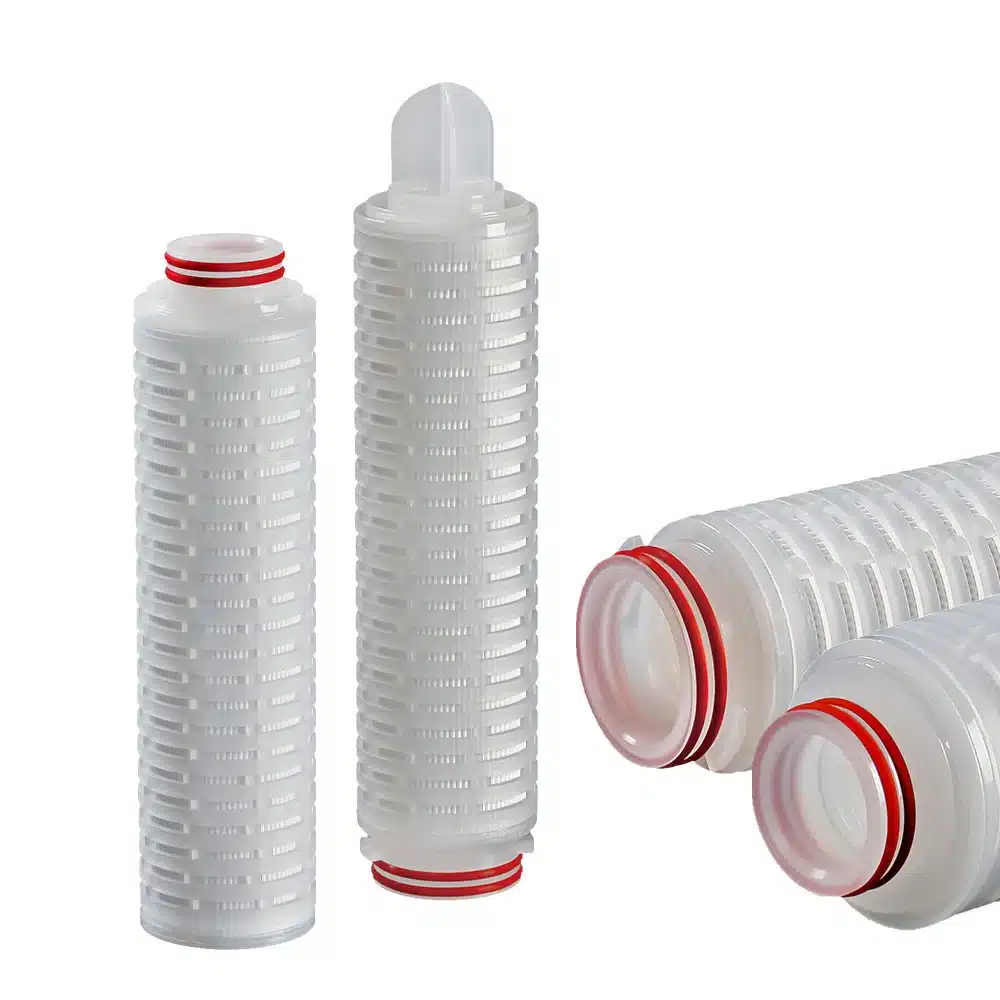
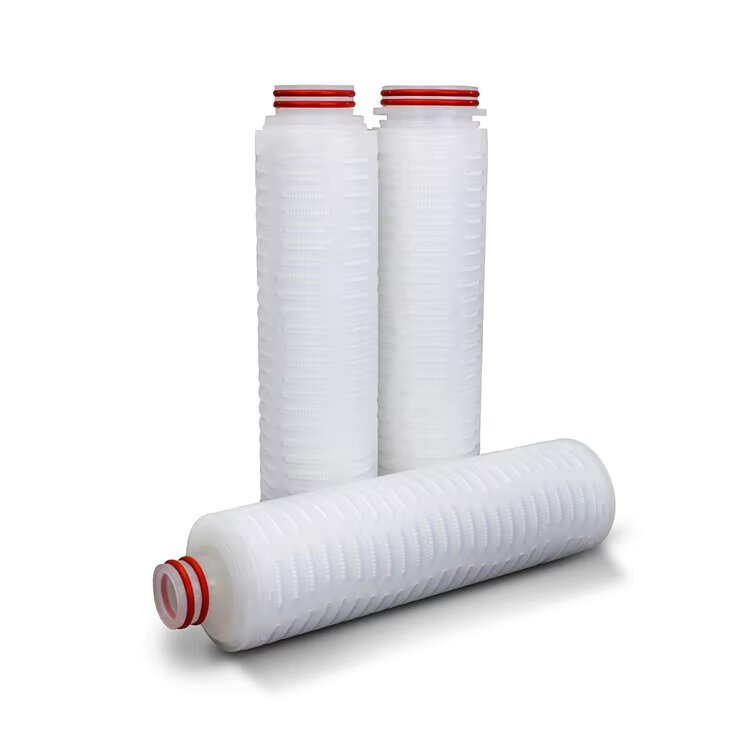
2.2 PP Pleated Filters
Micron Rating: 1 µm, 0.5 µm, 0.2 µm
Features: Large surface area, low pressure drop, long service life
Position: Last line of defense before the RO membrane
Advantages:
Stable pressure drop
Higher dirt-holding capacity
Longer replacement intervals
Applications:
High-end projects and continuous operation systems
Projects requiring high SDI protection
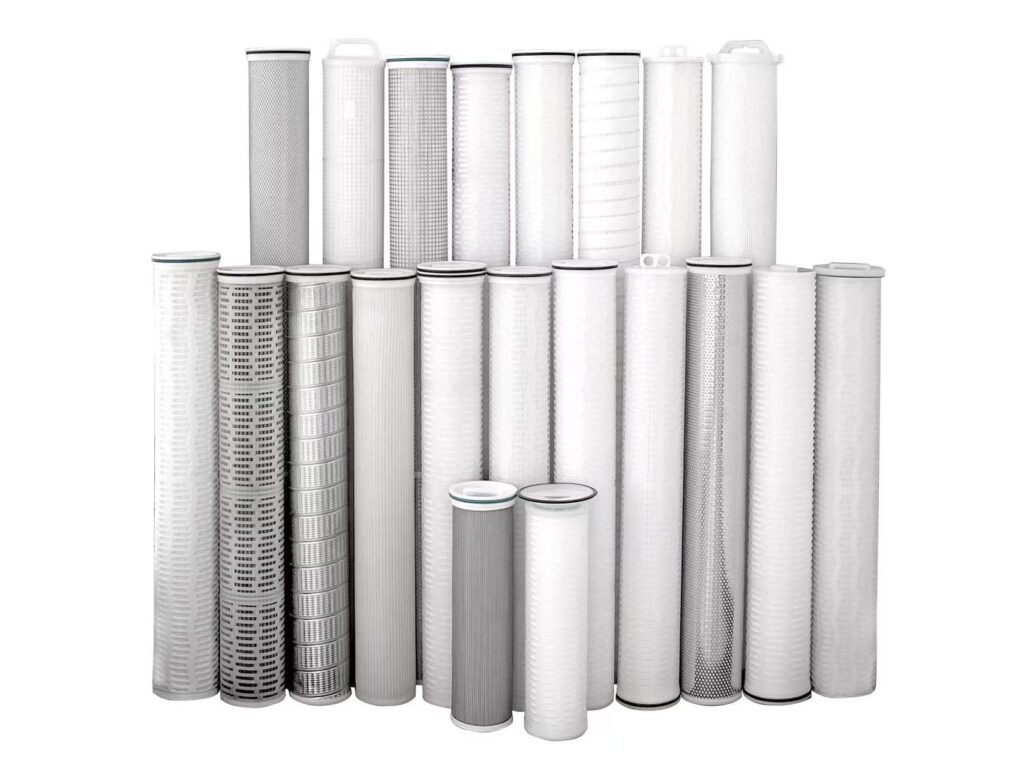
2.3 High Flow Filters
Dimensions: 40″ or 60″
Micron Rating: 1–5 µm
Features: Handles large flow rates, reduces the number of filter housings required
Position: Large-scale seawater desalination plants
Advantages:
Efficient for high-volume systems
Reduces operational and maintenance workload
Limitations:
Higher individual unit cost, but system-level cost is optimized
2.4 Glass Fiber / Deep Bed Filters (Optional)
Used in cases of high turbidity or special water quality conditions
Less common in modern RO pretreatment due to maintenance complexity
3. Typical Pretreatment Filter Configurations
The selection of filters depends on water quality, system size, and project requirements. Here are five common configurations:
Configuration 1: Basic System (Small Scale)
Flow: Intake → Multimedia Filter → 5 µm PP Melt-Blown → RO
Use Case:
Low-turbidity water sources
Small or pilot-scale desalination systems
Cost-sensitive projects
Note: RO membranes may experience faster fouling; regular maintenance is required.
Configuration 2: Standard Industry Practice
Flow: Intake → Multimedia Filter → 5 µm PP Melt-Blown → 1 µm PP Melt-Blown or Pleated → RO
Advantages:
Balanced cost and membrane protection
Widely used in commercial systems
Configuration 3: High Stability System
Flow: Intake → Multimedia Filter → 5 µm PP Melt-Blown → 1 µm PP Pleated → RO
Advantages:
Slower pressure drop rise
Better RO membrane protection
Longer filter replacement cycle
Applications: Medium to large-scale systems, EPC projects
Configuration 4: UF + Fine Filtration System (High-End)
Flow: Intake → Ultrafiltration (UF) → 1 µm or 0.5 µm PP Pleated → RO
Advantages:
Very low SDI
RO membranes last longer
Highly stable operation
Applications: High-value projects, sensitive seawater sources
Configuration 5: Large-Scale Industrial Plant
Flow: Intake → Multimedia Filter → UF → High Flow 1–5 µm → RO
Advantages:
Fewer filter units, reduced labor
Efficient for large-scale desalination
Industry-preferred for multi-million-liter plants
4. Choosing the Right Filter Precision
| Water Quality / Condition | Recommended Filter Micron Rating |
|---|---|
| Normal seawater | 5 µm + 1 µm |
| High SDI water | 1 µm |
| After UF | 1 µm / 0.5 µm |
| High-end system | Pleated 1 µm |
| RO pressure fluctuation high | Pleated replacement preferred |
Note: Smaller micron does not always mean better. Extremely fine filters (0.2 µm) are generally unnecessary and may increase fouling frequency.
5. Common Customer Questions & Answers
Q1: Should we use absolute or nominal filters?
A: Nominal filters (5 µm + 1 µm) are common. For higher stability, pleated filters with tighter ratings can be used.
Q2: Is 0.2 µm required for seawater RO systems?
A: Usually not. 1 µm pleated filters are widely accepted and provide sufficient protection for RO membranes.
6. Key Selling Points for PP Pleated Filters
For suppliers or exporters of PP pleated filter cartridges, the key advantages in seawater desalination include:
Low pressure drop: Reduces pumping energy consumption
Long service life: Reduces replacement frequency and downtime
Stable SDI protection: Ensures consistent RO membrane operation
Wide compatibility: Fits standard housings (10″, 20″, 30″, 40″)
Emphasize these points when promoting to EPC contractors or desalination operators.
Conclusion
The pretreatment filter stage is critical for the efficiency, stability, and longevity of seawater RO systems. Proper selection of PP melt-blown, pleated, or high-flow filters ensures that RO membranes are well-protected, operating costs are minimized, and system downtime is reduced.
By understanding the water quality, system size, and desired stability, operators can choose an appropriate filter configuration, from basic small-scale setups to high-end industrial plants.
Whether for small desalination units or large-scale SWRO plants, PP pleated filters offer a reliable and long-lasting solution, making them a preferred choice for both OEM suppliers and project operators worldwide.
Reference
Pretreatment processes for seawater reverse osmosis desalination systems —J. Kavitha, M. Rajalakshmi, A.R. Phani, Mahesh Padaki
Recommended Filter Cartridges

 English
 Spanish