
How to Evaluate the Quality of a Pleated Filter Cartridge
Why Pleated Filter Cartridge Quality Matters
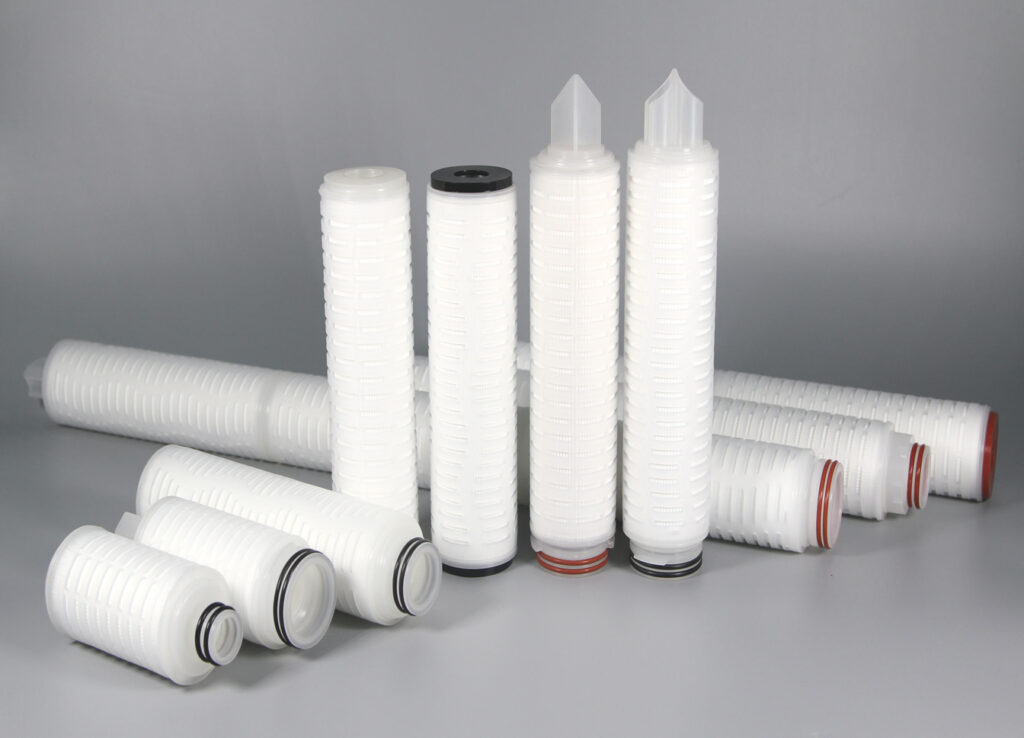
Pleated filter cartridges are critical components in industrial filtration systems, widely used in water treatment, food and beverage processing, pharmaceutical manufacturing, microelectronics, and chemical processing industries. While pleated filter cartridges may appear similar in shape and size, their quality differences can significantly affect filtration efficiency, system reliability, operating cost, and product safety.
A high-quality pleated filter cartridge ensures:
Consistent particle retention
Stable flow rate and low pressure drop
Longer service life
Reduced risk of system contamination or filter failure
Conversely, low-quality pleated filter cartridges often lead to:
Premature clogging and frequent replacement
Inconsistent micron rating performance
Filter bypass caused by poor sealing or weak bonding
Increased downtime and higher total cost of ownership
Understanding how to evaluate the quality of a pleated filter cartridge is therefore essential for engineers, procurement managers, and system designers who seek reliable, long-term filtration performance rather than short-term cost savings.
Key Structural Factors That Determine Pleated Filter Cartridge Quality
The quality of a pleated filter cartridge is fundamentally determined by its structural design and material selection. These elements directly influence filtration accuracy, mechanical strength, and operational stability.
Filter Media Selection and Micron Accuracy
The filter media is the core functional component of any pleated filter cartridge. High-quality cartridges use carefully selected filtration media with uniform pore size distribution, ensuring consistent and predictable particle retention.
Nominal vs Absolute Micron Rating
One of the most important indicators of pleated filter cartridge quality is micron rating accuracy.
Nominal micron rating typically refers to a filtration efficiency of approximately 85–90% for particles of a specified size.
Absolute micron rating indicates a much higher level of filtration efficiency, usually ≥99.9%, and is verified through standardized testing methods such as beta ratio testing.
Low-quality pleated filter cartridges often claim fine micron ratings without sufficient test data to support these claims. High-quality manufacturers provide validated performance data, including:
Particle challenge test results
Beta ratio curves
Consistent micron performance across production batches
Media Uniformity and Structural Consistency
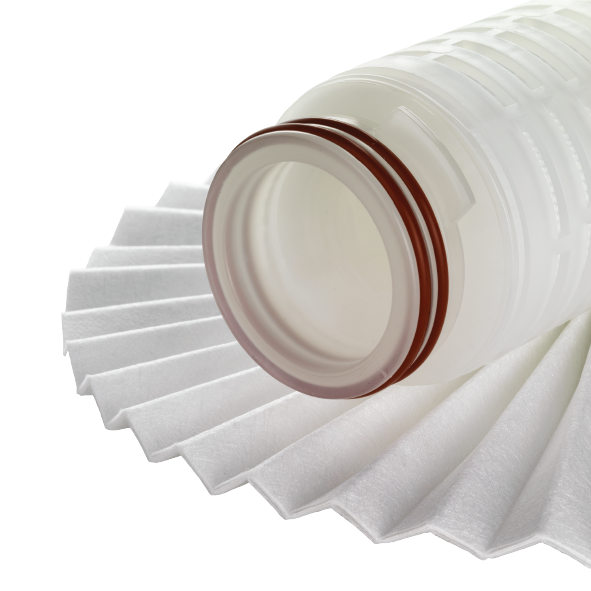
Uniform media thickness and fiber distribution are essential for stable filtration performance. Poor-quality media may contain:
Inconsistent fiber density
Localized weak spots
Uneven pore structures
These defects can cause early blockage, pressure drop instability, or even media rupture under differential pressure. In contrast, high-quality pleated filter cartridges maintain uniform filtration behavior throughout their service life, even under fluctuating operating conditions.
Pleat Design and Pleat Density
Pleat design is one of the most distinguishing features of pleated filter cartridges and a critical factor in determining overall quality.
Effective Filtration Area
Well-designed pleats significantly increase the effective filtration area compared to depth filters or melt-blown cartridges. However, more pleats do not automatically mean better quality.
High-quality pleated filter cartridges achieve an optimal balance between:
Pleat count
Pleat height
Pleat spacing
Excessively tight pleats can restrict flow and cause premature clogging, while poorly supported pleats may collapse under pressure.
Pleat Spacing and Flow Distribution
Uniform pleat spacing ensures:
Even flow distribution across the entire filter surface
Reduced localized loading
Improved dirt holding capacity
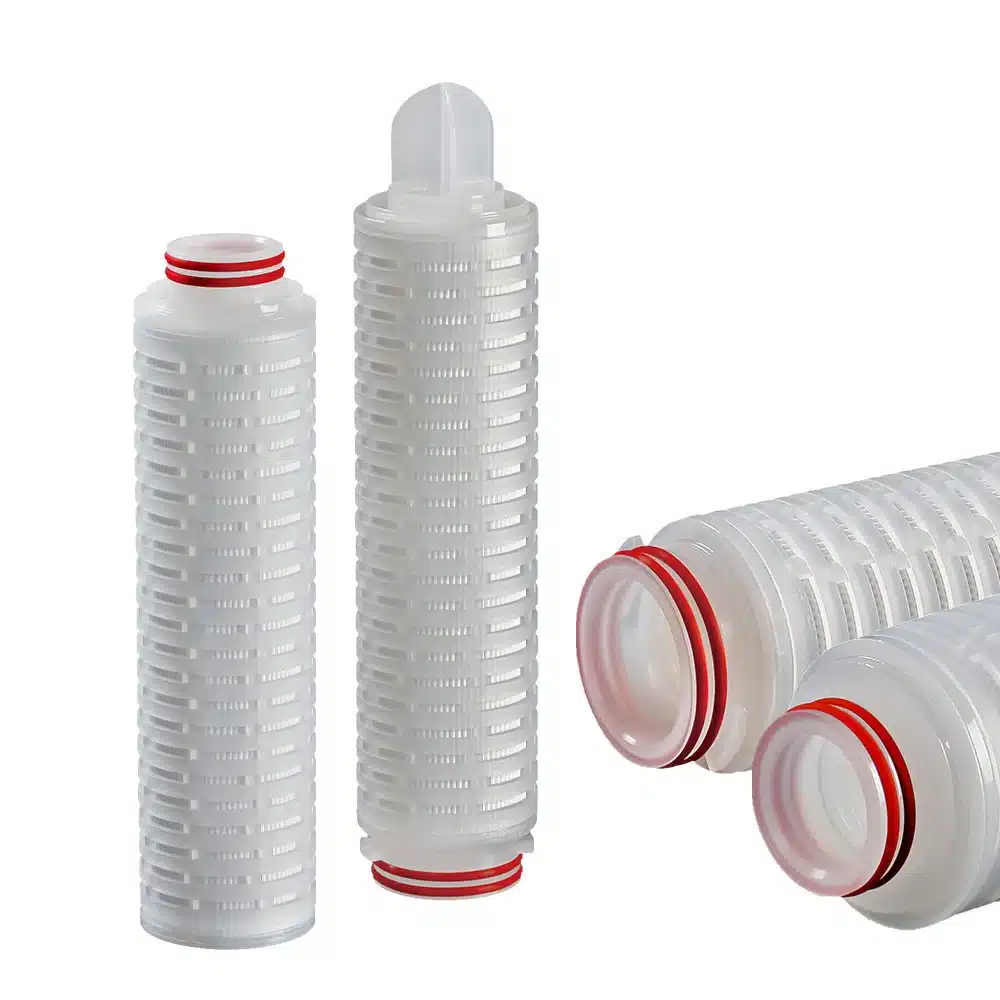
Low-quality cartridges often show irregular pleat spacing, which can be visually observed and leads to uneven filtration and shortened service life. Advanced pleated filter cartridges incorporate pleat support layers or reinforcement structures to maintain pleat stability during operation.
End Cap and Core Construction
The mechanical integrity of a pleated filter cartridge largely depends on its end caps and inner core design.
End Cap Materials and Bonding Strength
Common end cap materials include:
Polypropylene (PP)
Stainless steel
Nylon
High-quality pleated filter cartridges use end caps that are:
Chemically compatible with the process fluid
Mechanically strong
Securely bonded to the filter media
Thermal bonding technologies are generally preferred over adhesive bonding, as they reduce the risk of chemical leaching and ensure long-term sealing reliability.
Inner Core Design and Structural Support
The inner core provides structural support to prevent media collapse under differential pressure. A well-designed core features:
Uniform perforation patterns
High open area for flow efficiency
Adequate mechanical strength
Low-quality cores may deform, crack, or restrict flow, compromising both performance and safety.
Performance Indicators for Evaluating Pleated Filter Cartridge Quality
Beyond structural design, performance-based indicators provide objective criteria for evaluating pleated filter cartridge quality under real operating conditions.
Filtration Efficiency and Particle Retention
Filtration efficiency measures how effectively a pleated filter cartridge removes particles of a given size from the fluid stream.
High-quality pleated filter cartridges demonstrate:
Stable filtration efficiency over time
Predictable particle retention curves
Minimal variation between production batches
Efficiency is commonly expressed using the beta ratio, which quantifies the number of particles upstream versus downstream of the filter at a specified particle size.
A higher beta ratio indicates better filtration performance and greater reliability in critical applications such as pharmaceutical or microelectronics processing.
Pressure Drop and Flow Rate Performance
Pressure drop is one of the most critical operational parameters when evaluating pleated filter cartridge quality.
Initial Pressure Drop
A well-designed pleated filter cartridge exhibits a low initial pressure drop, allowing higher flow rates with reduced energy consumption. Excessive initial pressure drop may indicate:
Poor pleat design
Insufficient filtration area
Dense or uneven filter media
Pressure Drop Stability Over Time
High-quality pleated filter cartridges maintain a gradual and predictable pressure drop increase as contaminants accumulate. In contrast, low-quality filters often show:
Rapid pressure increase
Sudden flow restriction
Unstable operating behavior
Stable pressure drop performance is essential for process control and system efficiency.
Dirt Holding Capacity and Service Life
Dirt holding capacity refers to the total amount of contaminants a filter can retain before reaching its terminal pressure drop.
High-quality pleated filter cartridges offer:
Higher dirt holding capacity
Longer service intervals
Lower replacement frequency
This directly translates into reduced maintenance costs and improved system uptime. Superior dirt holding capacity is typically achieved through optimized pleat geometry, uniform media structure, and effective flow distribution.
Manufacturing Quality and Process Control
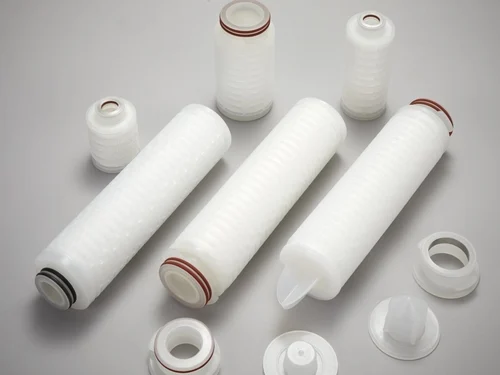
While material selection and structural design define the theoretical performance of a pleated filter cartridge, manufacturing quality and process control determine whether that performance can be consistently achieved in real-world applications. Even the best filtration media and pleat design can fail if manufacturing processes lack precision and quality oversight.
Bonding Technology and Seal Integrity
The bonding method used to assemble a pleated filter cartridge plays a decisive role in sealing performance and long-term reliability.
Thermal Bonding vs Adhesive Bonding
High-quality pleated filter cartridges typically use thermal bonding (also known as hot-melt or heat fusion bonding), which permanently fuses the filter media to the end caps and core without introducing foreign substances.
Key advantages of thermal bonding include:
Strong and consistent bond strength
Excellent chemical resistance
Elimination of adhesive contamination risk
Improved sealing integrity under temperature fluctuations
In contrast, low-quality cartridges often rely on adhesive bonding, which may degrade over time due to chemical exposure, temperature variation, or mechanical stress. Adhesive failure can lead to internal bypass, allowing unfiltered fluid to pass through the cartridge and compromise system performance.
Seal Integrity and Bypass Prevention
Seal integrity is essential to prevent fluid bypass around the filter media. High-quality pleated filter cartridges feature:
Precision-machined end caps
Proper gasket compression
Reliable bonding interfaces
A poor seal, even with high-grade media, can render a pleated filter cartridge ineffective by allowing contaminants to bypass the filtration layer entirely.
Cleanroom Production and Contamination Control
Manufacturing environment is often overlooked when evaluating pleated filter cartridge quality, yet it is particularly critical for high-purity applications.
High-quality manufacturers produce pleated filter cartridges in controlled cleanroom environments, commonly:
ISO Class 8 (Class 100,000) cleanrooms for industrial and water treatment applications
Higher-grade cleanrooms for pharmaceutical and microelectronics uses
Cleanroom production ensures:
Reduced particulate contamination
Consistent product cleanliness
Improved integrity test reliability
Low-quality production environments increase the risk of contamination, which may not be visible but can have serious consequences in sensitive processes.
Quality Inspection and Testing Procedures
Objective testing is one of the strongest indicators of pleated filter cartridge quality. Reputable manufacturers implement comprehensive testing protocols throughout the production cycle.
Bubble Point Test
The bubble point test is widely used to verify membrane integrity and pore size distribution in membrane pleated filter cartridges.
A consistent and repeatable bubble point value indicates:
Uniform pore structure
Absence of defects or tears
Reliable micron rating performance
Significant variation in bubble point results may signal inconsistent media quality or manufacturing defects.
Integrity Testing
Integrity testing methods, such as:
Bubble point test
Diffusion test
Pressure hold test
are essential for applications requiring absolute filtration performance. High-quality pleated filter cartridges are often 100% integrity tested before shipment, especially for pharmaceutical and food-grade filtration systems.
Flow Rate and Pressure Drop Testing
Flow testing verifies that each pleated filter cartridge meets specified performance parameters. This includes:
Initial pressure drop at a defined flow rate
Flow consistency across production batches
Reliable flow data allows system designers and end users to accurately predict filtration performance and system behavior.
Application-Based Quality Requirements
The definition of “high quality” for a pleated filter cartridge varies depending on the application. Evaluating quality must therefore be context-specific.
Water Treatment Applications
In water treatment systems, key quality indicators include:
Stable micron rating performance
High dirt holding capacity
Resistance to pressure fluctuations
Consistency and cost-effectiveness are critical, as filters are often used in large quantities and replaced regularly.
Food and Beverage Processing
Food and beverage applications require pleated filter cartridges that comply with:
FDA and EC food contact regulations
Low extractables and leachables
Hygienic design standards
High-quality cartridges ensure product safety while maintaining efficient flow rates and long service life.
Pharmaceutical and Bioprocessing Applications
Pharmaceutical filtration demands the highest quality standards. Key evaluation criteria include:
Absolute-rated filtration efficiency
Full integrity testing and validation documentation
Cleanroom manufacturing and batch traceability
Any compromise in cartridge quality can result in batch rejection or regulatory non-compliance.
Microelectronics and High-Purity Applications
In microelectronics and ultrapure water systems, even sub-micron contaminants can cause defects. High-quality pleated filter cartridges for these applications feature:
Highly uniform membrane structures
Exceptional cleanliness
Consistent performance under continuous operation
How to Choose a Reliable Pleated Filter Cartridge Manufacturer
Evaluating the quality of a pleated filter cartridge is inseparable from evaluating the capabilities of the manufacturer behind it.
Certifications and Industry Standards
A reliable manufacturer typically holds:
ISO 9001 quality management certification
ISO 14001 environmental management certification
Application-specific compliance such as FDA or EU regulations
These certifications reflect structured quality systems rather than isolated product claims.
Customization Capability and Technical Support
High-quality manufacturers offer:
Customized micron ratings and dimensions
Multiple media options (PP, PES, PVDF, PTFE)
Application-specific technical guidance
Strong technical support ensures the pleated filter cartridge is properly matched to the filtration system and operating conditions.
Documentation and Traceability
Complete technical documentation, including:
Data sheets
Test reports
Batch traceability records
demonstrates transparency and accountability, which are essential indicators of long-term reliability.
Conclusion: A Systematic Approach to Evaluating Pleated Filter Cartridge Quality
Evaluating the quality of a pleated filter cartridge requires a systematic, multi-dimensional approach that goes far beyond visual inspection or price comparison.
A truly high-quality pleated filter cartridge combines:
Uniform and validated filter media
Optimized pleat design and structural integrity
Reliable sealing and bonding technology
Controlled manufacturing environments
Comprehensive performance testing
Application-specific compliance and documentation
By assessing pleated filter cartridges across structural design, performance indicators, manufacturing quality, and supplier reliability, engineers and procurement professionals can make informed decisions that improve system performance, reduce operating costs, and ensure long-term process stability.
Ultimately, investing in high-quality pleated filter cartridges is not merely a purchasing decision—it is a strategic choice that directly impacts operational efficiency, product quality, and regulatory compliance.
Recommended Filter Cartridges

 English
 Spanish