
Filter Cartridges Used in Mineral Water Filtration Systems
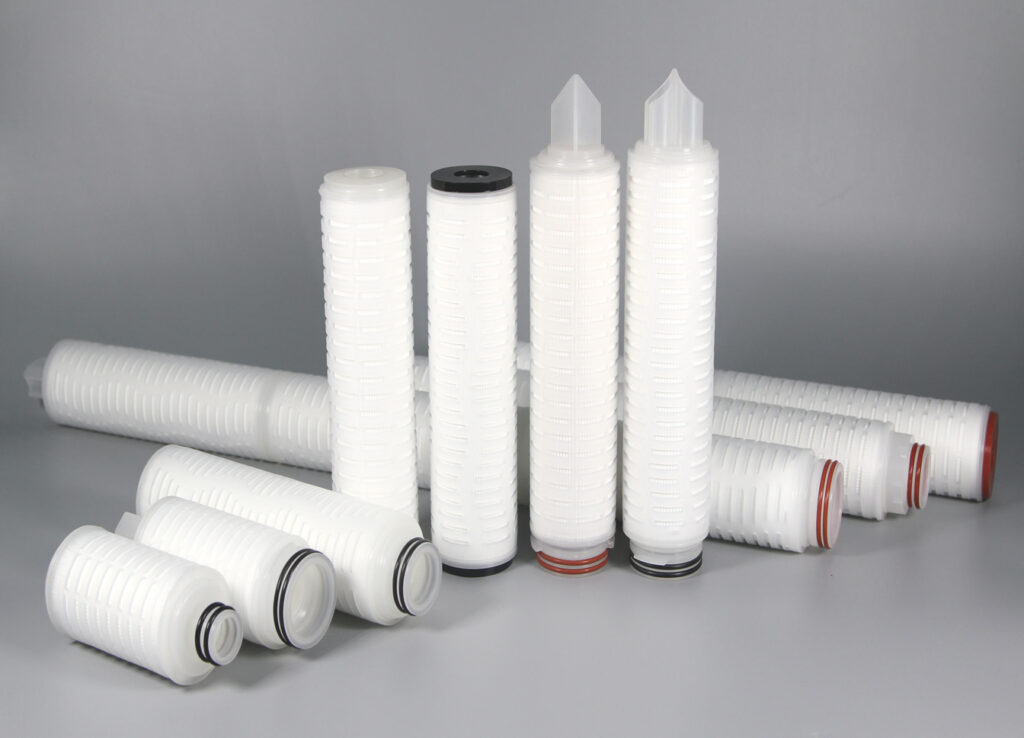
INTRODUCTION
Mineral water production requires a reliable and carefully designed filtration system to ensure the final product is clean, safe, and stable while maintaining natural minerals. Unlike purified water, mineral water filtration must remove impurities, suspended particles, and microorganisms without significantly altering the natural mineral composition of the water.
For this reason, mineral water bottling plants typically use multi-stage filtration systems with different types of filter cartridges installed at various points in the production process. Each filtration stage performs a specific function, such as removing large particles, protecting membrane systems, or eliminating bacteria before bottling.
This article explains which filter cartridges are used in mineral water filtration systems and how they should be configured throughout the production process.
Mineral Water Filtration Process Overview
In a typical mineral water production line, raw water goes through several treatment steps before entering the filling machine. The purpose of these steps is to remove suspended solids, organic matter, microorganisms, and other contaminants while ensuring the water maintains its natural taste and mineral content.
A common mineral water filtration process includes:
Raw water pre-filtration
Activated carbon filtration
Fine filtration before membrane systems
Sterile filtration before filling
Final protection filtration
Each stage requires specific filter cartridge types and micron ratings to achieve optimal performance.
1. Raw Water Pre-Filtration
Purpose
The first filtration step removes large suspended particles and sediments present in raw mineral water sources such as springs, wells, or underground reservoirs.
Typical contaminants include:
Sand
Rust particles
Mud and sediment
Pipe scale
Suspended solids
Removing these impurities early in the process prevents downstream filters and equipment from clogging.
Common Filter Cartridges
The most commonly used filter cartridges in this stage include:
PP Melt Blown Filter Cartridge
String Wound Filter Cartridge
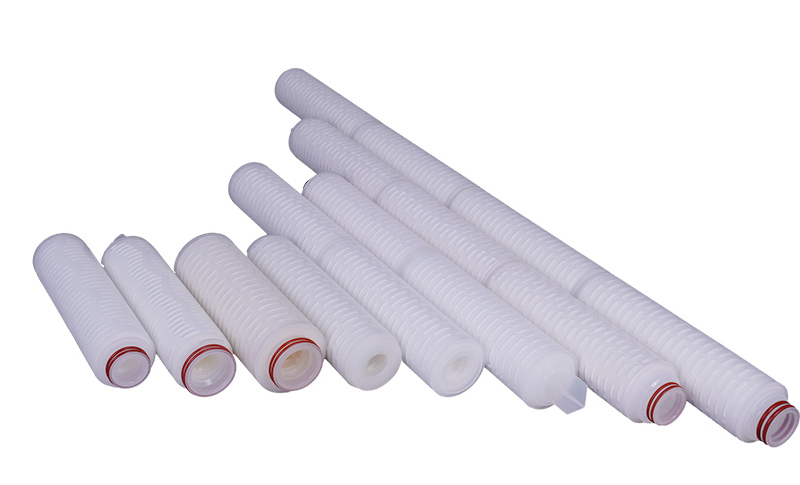
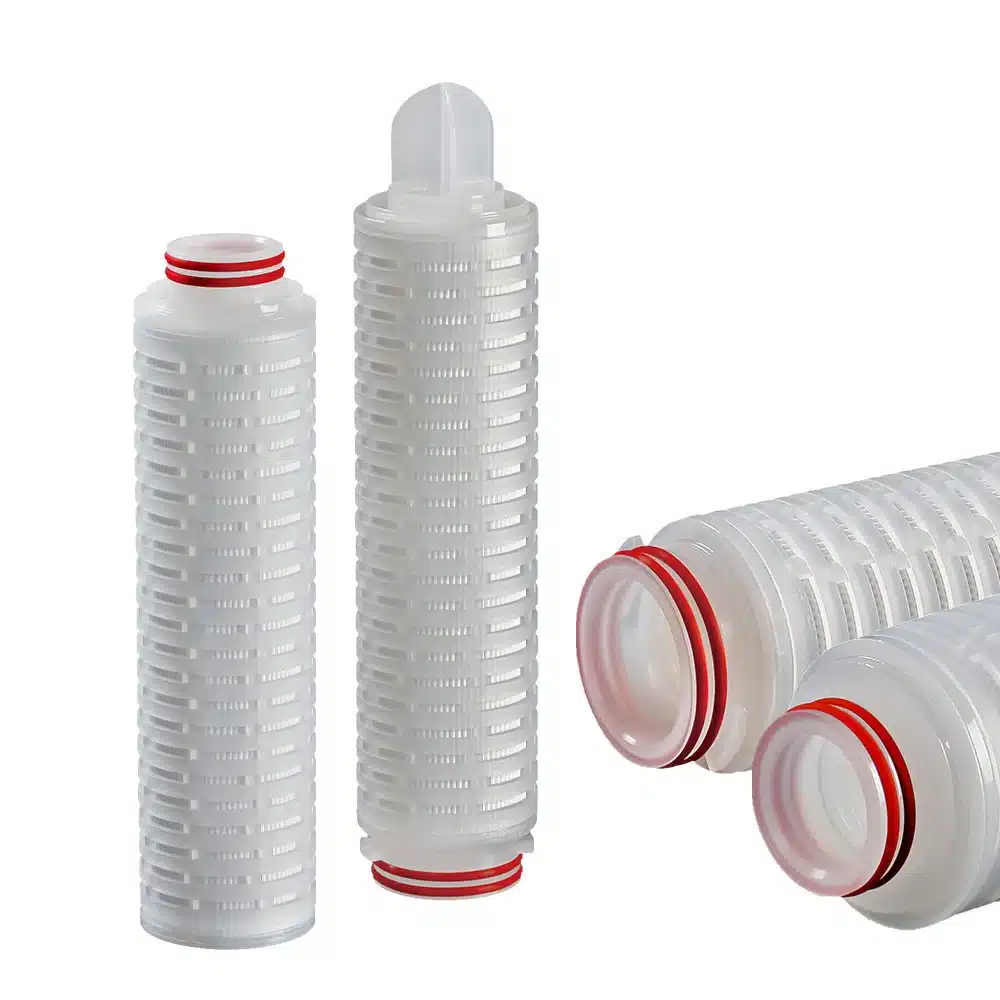
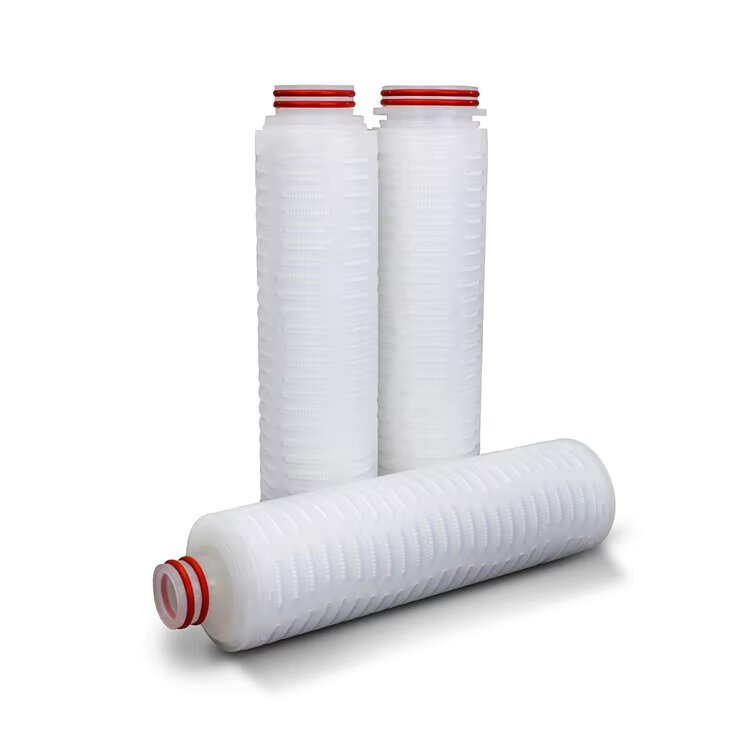
PP Pleated Filter Cartridge
Melt Blown Filter Cartridge
Melt blown filters are made from polypropylene fibers and provide good dirt holding capacity for removing coarse particles.
String Wound Filter Cartridge
String wound filters consist of yarn wound around a core. Their deep filtration structure allows them to capture large amounts of contaminants.
PP Pleated Filter Cartridge
Pleated filters offer larger filtration surface area, lower pressure drop, and longer service life.
Recommended Micron Ratings
| Filter Type | Recommended Micron Rating |
|---|---|
| Melt Blown Filter Cartridge | 10 – 20 μm |
| String Wound Filter Cartridge | 10 – 25 μm |
| PP Pleated Filter Cartridge | 5 – 10 μm |
This stage protects downstream treatment equipment such as sand filters and activated carbon filters.
2. Activated Carbon Filtration
Purpose
Activated carbon filtration is used to remove dissolved contaminants and unwanted tastes or odors in mineral water.
The main substances removed include:
Chlorine
Organic compounds
Color
Odor
Residual oxidants
Although natural mineral water sources often contain low chlorine levels, carbon filtration is still widely used to improve water quality and stability.
Carbon Filtration System
Activated carbon is usually installed in large filtration tanks rather than cartridges. However, after carbon filtration, a cartridge filter is required to remove carbon fines.
Post Carbon Filter Cartridges
Common cartridge filters used after carbon tanks include:
PP Melt Blown Filter Cartridge
PP Pleated Filter Cartridge
Recommended Micron Rating
5 μm
This stage ensures that carbon particles do not enter downstream filtration equipment.
3. Fine Filtration Before Membrane Systems
Many modern mineral water plants install membrane filtration systems, such as:
Microfiltration (MF)
Ultrafiltration (UF)
These systems improve water clarity and remove microorganisms.
However, membrane systems are sensitive to particle contamination. Therefore, fine filtration before the membrane system is essential.
Purpose
Prevent membrane fouling
Protect membrane modules
Improve filtration efficiency
Recommended Filter Cartridge
The most suitable filter cartridge is:
PP Pleated Filter Cartridge
Pleated filters provide:
Large filtration surface area
High flow rate
Low pressure drop
Long service life
Recommended Micron Ratings
| Membrane System | Filter Micron |
|---|---|
| Ultrafiltration (UF) | 1 – 5 μm |
| Microfiltration (MF) | 1 μm |
Installing the correct pre-filter significantly reduces membrane maintenance and replacement costs.
4. Sterile Filtration Before Filling
The most critical filtration step in mineral water production is the sterile filtration stage. This filtration step is typically installed just before the filling machine.
Purpose
Sterile filtration removes microorganisms that could affect product safety and shelf life.
The contaminants removed include:
Bacteria
Microorganisms
Fine particles
Without proper sterile filtration, bottled mineral water may develop microbial contamination during storage.
Common Membrane Filter Cartridges
The following membrane filter cartridges are widely used:
PES Pleated Filter Cartridge
PVDF Pleated Filter Cartridge
Nylon Membrane Filter Cartridge
These filters use microporous membranes capable of removing microorganisms.
PES Membrane Filters
PES (Polyethersulfone) membranes provide:
High flow rate
Low protein binding
Excellent filtration efficiency
PVDF Membrane Filters
PVDF membranes offer:
Strong chemical resistance
Hydrophilic surface
Reliable microbial removal
Nylon Membrane Filters
Nylon membranes are widely used in food and beverage filtration applications.
Recommended Micron Ratings
| Filtration Type | Micron Rating |
|---|---|
| Microbial reduction | 0.45 μm |
| Sterile filtration | 0.22 μm |
A 0.22 μm membrane filter cartridge is commonly used to achieve sterile filtration.
5. Filling Line Protection Filtration
Some high-standard mineral water plants add an additional filtration stage after sterile filtration.
Purpose
This stage provides final protection before bottling.
It prevents:
Secondary contamination from pipelines
Microbial contamination
Particle contamination from equipment
Recommended Filter Cartridge
A typical solution includes:
0.22 μm membrane pleated filter cartridge
This ensures maximum microbiological safety before the filling machine.
Typical Mineral Water Filtration Process Flow
A typical mineral water production filtration process may look like this:
Raw Water
↓
Sand Filter
↓
Activated Carbon Filter
↓
5 μm Filter Cartridge
↓
UF or MF Membrane System (optional)
↓
1 μm Pleated Filter Cartridge
↓
0.45 μm Membrane Filter
↓
0.22 μm Sterile Filter
↓
Filling Machine
This multi-stage filtration process ensures the water is clean, safe, and microbiologically stable.
Typical Filter Cartridge Configuration
| Filtration Stage | Filter Cartridge Type | Micron Rating |
|---|---|---|
| Pre-filtration | Melt Blown / String Wound | 10–20 μm |
| Carbon protection | PP Pleated Filter Cartridge | 5 μm |
| Membrane protection | PP Pleated Filter Cartridge | 1–5 μm |
| Fine filtration | PP Pleated Filter Cartridge | 1 μm |
| Sterile filtration | PES / PVDF Membrane Filter | 0.22–0.45 μm |
Key Considerations for Mineral Water Filtration
Maintaining Natural Minerals
Unlike purified water production, mineral water systems should avoid reverse osmosis (RO) because RO removes beneficial minerals.
Instead, filtration systems focus on removing particles and microorganisms without affecting mineral content.
Microbiological Control
The most important factor in mineral water safety is microbial control. Using membrane filter cartridges with 0.22 μm pore size helps remove bacteria and ensures hygienic water production.
Low Pressure Drop
Using pleated filter cartridges is recommended because they provide:
Large filtration surface area
High flow capacity
Low pressure drop
Long service life
This reduces energy consumption and improves system efficiency.
Food Grade Materials
All filter cartridges used in mineral water production should be made from food-grade materials and comply with international standards such as FDA food contact requirements.
Conclusion
Mineral water production requires a carefully designed multi-stage filtration system to ensure water purity while preserving natural mineral composition. By using the right combination of filter cartridges at each stage—such as melt blown filters, string wound filters, pleated filters, and membrane filters—mineral water plants can achieve reliable contaminant removal and microbial control.
Proper filtration not only improves water quality but also protects equipment, extends filter service life, and ensures safe bottled mineral water for consumers.
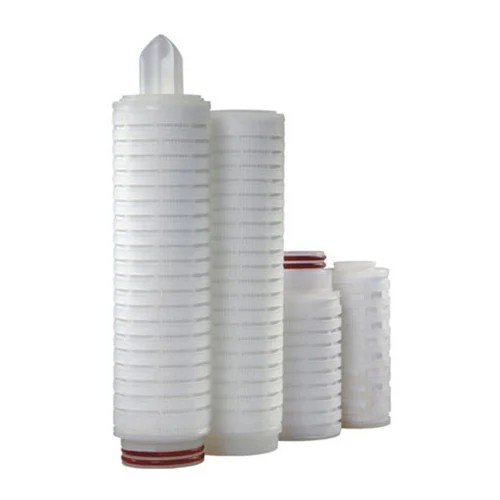
Recommended Filter Cartridges

 English
 Spanish