
Polypropylene Pleated Filter Cartridges: Technical Guide, Performance, and Industrial Applications
INTRODUCTION
1. Why Polypropylene Pleated Filter Cartridges Are Widely Used
In modern industrial filtration systems, reliability, consistency, and cost efficiency are essential performance criteria. Across industries such as water treatment, food and beverage processing, chemical manufacturing, power generation, and general industrial filtration, polypropylene pleated filter cartridges have become one of the most widely adopted filtration solutions.
The popularity of polypropylene pleated filter cartridges is not accidental. Polypropylene (PP) offers excellent chemical resistance, stable mechanical properties, and broad application compatibility. When combined with a pleated structure, PP filter media delivers high flow capacity, low pressure drop, and extended service life, making it suitable for both pre-filtration and final filtration stages.
Compared with traditional depth filters or non-pleated designs, polypropylene pleated filter cartridges provide a balanced solution that meets performance requirements without excessive operational costs. For system designers and procurement professionals, understanding why these cartridges are so widely used is the first step toward selecting the right filtration solution.
This article provides a comprehensive technical guide to polypropylene pleated filter cartridges, covering structure, filtration mechanisms, performance characteristics, manufacturing quality considerations, and typical industrial applications. The goal is to help users make informed, technically sound decisions when specifying polypropylene pleated filter cartridges for industrial filtration systems.
2. What Are Polypropylene Pleated Filter Cartridges?
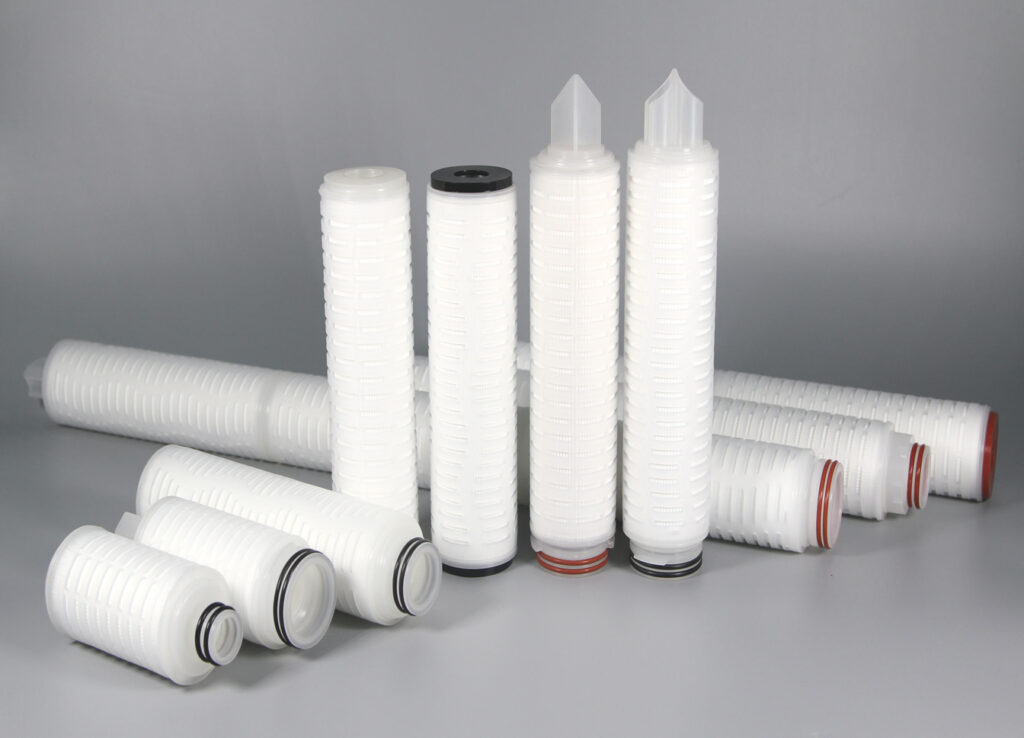
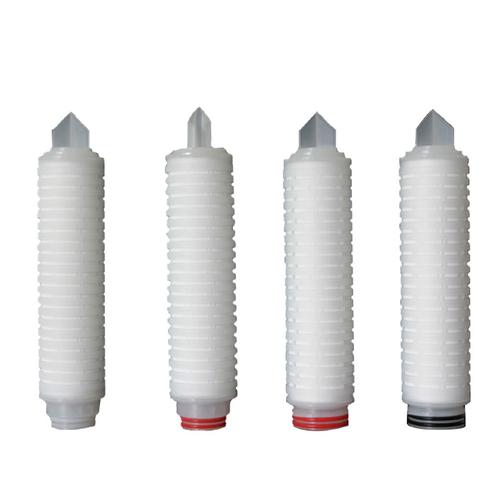
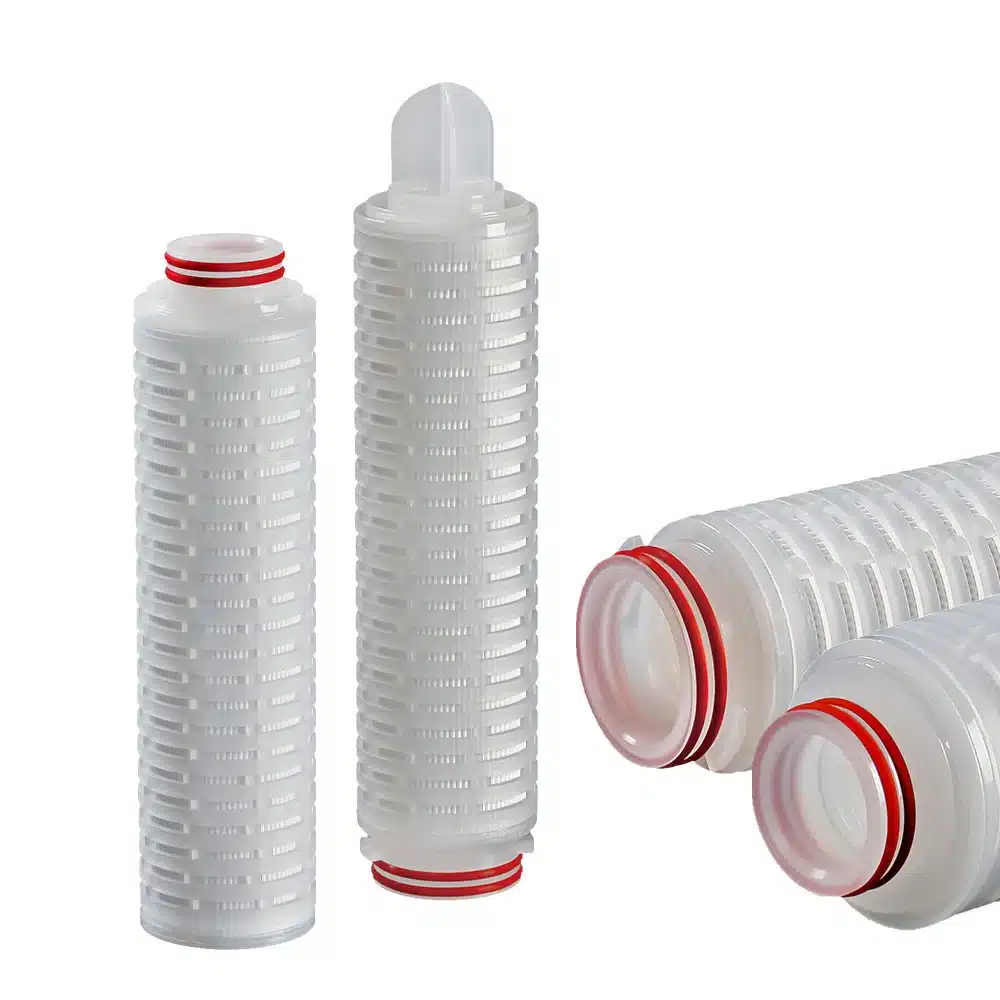
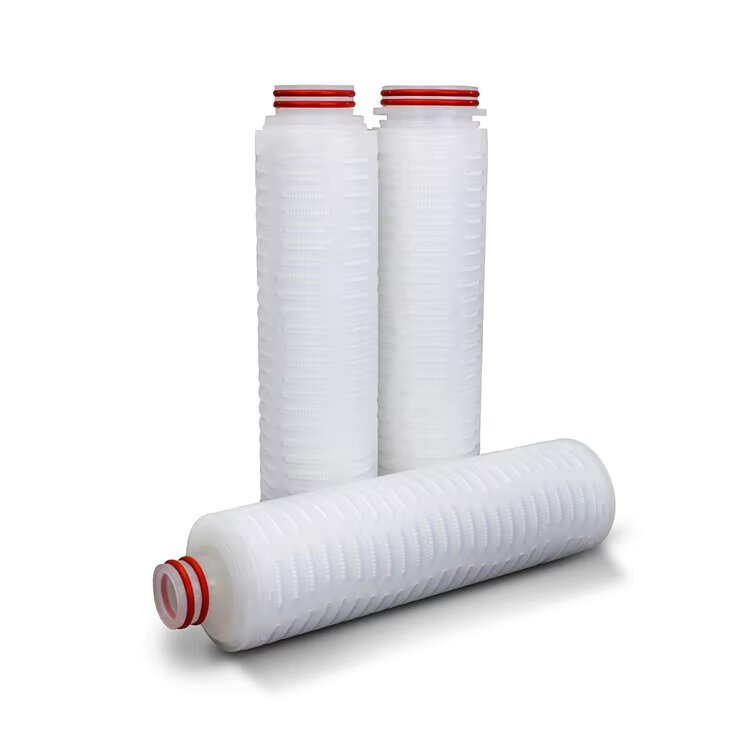
Polypropylene pleated filter cartridges are cylindrical filter elements constructed using polypropylene-based filter media that is folded into a pleated configuration. The pleated media is supported by internal and external polypropylene structures and sealed with end caps to form a complete, self-contained filtration unit.
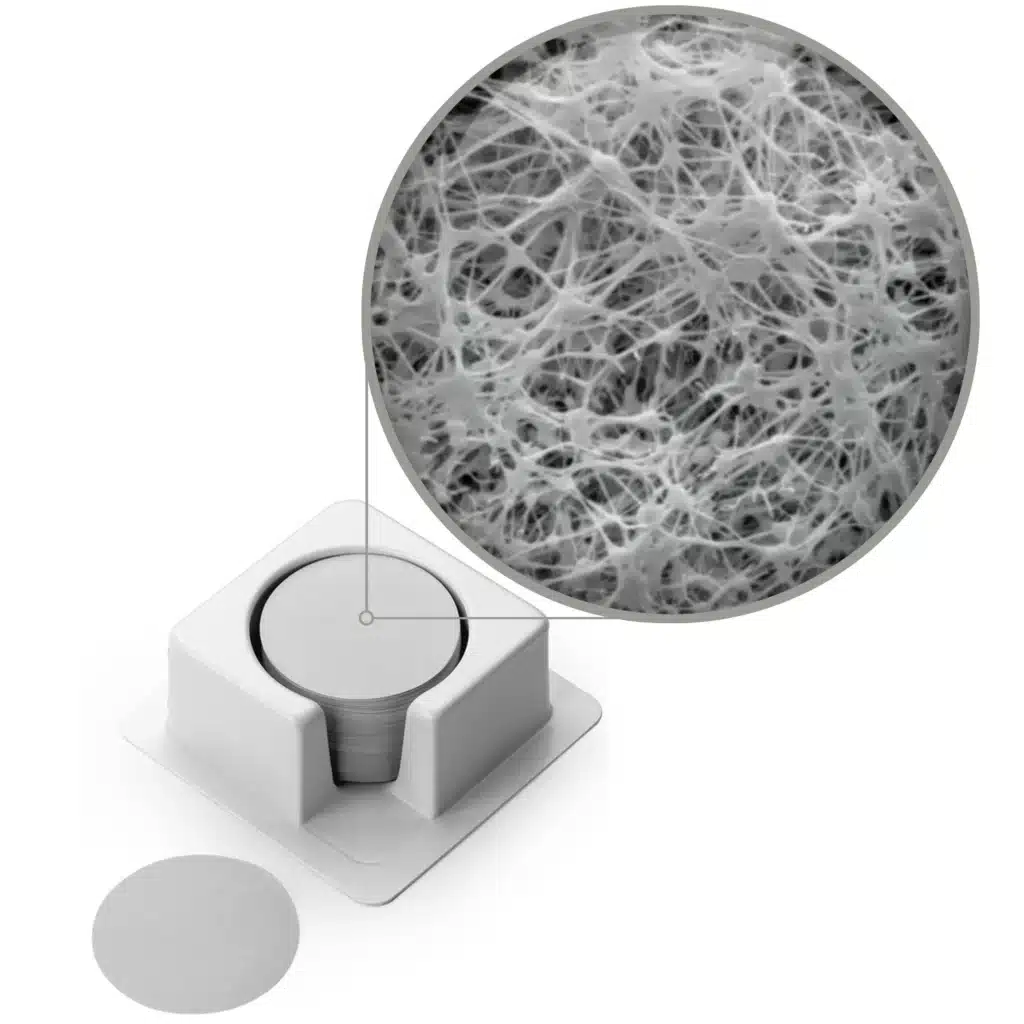
Unlike depth filters such as melt blown or string wound cartridges, which rely on fiber thickness to capture contaminants, pleated filter cartridges primarily use surface filtration. Particles larger than the membrane or fiber pore size are retained on the surface of the filter media, allowing for predictable filtration efficiency and easier monitoring of pressure drop.
The pleated design dramatically increases the effective filtration area within a standard cartridge length. This increased surface area allows polypropylene pleated filter cartridges to handle higher flow rates while maintaining lower initial pressure drop compared to non-pleated designs.
Key defining features include:
Controlled pore size distribution
High effective filtration area
Consistent performance across batches
Compatibility with standard filter housings
Because of these characteristics, polypropylene pleated filter cartridges are commonly used in applications requiring stable performance and repeatable results.
3. Structure and Components of Polypropylene Pleated Filter Cartridges
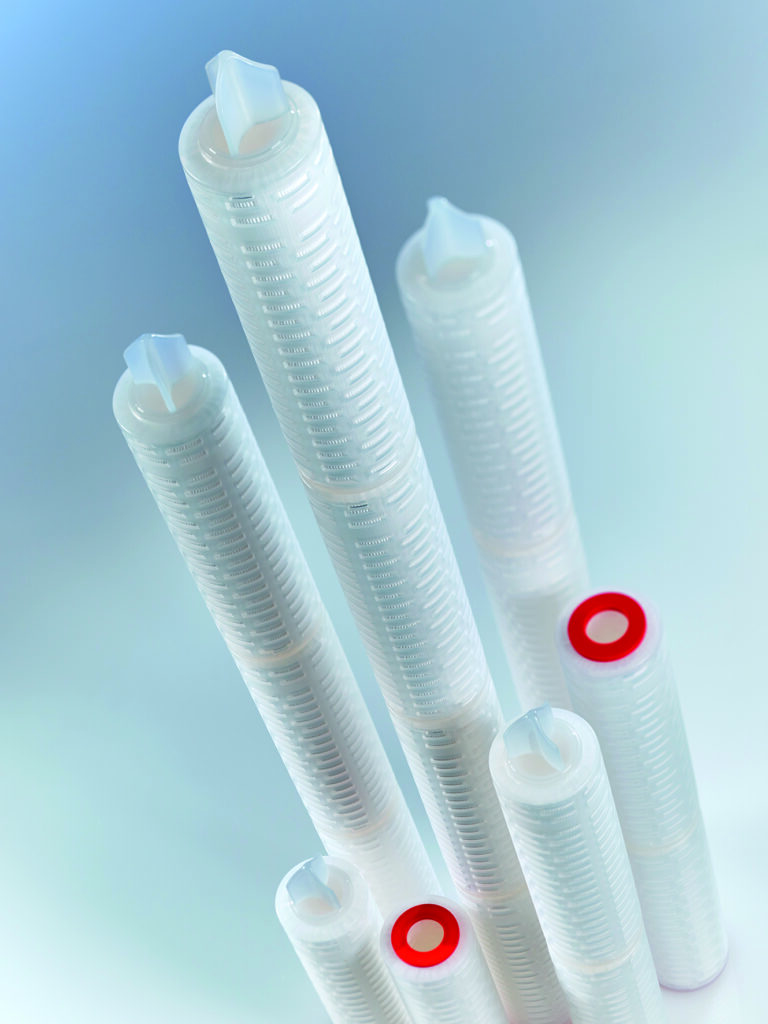
A high-quality polypropylene pleated filter cartridge is the result of careful engineering and precise manufacturing. Each component plays a specific role in ensuring filtration performance, mechanical stability, and service life.
3.1 Polypropylene Filter Media
The filter media is the heart of the cartridge. In polypropylene pleated filter cartridges, the media is typically made from:
Melt-blown polypropylene fibers
Spunbond polypropylene layers
Multi-layer composite PP structures
High-quality cartridges use 100% virgin polypropylene, which provides consistent fiber diameter, stable pore structure, and reliable chemical resistance. Virgin PP media minimizes the risk of fiber shedding, material degradation, and extractables, which is especially important in sensitive applications.
The pore size of the PP filter media determines the cartridge’s micron rating. Accurate control of fiber distribution during manufacturing ensures uniform filtration efficiency and consistent performance.
3.2 Pleated Design and Effective Filtration Area
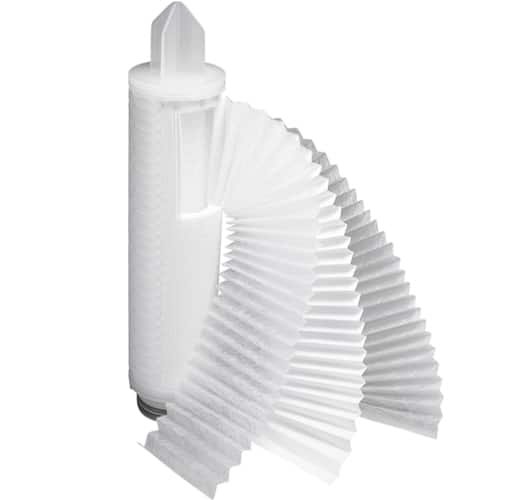
Pleating is a critical design feature that distinguishes polypropylene pleated filter cartridges from traditional depth filters. By folding the filter media into evenly spaced pleats, manufacturers significantly increase the effective filtration area within a compact cartridge format.
A well-designed pleated structure provides:
Even flow distribution across the entire media surface
Reduced localized loading and premature clogging
Improved dirt-holding capacity
Extended service life
Uniform pleat spacing and consistent pleat depth are essential. Poor pleating can lead to channeling, uneven pressure distribution, and early failure under operating conditions.
3.3 Support Layers and Drainage Structure
Support layers are positioned upstream and downstream of the polypropylene filter media to provide mechanical reinforcement and protect the media from deformation during operation.
These support layers:
Prevent pleat collapse under differential pressure
Improve structural rigidity
Maintain stable flow paths through the cartridge
High-quality polypropylene pleated filter cartridges use thermally bonded support layers rather than adhesives, reducing the risk of contamination and ensuring long-term structural stability.
3.4 End Caps, Center Core, and Sealing System
End caps and center cores are typically made from polypropylene to ensure broad chemical compatibility and uniform thermal expansion.
Key functions include:
Securing the pleated media assembly
Providing structural support under pressure
Ensuring proper alignment within the filter housing
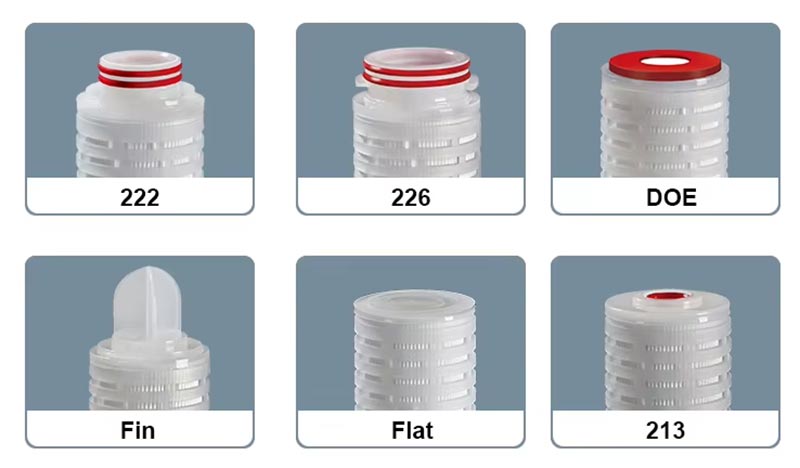
Sealing systems may include flat gaskets, O-rings, or molded seals. Common gasket materials include EPDM, silicone, and Viton, selected based on chemical compatibility and operating temperature.
A reliable sealing system is essential to prevent bypass, where unfiltered fluid passes around the cartridge rather than through the filter media.
4. Filtration Mechanism and Performance Characteristics
4.1 Surface Filtration Principle
Polypropylene pleated filter cartridges primarily operate through surface filtration. Particles larger than the pore size are retained on the upstream surface of the filter media, forming a visible filter cake over time.
This mechanism provides:
High initial filtration efficiency
Easy monitoring of pressure drop
Predictable replacement intervals
Because contaminants accumulate on the surface, the cartridge maintains consistent filtration performance until the pressure drop reaches its terminal limit.
4.2 Depth Contribution in Multi-Layer Media
While surface filtration is dominant, many polypropylene pleated filter cartridges incorporate multi-layer media designs that provide partial depth filtration. Larger particles are captured in upstream layers, while finer particles are retained closer to the surface.
This layered structure enhances dirt-holding capacity without sacrificing filtration accuracy, making the cartridge suitable for fluids with mixed particle size distributions.
4.3 Impact on System Stability
Stable filtration performance is critical for protecting downstream equipment such as pumps, valves, membranes, and instrumentation. Polypropylene pleated filter cartridges help maintain system stability by:
Delivering consistent flow rates
Preventing sudden pressure spikes
Reducing the risk of particle breakthrough
These characteristics make them ideal for continuous industrial processes where unplanned downtime must be minimized.
5. Micron Ratings and Filtration Efficiency
5.1 Understanding Micron Ratings
Micron rating defines the size of particles that a filter cartridge is designed to retain. Polypropylene pleated filter cartridges are available in a wide range of micron ratings, typically from 0.5 µm to 100 µm.
Micron ratings may be expressed as:
Nominal ratings, indicating a percentage-based retention efficiency
Absolute ratings, indicating near-total particle retention
Understanding how a manufacturer defines micron ratings is essential for accurate comparison and selection.
5.2 Consistency and Repeatability
In industrial applications, consistency is often more important than achieving the lowest possible micron rating. Variations in pore size distribution can lead to unpredictable performance and contamination risks.
High-quality polypropylene pleated filter cartridges are produced under controlled conditions to ensure:
Consistent fiber structure
Stable pore size distribution
Repeatable performance across production batches
This consistency is a key indicator of manufacturing quality and process control.
6. Performance Parameters of Polypropylene Pleated Filter Cartridges
To properly evaluate and compare polypropylene pleated filter cartridges, buyers must understand several key performance indicators. These parameters directly affect filtration efficiency, operating cost, and system reliability.
6.1 Filtration Efficiency
Filtration efficiency refers to the cartridge’s ability to remove particles at its rated micron level. High-quality PP pleated filter cartridges typically offer:
Absolute or high nominal retention
Stable pore structure
Consistent particle removal throughout service life
For critical applications, efficiency testing is commonly verified using standardized methods such as multi-pass testing.
6.2 Flow Rate and Pressure Drop
One major advantage of polypropylene pleated filter cartridges is their high flow capacity combined with low initial pressure drop.
Key influencing factors include:
Pleat count and pleat geometry
Cartridge length (10”, 20”, 30”, 40”)
Micron rating
Fluid viscosity and temperature
Proper cartridge selection helps reduce energy consumption and extends replacement intervals.
6.3 Dirt-Holding Capacity
Dirt-holding capacity measures how much contaminant a cartridge can retain before reaching its terminal pressure drop.
Polypropylene pleated filter cartridges achieve high dirt-holding capacity through:
Increased filtration surface area
Optimized pleat spacing
Gradient or layered fiber structures
This results in longer service life and lower total cost of ownership.
6.4 Operating Temperature and Pressure Limits
Typical operating ranges:
Temperature: up to 80–90°C (176–194°F)
Differential pressure: up to 4.0 bar (varies by design)
Because polypropylene has excellent thermal stability, these cartridges perform reliably in most industrial filtration environments.
7. Applications of Polypropylene Pleated Filter Cartridges
Due to their versatility and cost-effectiveness, polypropylene pleated filter cartridges are widely used across multiple industries.
7.1 Water Treatment
Common uses include:
Pre-filtration before RO and UF membranes
Municipal drinking water treatment
Industrial process water filtration
Their chemical resistance and consistent performance make them ideal for continuous water treatment operations.
7.2 Food and Beverage Industry
Polypropylene pleated filter cartridges are frequently applied in:
Bottled water
Beverage clarification
Ingredient water filtration
They comply with FDA food-contact regulations and do not release fibers or additives into filtered media.
7.3 Chemical and Process Industries
In chemical processing, these cartridges are used for:
Acid and alkali filtration
Solvent-compatible applications
Process fluid protection
Polypropylene’s broad chemical compatibility reduces the risk of material degradation.
7.4 Electronics and Microelectronics
Used as pre-filters in:
Ultra-pure water (UPW) systems
Semiconductor manufacturing
PCB cleaning processes
They help protect downstream membrane filters and sensitive equipment.
7.5 Pharmaceuticals (Non-Sterile Filtration)
While not a sterilizing-grade filter, polypropylene pleated filter cartridges are widely used for:
Raw water pre-filtration
Process water clarification
Equipment protection
Their low extractables and stable structure support GMP environments.
8. Comparison: Polypropylene Pleated Filter vs Other Filter Types
Understanding how polypropylene pleated filter cartridges compare with alternatives helps buyers make informed decisions.
8.1 PP Pleated vs Melt Blown Filter Cartridges
| Feature | PP Pleated | Melt Blown |
|---|---|---|
| Surface Area | High | Moderate |
| Flow Rate | High | Lower |
| Dirt Holding | Excellent | Limited |
| Reusability | Possible | Disposable |
| Cost Efficiency | Higher long-term | Lower initial |
8.2 PP Pleated vs String Wound Filters
PP pleated cartridges offer:
More uniform pore structure
Lower pressure drop
Better particle retention consistency
String wound filters remain suitable for coarse filtration but lack precision.
8.3 PP Pleated vs Membrane Pleated Filters
Membrane pleated cartridges (PES, PVDF, PTFE) are used for critical filtration, while polypropylene pleated cartridges excel as high-performance pre-filters with superior cost-performance balance.

9. How to Choose the Right Polypropylene Pleated Filter Cartridge
Selecting the correct cartridge involves evaluating several technical and operational factors.
9.1 Micron Rating Selection
Common micron ratings include:
0.5 μm
1 μm
5 μm
10 μm
20 μm
Choose based on:
Contaminant size
Downstream equipment requirements
Process sensitivity
9.2 Cartridge Dimensions and End Caps
Ensure compatibility with existing housings:
Standard lengths: 10”, 20”, 30”, 40”
End cap options: DOE, SOE, Code 7, Code 3, etc.
Correct sealing prevents bypass and contamination risks.
9.3 Operating Conditions
Consider:
Temperature
Pressure
Chemical exposure
Flow demand
Polypropylene pleated filter cartridges are ideal for most ambient and moderately elevated conditions.
9.4 Regulatory Requirements
For food, beverage, and pharmaceutical use, ensure cartridges comply with:
FDA 21 CFR
EU food-contact regulations (if required)
10. Quality Verification and Testing Standards
High-quality polypropylene pleated filter cartridges undergo strict quality control procedures.
10.1 Visual and Dimensional Inspection
Pleat uniformity
Bonding integrity
Cartridge length accuracy
10.2 Flow and Pressure Testing
Initial pressure drop measurement
Flow consistency testing
10.3 Integrity and Retention Testing
Bubble point test (when applicable)
Particle challenge testing
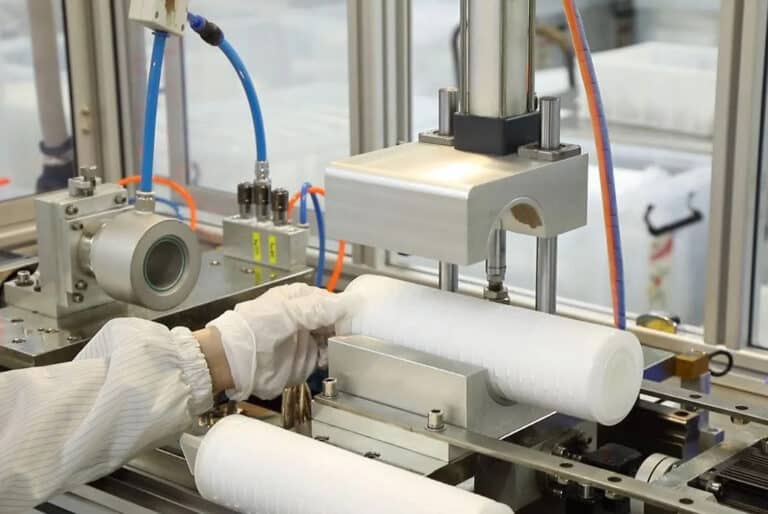
10.4 Cleanroom Manufacturing
High-quality cartridges are manufactured in controlled cleanroom environments, typically Class 100,000 or better.
Cleanroom production ensures:
Minimal particulate contamination
Consistent product quality
Compliance with food, beverage, and pharmaceutical standards
Each cartridge undergoes visual inspection and dimensional checks before packaging.
11. Installation, Maintenance, and Replacement Guidelines
11.1 Installation Best Practices
Flush system before installation
Avoid overtightening
Ensure correct orientation
11.2 Maintenance Tips
Monitor differential pressure
Replace cartridges at recommended pressure drop
Keep replacement records
11.3 Replacement Frequency
Replacement intervals depend on:
Feed water quality
Flow rate
Contaminant load
Regular monitoring helps optimize lifecycle costs.
12. Why Choose Econe Filtration Polypropylene Pleated Filter Cartridges
Econe Filtration specializes in manufacturing high-performance polypropylene pleated filter cartridges designed for global industrial applications.
Key advantages include:
Advanced pleating technology
Strict raw material selection
Cleanroom production
Consistent batch quality
OEM and customization support
Our cartridges are engineered to deliver reliable filtration, long service life, and competitive pricing.
13. Conclusion
Polypropylene pleated filter cartridges are a cornerstone solution in modern industrial filtration. Their high flow rate, excellent dirt-holding capacity, chemical resistance, and cost efficiency make them an ideal choice for water treatment, food and beverage, chemical processing, and general industrial applications.
By selecting a trusted manufacturer and matching cartridge specifications to application requirements, users can achieve optimal filtration performance and long-term operational stability.
Recommended Filter Cartridges

 English
 Spanish