
Understanding Pressure Drop (ΔP) of Pleated Filter Cartridges
INTRODUCTION
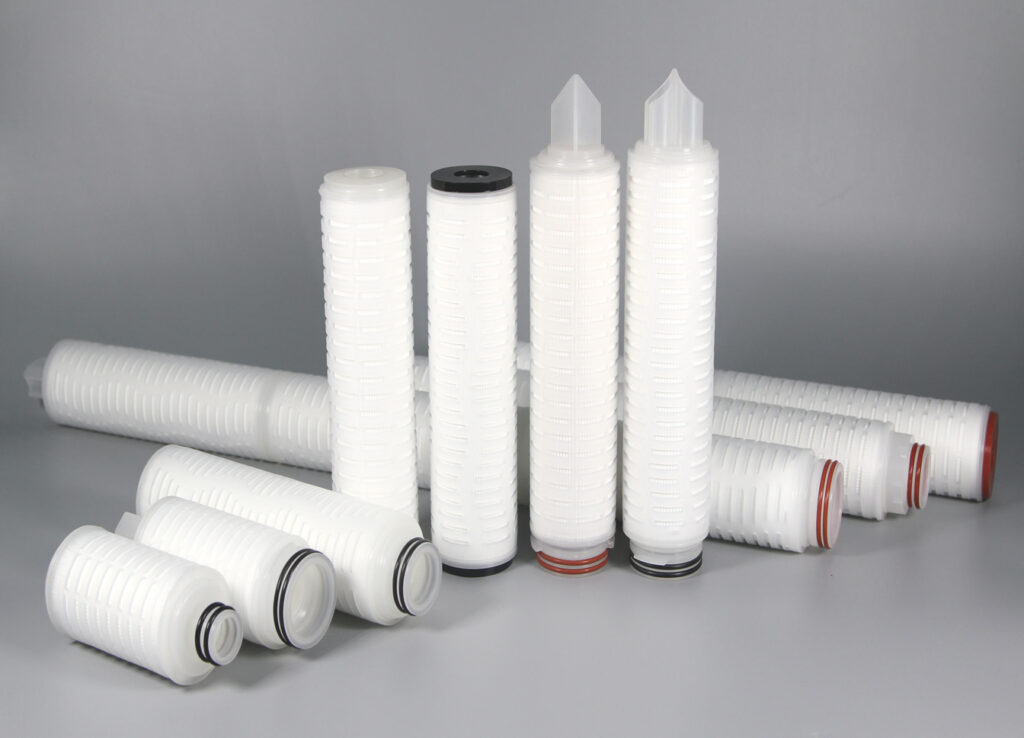
Pressure drop — often expressed as differential pressure (ΔP) — is one of the most important performance parameters in pleated filter cartridges used across industrial and commercial filtration systems. It tells you how much resistance a filter element introduces to fluid flow, reflects the filter’s operating condition, and influences energy consumption, service life, and system efficiency.
1. What Is Pressure Drop (ΔP) in Pleated Filter Cartridges?
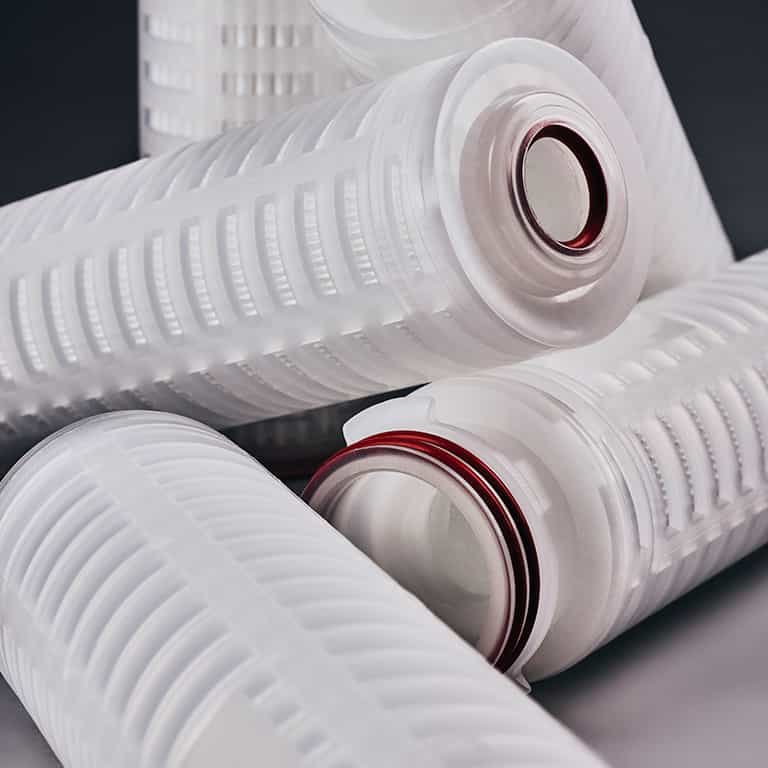
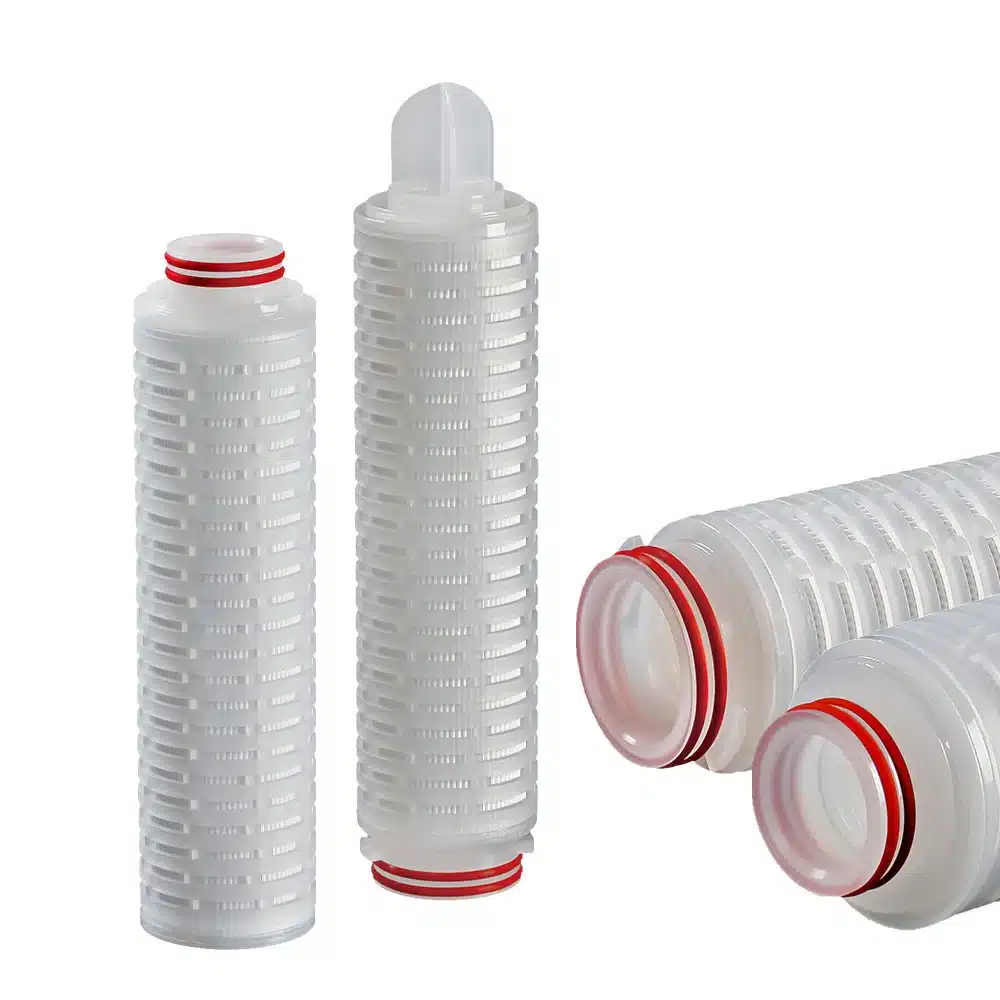
Pressure drop refers to the difference in pressure between the inlet and outlet of a pleated filter cartridge as fluid flows through the media. In technical terms, it’s also called differential pressure and is commonly measured in psi (pounds per square inch) or bar.
Mathematically:
ΔP = Inlet Pressure – Outlet Pressure
The larger this number, the more resistance the filter is creating to fluid flow — similar to how a narrow pipe restricts water flow more than a wide one.
A clean cartridge will have a lower pressure drop; as the filter media traps particles, the resistance increases and pressure drop rises accordingly.
2. Why Pressure Drop Matters in Filtration Systems
ΔP isn’t just a measurement — it’s a vital indicator of filter health and system performance:
A. Filtration Efficiency and Clogging Indicator
As contaminants build up on the filter media, the media becomes more resistant to flow. This causes differential pressure to gradually increase — a direct signal that the filter is becoming clogged and may soon require replacement or maintenance.
B. Energy Consumption
Higher ΔP means greater resistance for the pump or blower to overcome. This increases energy usage and operating costs. Designers often aim for low initial ΔP to reduce baseline energy requirements.
C. Service Life and Operational Safety
Knowing the progression of pressure drop helps determine when a cartridge should be replaced before it affects process flow or system safety. A final ΔP limit — set by design or manufacturer — marks the end of effective cartridge life.
3. How Pressure Drop Develops During Filtration
When a pleated filter is first installed, the fluid flows relatively freely through its pores and pleats. This gives you a baseline pressure drop known as initial ΔP. As particles accumulate:
The media pores begin to clog.
Flow pathways narrow.
Differential pressure increases steadily.
This increase in ΔP over time is analogous to adding plaque in a pipe — the flow becomes restricted, and more “force” is needed to push fluid through.
Eventually ΔP reaches a defined “final” or “change-out” value, indicating it’s time to replace the cartridge to avoid excessive energy use or compromised filtration performance.

4. Typical Initial and Final Pressure Drop Values
While specific values depend on filter size, medium, and application, some general ΔP behavior includes:
Initial ΔP (clean cartridge): often less than ~1 psi for many cartridge filters before contaminant loading begins.
Final ΔP (replacement point): many cartridge filters are changed when ΔP reaches 15–35 psi, depending on fluid type, flow rate, and system design.
These are illustrative ranges — always refer to manufacturer data for precise recommendations in your system.
5. How to Measure Pressure Drop
Accurate measurement of ΔP is key to effective filtration monitoring. Two common techniques include:
A. Two Pressure Gauges
Place a pressure gauge upstream (before the filter) and one downstream (after the filter).
Then calculate:
ΔP = Upstream Pressure – Downstream Pressure
This method is straightforward and widely used.
B. Differential Pressure Gauge
A single differential gauge has two ports connected upstream and downstream. It directly displays the pressure difference, making real-time monitoring and trend tracking easier.
Regular measurement helps identify when ΔP is rising too fast — a sign of premature clogging, filter damage, or operating condition changes.
6. Factors That Influence Pressure Drop
Several variables affect how quickly and how much ΔP increases in a filtration system:
A. Flow Rate
Higher flow speeds cause greater resistance and increase ΔP. Designing the system for appropriate flow rates helps control pressure drop.
B. Media Type and Structure
Different filter media (e.g., PP, PES, PTFE) and pleat geometries impact inherent resistance. Pleated designs generally provide more surface area, which helps maintain lower ΔP for comparable filtration efficiency.
C. Fluid Properties
Viscosity, temperature, and particulate types affect how fluid moves through the media — higher viscosity fluids usually lead to higher ΔP.
7. Differential Pressure and Filter Replacement Strategy
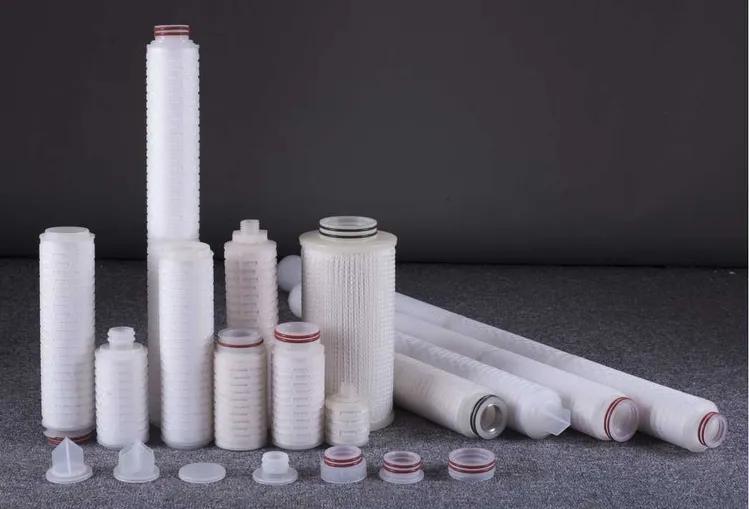
One of the main practical uses of pressure drop data is predicting the optimal replacement interval for a pleated filter:
A steady upward trend in ΔP signals normal contaminant accumulation.
A sudden sharp spike could indicate process upsets or abnormal particulate loading.
When ΔP reaches a predetermined threshold defined by the manufacturer or system design limits, it’s time to replace the cartridge.
Proactive monitoring based on ΔP helps avoid system performance loss, pump strain, and unexpected downtime.
8. Conclusion
Understanding and managing pressure drop (ΔP) in pleated filter cartridges is essential for high-performance filtration systems. From indicating service life and clogging trends to helping control operational costs, ΔP serves as a fundamental metric for filter selection, maintenance, and system design.
By accurately measuring ΔP and interpreting its changes over time, engineers and operators can make smarter decisions — extending filter life, reducing energy costs, and improving overall system reliability.
View All Our Filter Cartridges

 English
 Spanish