
Bacteria Challenge Testing in Filtration Systems: Principles, Methods, and Applications
INTRODUCTION
Bacteria challenge testing is a widely recognized experimental method used to evaluate the microbial retention performance of filtration systems. By deliberately introducing a known concentration of bacteria upstream of a filter and measuring the number of organisms that pass through, this test provides quantitative insight into a filter’s ability to remove or retain microorganisms under controlled conditions.
In industrial, pharmaceutical, water treatment, and food processing applications, filtration systems are often relied upon as a critical control point for microbial safety. While routine operational monitoring can indicate whether a system is functioning within expected parameters, it does not directly measure microbial retention capability. Bacteria challenge testing addresses this gap by offering a standardized, reproducible means of validating filtration performance.
This article presents a comprehensive overview of bacteria challenge testing in filtration systems, covering its scientific principles, test methodologies, applications across filtration technologies, data interpretation, regulatory context, and inherent limitations. The aim is to provide a neutral, technically rigorous reference suitable for academic citation, professional use, and authoritative industry guidance.
2. Fundamentals of Bacterial Filtration
2.1 Microbial Contaminants in Liquid Systems
Liquid systems used in industrial and processing environments may contain a wide variety of microorganisms, including bacteria, fungi, and protozoa. Among these, bacteria are of particular concern due to their ubiquity, small size, and ability to proliferate rapidly under favorable conditions.
Bacterial contamination can originate from source water, raw materials, equipment surfaces, or environmental exposure. In water treatment and process fluid systems, common bacterial genera include Pseudomonas, Escherichia, Bacillus, and Brevundimonas. These organisms may range in size from approximately 0.2 to 2.0 micrometers, placing them within the operational range of microfiltration and some ultrafiltration technologies.
Uncontrolled bacterial presence can lead to product spoilage, biofouling, corrosion, health risks, and regulatory non-compliance. As a result, effective bacterial removal is a key performance criterion for many filtration systems.

2.2 Mechanisms of Bacterial Retention
Filtration systems retain bacteria through several physical and physicochemical mechanisms:
Size exclusion (sieving): Bacteria larger than the effective pore size of the filter medium are physically blocked.
Depth capture: In depth filters, bacteria are retained within a tortuous matrix rather than on a single surface.
Adsorption: Electrostatic and hydrophobic interactions between bacterial cell surfaces and filter media can enhance retention.
Interception and diffusion: Particularly relevant at low flow velocities or in fibrous media.
The relative contribution of each mechanism depends on filter design, material properties, pore structure, and operating conditions. Bacteria challenge testing evaluates the combined effect of these mechanisms under defined test parameters.
3. Principles of Bacteria Challenge Testing
3.1 Concept of Challenge Testing
Bacteria challenge testing involves intentionally exposing a filtration system to a high concentration of microorganisms under controlled conditions. Unlike routine monitoring, which assesses system performance indirectly, challenge testing directly measures microbial retention capability.
The fundamental concept is comparative: bacterial counts upstream of the filter are compared with counts downstream. The difference between these values reflects the filter’s ability to remove bacteria from the fluid stream.
Challenge testing is typically conducted during product development, validation, or qualification rather than during routine operation.
3.2 Log Reduction Value (LRV)
The performance of a filtration system in a bacteria challenge test is commonly expressed as a Log Reduction Value (LRV). LRV is defined as the logarithmic reduction in bacterial concentration achieved by the filter and is calculated as:
Where:
Cupstream is the bacterial concentration before filtration
Cdownstream is the bacterial concentration after filtration
An LRV of 6, for example, corresponds to a 99.9999% reduction in bacterial count. Higher LRVs indicate greater microbial retention efficiency.
3.3 Selection of Challenge Organisms
The choice of challenge organism is critical to the relevance and reproducibility of test results. Selection criteria typically include:
Small cell size relative to the filter’s nominal pore rating
Well-characterized morphology and growth behavior
Ease of cultivation and enumeration
Consistency across laboratories
One of the most commonly used organisms in challenge testing is Brevundimonas diminuta, due to its small size and widespread acceptance in filtration validation studies. Other organisms may be selected depending on application-specific requirements.

4. Bacteria Challenge Test Methodology
4.1 Test System Configuration
A typical bacteria challenge test setup includes:
A controlled feed reservoir containing the bacterial suspension
A test housing with the filter installed according to manufacturer or standard specifications
Upstream and downstream sampling ports
Pressure and flow control devices
The system must be designed to minimize external contamination and ensure representative sampling.
4.2 Preparation of Bacterial Suspension
The bacterial challenge suspension is prepared by culturing the selected organism under defined conditions to achieve the desired cell concentration. Key considerations include:
Growth medium composition
Incubation temperature and duration
Cell harvesting and resuspension
Verification of concentration and viability
Homogeneity of the suspension is essential to ensure consistent challenge conditions throughout the test.
4.3 Test Conditions
Test conditions significantly influence challenge test outcomes. Commonly controlled parameters include:
Flow rate and flux
Differential pressure across the filter
Temperature
Fluid chemistry (pH, ionic strength)
These conditions should reflect intended use where possible, or follow recognized standards to enable comparability.
4.4 Sampling and Enumeration Methods
Bacterial enumeration is typically performed using culture-based methods, such as:
Plate count techniques
Membrane filtration followed by incubation
Emerging rapid microbiological methods may also be used, provided they are validated for accuracy and sensitivity.
5. Application to Different Filtration Technologies
5.1 Membrane Filters
Membrane filters rely primarily on size exclusion and are widely used for applications requiring high microbial retention. Bacteria challenge testing is particularly relevant for validating absolute-rated membranes used in critical processes.
5.2 Depth Filters
Depth filters capture bacteria within a three-dimensional matrix. While they can achieve significant microbial reduction, their retention performance may be more variable and dependent on loading conditions.
5.3 Pleated Filter Cartridges
Pleated filter cartridges combine surface and depth filtration characteristics. Factors such as pleat density, media composition, and support structure can influence bacterial retention outcomes in challenge testing.
6. Data Analysis and Interpretation
6.1 Calculation of Retention Efficiency
Retention efficiency is derived from upstream and downstream bacterial counts. Statistical analysis may be applied to account for sampling variability and detection limits.
6.2 Interpretation of Pass/Fail Criteria
Pass/fail criteria are typically defined by application requirements or regulatory expectations. These criteria should be established prior to testing to avoid bias in interpretation.
6.3 Sources of Variability
Variability in challenge test results may arise from biological factors, system configuration, operator technique, and analytical methods. Understanding these sources is essential for reliable interpretation.
7. Standards, Guidelines, and Regulatory Context
Bacteria challenge testing is referenced in various international standards and guidance documents. While specific requirements may differ by industry, the underlying principles remain consistent across applications.
8. Relationship to Filter Integrity Testing
Challenge testing and integrity testing serve complementary roles. While integrity testing assesses the physical condition of a filter, challenge testing evaluates functional microbial retention performance.
9. Applications Across Industries
9.1 Pharmaceutical and Bioprocessing
In pharmaceutical manufacturing, bacteria challenge testing supports sterile filtration validation and regulatory compliance.
9.2 Water Treatment and Industrial Fluids
In water treatment and industrial fluid systems, challenge testing provides assurance of microbial control under defined conditions.
9.3 Food and Beverage Processing
Food and beverage applications use bacteria challenge testing to support hygienic design and microbial risk management.
10. Limitations and Practical Considerations
Despite its value, bacteria challenge testing has limitations. Laboratory conditions may not fully replicate real-world operating environments, and test organisms may not represent all microbial challenges encountered in practice.
11. Emerging Trends and Developments
Advances in rapid microbiological methods, predictive modeling, and risk-based validation approaches are influencing the future application of bacteria challenge testing.
12. Conclusion
Bacteria challenge testing remains a fundamental tool for evaluating microbial retention performance in filtration systems. By providing quantitative, reproducible data, it supports informed decision-making in system design, validation, and application across diverse industries.
13. References
A complete reference list should include peer-reviewed journals, international standards, and authoritative technical texts relevant to filtration and microbiological testing.
[1] ASTM International
Standard Guide for Microbiological Testing of Filters
[2] International Organization for Standardization (ISO)
ISO 29463 / ISO 11137 – Filtration and Microbiological Control Standards
[3] PDA Technical Report No. 26
Sterilizing Filtration of Liquids
[4] U.S. Food and Drug Administration (FDA)
Guidance for Industry: Sterile Drug Products Produced by Aseptic Processing
[5] European Medicines Agency (EMA)
Annex 1: Manufacture of Sterile Medicinal Products
[6] John Lok, Danny Lu,
Bubble Point Test for Filter Integrity: Principles and Practical Considerations DOI: zenodo.18323237
[7] Jornitz, M. W., & Meltzer, T. H.
Filter Integrity Testing and Bacterial Challenge Testing Correlation
Journal of Parenteral Science and Technology.
[8] Sutton, S.
The Role of Microbial Challenge Studies in Filtration Validation
Journal of Validation Technology.
[9] Leahy, T. J., & Sullivan, J. J.
Microbial Retention Testing of Liquid Filters
Pharmaceutical Engineering.
[10] European Pharmacopoeia
2.6.1 Sterility & Microbiological Control Methods
[11] American Water Works Association (AWWA)
Water Quality and Treatment: A Handbook of Community Water Supplies
[12] Brevundimonas diminuta – ATCC
ATCC® 19146™ Technical Profile
American Type Culture Collection.
[13] Hetrick, E. M., & Schoenfisch, M. H.
Reducing Bacterial Adhesion on Filtration Materials
Chemical Society Reviews.
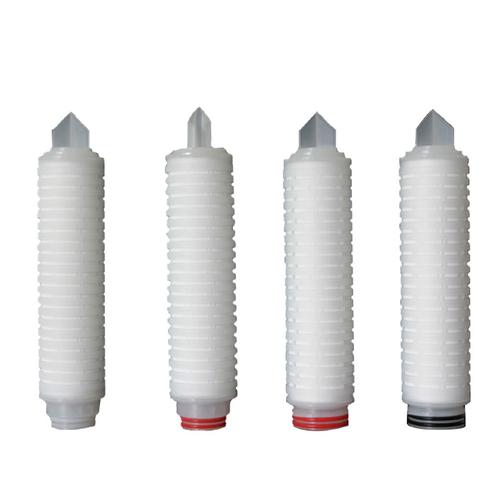
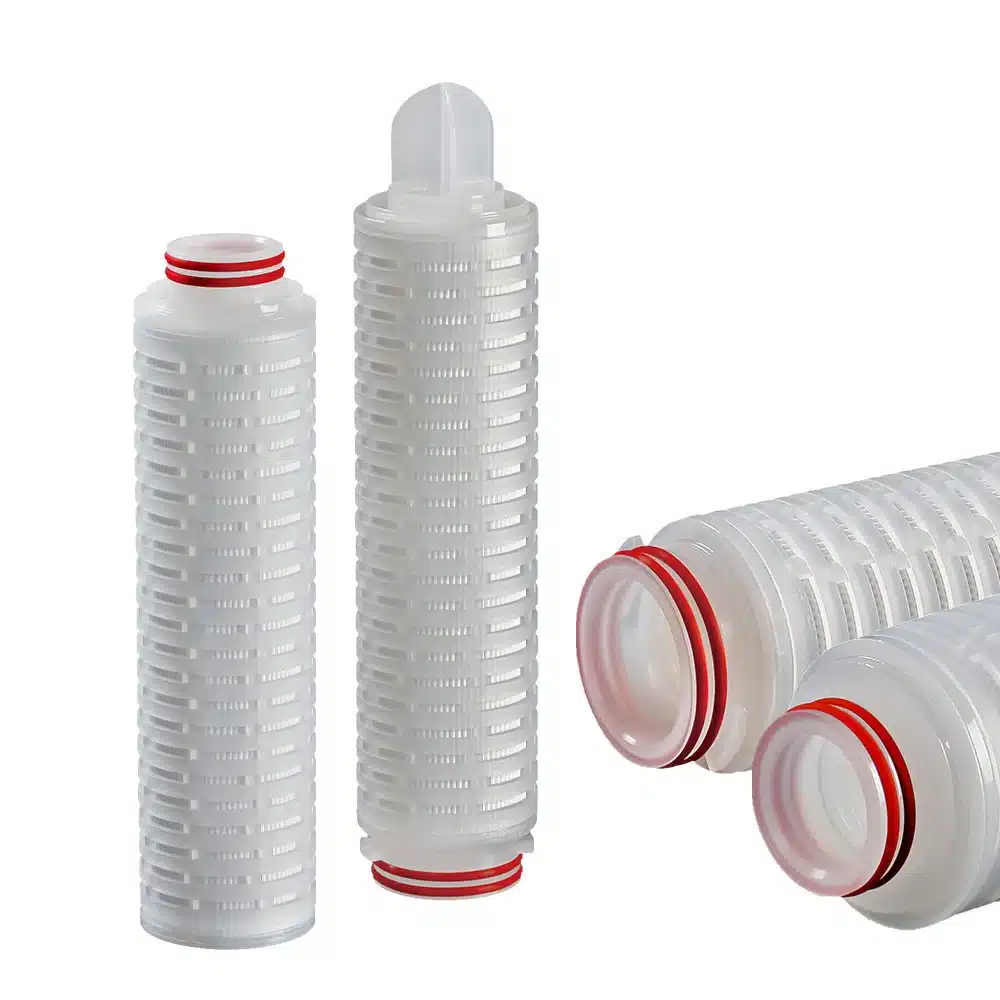
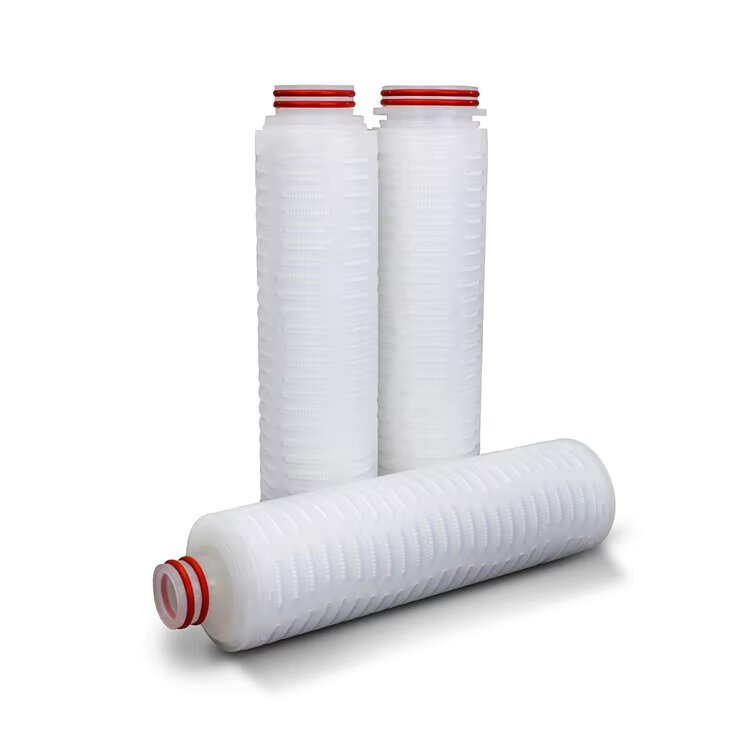
Recommended Filter Cartridges

 English
 Spanish