
How to Choose the Right Pleated Filter Cartridge – The Ultimate Industrial Filtration Selection Guide
INTRODUCTION
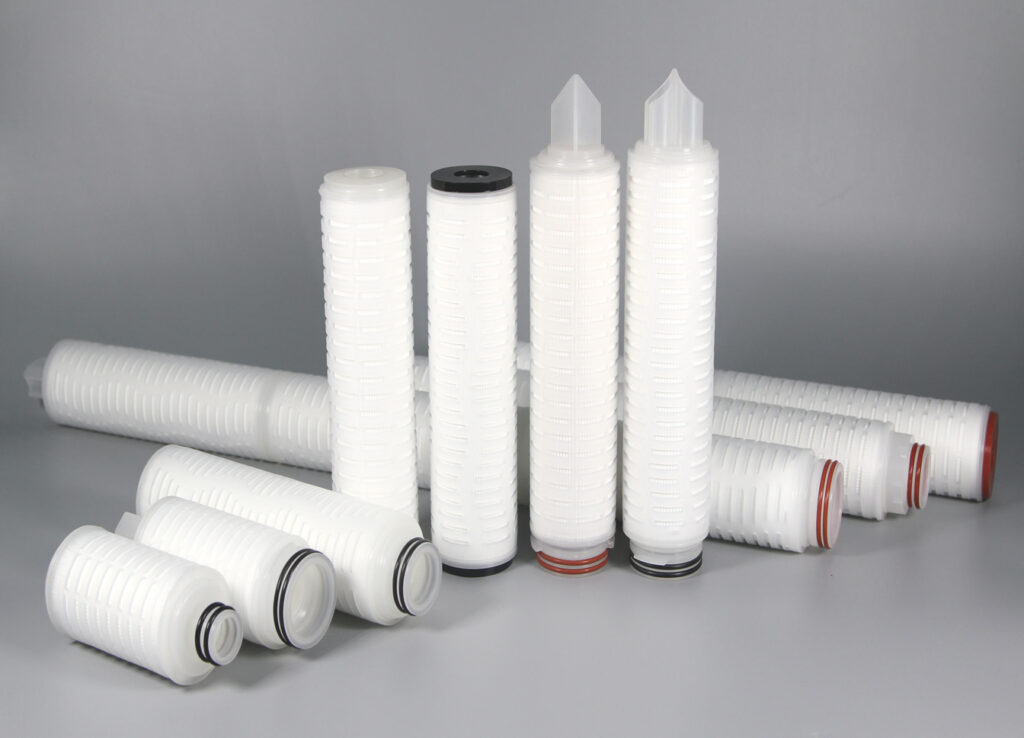
Selecting the right pleated filter cartridge is critical for system efficiency, reliability, and cost savings. These cartridges are widely used in water treatment, food & beverage, pharmaceuticals, chemical processing, and electronics because they offer high filtration efficiency, large dirt-holding capacity, and long service life.
The wrong choice — such as an incompatible media, incorrect micron rating, or unsuitable material — can lead to frequent clogging, high pressure drop, energy waste, and even equipment damage.
This guide will give you a clear framework to evaluate and choose the right pleated filter cartridge, avoid common mistakes, and confidently select a solution that meets your performance and budget goals.
2. Understand Your Filtration Application First
Before selecting any filter cartridge, the most important step is to understand what you are filtering and why.
2.1 What Fluid Are You Filtering?
Different fluids impose very different demands on filter media.
| Fluid Type | Typical Challenges |
|---|---|
| Water | Particulates, bacteria, organic matter |
| Chemicals | Corrosiveness, solvent attack |
| Pharmaceuticals | Sterility, regulatory compliance |
| Food & Beverage | Hygiene, taste, odor, safety |
| Solvents | Hydrophobic compatibility |
| Gases | Venting, moisture, particle control |
For example, a cartridge suitable for potable water may fail rapidly in a solvent filtration system.
2.2 What Contaminants Must Be Removed?
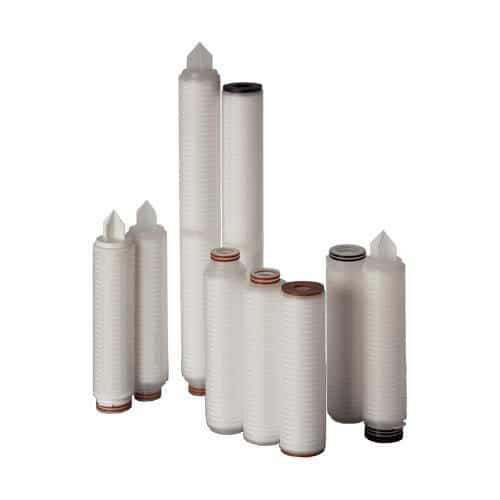
The contaminant type determines the micron rating and filter media structure.
Common contaminants include:
Suspended solids (sand, rust, scale)
Colloidal particles
Microorganisms
Oil and emulsions
Gels and organic matter
Rigid particles are easily captured by surface filtration, while deformable contaminants may require depth or gradient filtration.
2.3 Where Is the Filter Installed in the Process?
Filtration stage matters:
| Process Stage | Purpose |
|---|---|
| Pretreatment | Protect downstream equipment |
| Intermediate | Reduce load on final filters |
| Final filtration | Protect product quality |
| Sterile filtration | Remove microorganisms |
Pleated filter cartridges are most often used for fine filtration and final filtration, where precision and cleanliness matter.
3. How to Choose the Right Membrane Material
The filter membrane is the heart of a pleated cartridge. Selecting the correct membrane material is one of the most important decisions.
3.1 Common Pleated Filter Media
| Material | Key Characteristics | Typical Applications |
|---|---|---|
| Polypropylene (PP) | Chemical resistant, economical | Water, chemicals |
| Polyethersulfone (PES) | High flow, low protein binding | Pharmaceuticals |
| Polyvinylidene Fluoride (PVDF) | Strong chemical resistance | Aggressive chemicals |
| Polytetrafluoroethylene (PTFE) | Extremely hydrophobic | Solvents, gas |
| Nylon | Broad chemical compatibility | Organic solvents |
3.2 PP vs PES vs PVDF vs PTFE vs Nylon
Each material offers a unique balance of chemical resistance, hydrophilicity, mechanical strength, and filtration efficiency.
PP Pleated Filter Cartridges are widely used for water treatment and general chemicals due to low cost and good chemical resistance.
PES Membrane Filter Cartridges provide very high flow rates and are ideal for pharmaceutical and biopharmaceutical filtration.
PVDF Membrane Filter Cartridges offer excellent resistance to oxidizing agents and harsh chemicals.
PTFE Membrane Filter Cartridges are preferred for air, gas, and aggressive solvent filtration.
Nylon Membrane Filter Cartridges provide balanced solvent compatibility and good mechanical strength.
3.3 Chemical and Thermal Resistance
Some membranes degrade when exposed to high temperature, acids, or solvents.
| Membrane | Acid | Solvent | Temperature |
|---|---|---|---|
| PP | Good | Limited | Up to ~80°C |
| PES | Moderate | Limited | ~80–120°C |
| PVDF | Excellent | Good | ~130°C |
| PTFE | Excellent | Excellent | ~200°C |
| Nylon | Good | Good | ~100°C |
Using the wrong material may result in swelling, cracking, or complete filter failure.
Learn More>> How to Choose the Best Filter Cartridge Material for Systems
4. Hydrophilic or Hydrophobic – Which Should You Choose?
4.1 What Is a Hydrophilic Membrane?
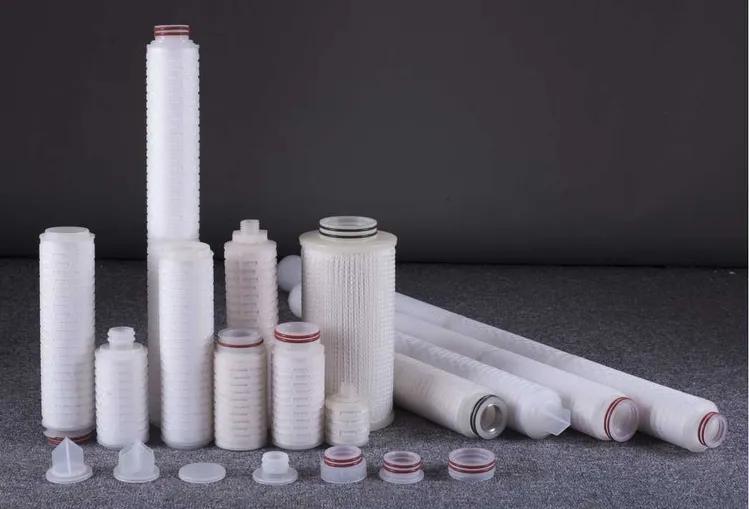
Hydrophilic membranes attract water and allow water to pass through easily.
They are used for water-based filtration.
Examples: PP, PES, PVDF (hydrophilic treated)
4.2 What Is a Hydrophobic Membrane?
Hydrophobic membranes repel water and are used for:
Air filtration
Gas venting
Solvent filtration
PTFE is the most common hydrophobic membrane.
4.3 Application-Based Selection
| Application | Membrane Type |
|---|---|
| Drinking water | Hydrophilic |
| Pharmaceutical liquids | Hydrophilic |
| Compressed air | Hydrophobic |
| Chemical solvents | Hydrophobic |
| Fermentation venting | Hydrophobic |
Using the wrong type can cause air lock, flow blockage, or wetting failure.
Difference Between Hydrophilic Filter vs Hydrophobic Filters
5. How to Choose the Correct Micron Rating
5.1 Nominal vs Absolute Rating
Nominal micron rating means the filter captures a percentage (usually 85–95%) of particles at that size.
Absolute micron rating means the filter captures ≥99.9% of particles at that size.
For critical filtration, absolute-rated pleated cartridges are required.
5.2 Typical Micron Ranges
| Application | Micron |
|---|---|
| Pretreatment | 5–20 µm |
| RO protection | 1–5 µm |
| Fine filtration | 0.45–1 µm |
| Sterile filtration | 0.1–0.22 µm |
Selecting too fine a micron increases pressure drop and cost.
Selecting too coarse allows contamination to pass through.
6. How to Calculate Required Flow Rate
Flow rate is controlled by:
Filter surface area
Pleat density
Membrane permeability
Differential pressure
Pleated cartridges provide much higher flow than depth cartridges due to large surface area.
If your system requires 10 m³/h, the filter must provide that flow at acceptable pressure drop, not just at zero pressure.
How to Select Cartridge Filter Flow Rate for Filtration Need
7. Pressure Drop and Dirt Holding Capacity
Pressure drop increases as contaminants accumulate.
A good pleated filter cartridge provides:
Low initial pressure drop
High dirt holding capacity
Stable filtration over time
This results in fewer replacements and lower operating cost.
8. Chemical Compatibility
Never assume a membrane is chemically resistant.
Acids, alkalis, solvents, and oxidizers can:
Attack filter fibers
Damage O-rings
Cause extractables
Always match membrane and seal materials to the process fluid.
9. How to Select the Correct Cartridge Dimensions
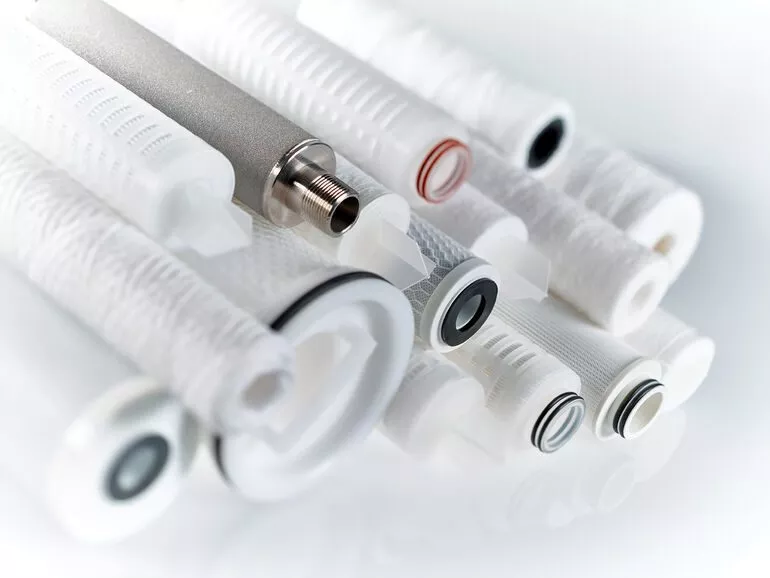
Selecting the right membrane and micron rating is meaningless if the cartridge does not physically fit into your filtration housing.
9.1 Standard Lengths
Pleated filter cartridges are typically available in:
10 inch
20 inch
30 inch
40 inch
Longer cartridges provide greater surface area and higher flow capacity.
For high-flow systems, 40” cartridges are often preferred to reduce the number of cartridges required per housing.
9.2 Diameter and Effective Filtration Area
Although many cartridges share similar external diameters, their pleat count and pleat depth determine the actual filtration area.
A high-quality pleated filter cartridge with optimized pleat geometry provides:
Higher flow rate
Lower pressure drop
Longer service life
This is especially important for PVDF and PTFE membranes, which are typically used in high-value applications where downtime is costly.
10. How to Choose the Right End Cap and Connection Type
The end connection determines how the cartridge seals inside the housing and how well it prevents bypass.
10.1 DOE (Double Open End)
Both ends are open
Sealing is achieved by flat gaskets
Low cost
More risk of bypass
DOE cartridges are commonly used for PP pleated filters in water and pretreatment systems.
10.2 SOE (Single Open End)
SOE cartridges provide positive sealing using O-rings or bayonet-style locking mechanisms.
Common SOE types:
| Code | Description |
|---|---|
| Code 3 | Double O-ring, flat top |
| Code 7 | Bayonet, high sealing |
| Code 8 | Single O-ring, common in pharma |
For PVDF and PES pharmaceutical filters, Code 7 and Code 8 connections are standard because they eliminate leakage risk.
10.3 Why Connection Type Matters
A poorly sealed cartridge allows unfiltered fluid to bypass the membrane, making even a 0.2 µm filter useless.
For critical filtration — pharmaceutical, food, microelectronics — always use SOE sealed cartridges.
11. O-Ring and Seal Material Selection
The membrane filters the fluid — the O-ring keeps it from leaking around the membrane.
| O-Ring Material | Best For |
|---|---|
| EPDM | Water, steam |
| Silicone | Food & pharma |
| Viton (FKM) | Chemicals & solvents |
| PTFE | Extreme chemical resistance |
For PTFE and PVDF pleated filter cartridges used in aggressive chemical service, Viton or PTFE O-rings are typically required.
12. Integrity Testing – How to Verify Filter Performance
High-quality pleated filter cartridges are not only manufactured — they are tested.
12.1 Why Integrity Testing Matters
Integrity tests ensure that:
The membrane has no pinholes
Pleats are intact
End caps are sealed correctly
This is especially critical for 0.2 µm pharmaceutical-grade PES and PVDF filters.
12.2 Bubble Point Test
The bubble point test measures the pressure at which air passes through a wetted membrane.
A higher bubble point means:
Smaller pore size
Higher filtration efficiency
Why Filters Cartridge Require Bubble Point Integrity Test and Its Importance
12.3 Diffusion Test
This measures the gas flow rate through a wetted membrane at a given pressure.
It is commonly used for on-site integrity testing in pharmaceutical plants.
12.4 Water Intrusion Test
Used for hydrophobic PTFE membranes, especially for vent filters.
13. Regulatory and Industry Standards
13.1 FDA Compliance
Filters used in food, beverage, and pharmaceutical applications must use FDA-compliant materials.
13.2 USP Class VI
This is required for filters in direct contact with pharmaceutical products.
13.3 ISO and GMP
High-quality pleated filter cartridge manufacturers operate under:
ISO 13485 (medical)
GMP production
These standards ensure consistency, traceability, and product reliability.
14. Common Mistakes When Selecting Pleated Filter Cartridges
14.1 Choosing Micron Rating Too Small
This leads to:
High pressure drop
Rapid clogging
High operating cost
14.2 Ignoring Chemical Compatibility
Using a PP cartridge in solvent service or an EPDM O-ring in acid is a common failure mode.
14.3 Using DOE for Critical Filtration
This often causes bypass leakage.
14.4 Buying on Price Alone
Low-cost cartridges often use:
Low pleat density
Inferior membranes
Poor sealing
This increases long-term cost.
15. How to Optimize Performance and Cost
Professional filtration systems often use multi-stage filtration:
Depth filter or melt blown filter
PP pleated pre-filter
PVDF, PES, or PTFE final filter
This protects the expensive final membrane and extends its life.
16. Final Selection Checklist
Before ordering any pleated filter cartridge, confirm:
Fluid type
Chemical compatibility
Required micron rating
Flow rate and pressure
Membrane material (PP / PES / PVDF / PTFE)
Hydrophilic or hydrophobic
Length and diameter
End cap type
O-ring material
Regulatory requirements
17. How to Match the Right Product to Your Application
Based on this guide:
PP Pleated Filter Cartridges
Best for water treatment, RO pretreatment, and general industrial filtration.PVDF Pleated Filter Cartridges
Ideal for chemical processing, pharmaceutical filtration, and aggressive fluids.PTFE Pleated Filter Cartridges
Best for solvents, compressed air, and vent filtration.
By selecting the correct membrane, connection type, and testing standard, your filtration system will operate with maximum efficiency, safety, and reliability.
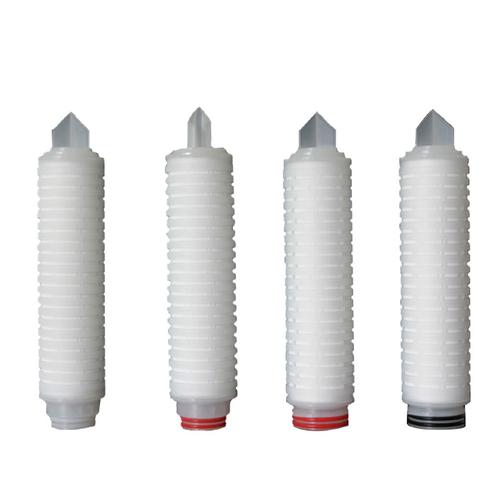
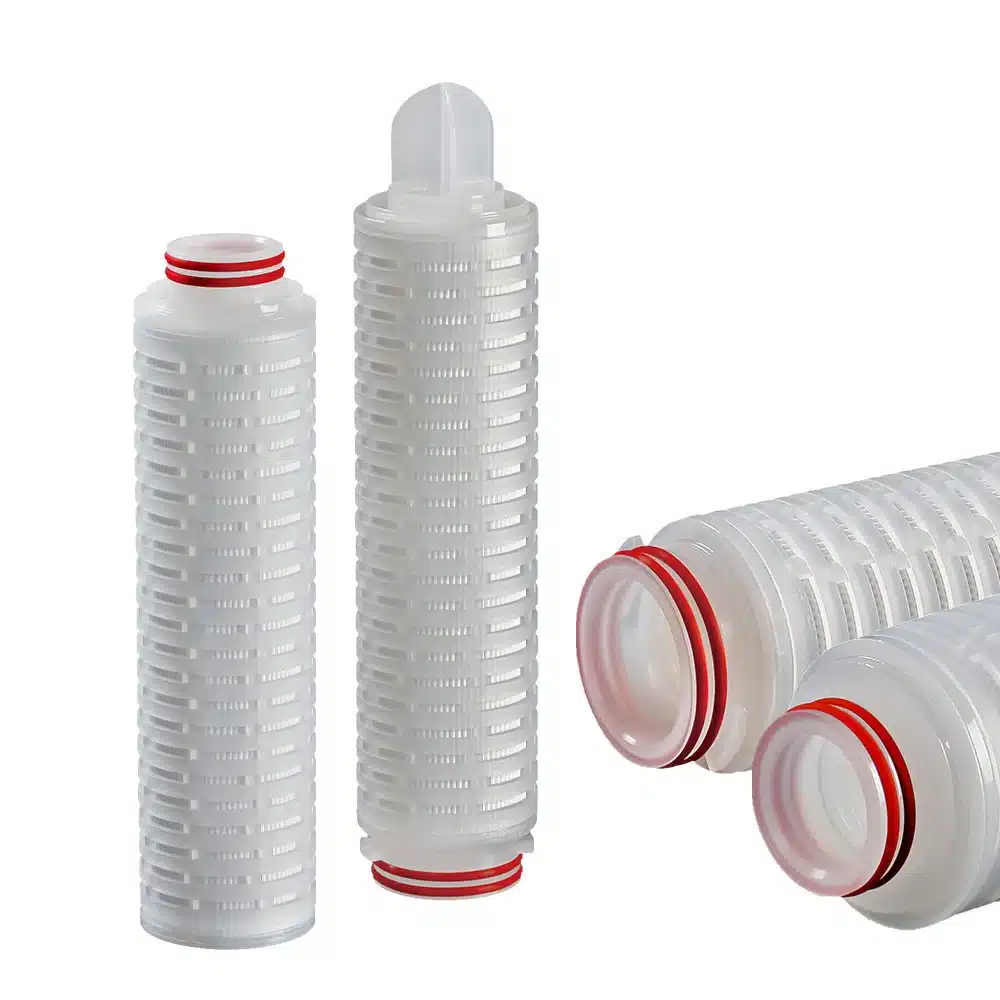
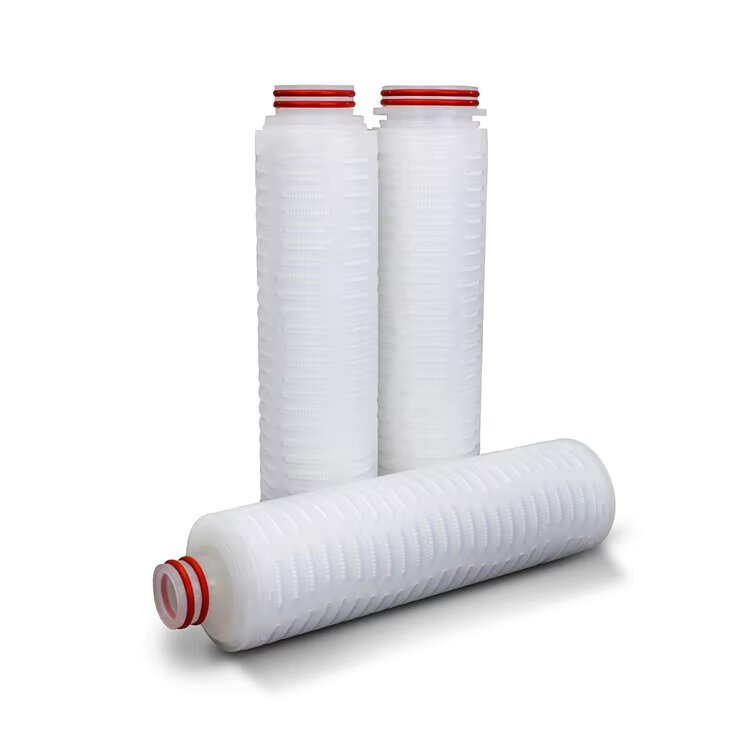
Recommended Filter Cartridges

 English
 Spanish